
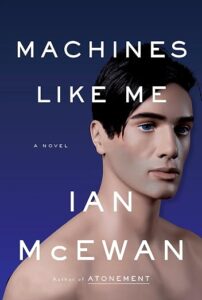
Science fiction continues to be one of my favorite genres for recreational reading – and the nearer term and more realistic the concept, the better. When it comes to building my annual reading list, I rely on a few trusted sources for recommendations, which is how Machines Like Me by Ian McEwan made the cut.
The premise revolves around a self-aware, learning android set in an alternate version of 1982. In McEwan’s re-imagined history, Margaret Thatcher is ousted over the UK’s involvement in the Falklands War, and figures like JFK, John Lennon, and Alan Turing are all still alive. Turing plays a pivotal role in the plot: his technical breakthroughs have accelerated computing far beyond its time, culminating in the creation of these artificial humans.
Enter Charlie, a pretty ordinary guy who decides to spend his inheritance on one of these androids, thinking it will make his life easier. Instead, Charlie gets far more than he bargained for, learning some hard lessons about himself, relationships, and the fact that taking the easy way out rarely works as planned.
At its core, Machines Like Me is very much a literary novel. If you’re looking for fast-paced action, big plot twists, or a dramatic climax that keeps you turning pages late into the night, you won’t find it here. Instead, it’s a straightforward, character-driven story about two people navigating the ups and downs of a relationship while trying to manage a first-of-its-kind technology.
Overall, I liked the concepts of the self-aware android and alternate reality. The book is good and well-written, but I wasn’t captivated by the overall story. For those who are fans of McEwan’s other books, it is worth the read. Otherwise, it’s not one I’d recommend putting at the top of your reading list.