In his book, The Image: A Guide to Pseudo-Events in America, Daniel Boorstin defines a pseudo-event as a happening that posses the following characteristics:
- It is not spontaneous, but comes about because someone has planned, planted or incited it.
- It is planted primarily (not always exclusively) for the immediate purpose of being reported or reproduced. Therefore, its occurrence is arranged for the convenience of the reporting or reproducing media. Its success is measured by how widely it is reported.
- Its relation to the underlying reality of the situation is ambiguous. Its interest arises largely from this very ambiguity.
- Usually it is intended to be a self-fulfilling prophecy. [Example] The hotel’s thirtieth-anniversary celebration, by saying that the hotel is a distinguished institution, actually makes it one.
Most of what we are fed by mainstream media are pseudo-events that are meant to entertain us (or in certain cases to influence or manipulate us). The media is not interested in educating or enlightening us – there isn’t any money to be made doing that. However, if they can sufficiently entertain us so we tune in each night, then they have done their job, in their mind.
In addition to mainstream media, marketing agencies and public relations entities are masters of the pseudo-event. They create pseudo-events for their clients to influence the public’s perception and to create an aura of importance. Whether it’s a corporate entity, celebrity, or politician, a good PR person can spin any story, whether good or bad, in their client’s favor. In fact, the more negative the story, the better the PR person is able to spin it.
To understand just how prevalent pseudo-events are, how they work, and how they twist the underlying meaning of a situation, let’s take a look at a few events from the political arena.
Continue reading →

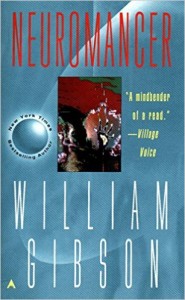 When I started my deep dive into sci-fi reading a couple of years back, a friend of mine, Andrew Schmitt, recommended that I read Neuromancer by William Gibson. While some shy away from a classic written 30 years ago, I looked at it as required reading if I wanted to really understand the genre. Plus, the book came highly recommended, which has become one of the key criteria in screening my extensive reading list that I’ve been stumbling through this year.