Do the right thing

The time has come. It’s time for the ‘gig economy’ companies and others exploiting employment regulations and independent contractors to step up to the plate. They need to face the facts, admit the truth, and reclassify these workers as employees. It’s time to do the right thing.

I wrote a similar article, What’s Bad for the Hive, a couple of months back. Little did I know back then that the world would change so dramatically since then. I’m going to do my best to keep this rant short, so you may want to refer back to that post first for a little background before wading into this one.

Continue reading

Book review: Count Zero

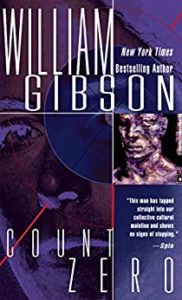
Book cover for Count Zero by William Gibson

The first, and only, William Gibson novel I’ve read is Neuromancer. It’s been nearly five years since I read it. I don’t remember a lot of details about the book. What I do remember is that I liked it a lot, and I was impressed by the amount of technology foreshadowing in the novel. The immersive cyberspace environment and human augmentation concepts that he wrote about back in 1984 were way ahead of their time. Those seemingly far-fetched concepts are close to becoming a reality today, if not here already.

Ever since finishing Neuromancer, I’ve wanted to read more of Gibson’s works. It’s taken a while for some reason or another, but I finally got around to it. So, for my second venture into Gibson’s extensive library, I choose to read the follow-up to Neuromancer, Count Zero.

Continue reading

Sheltered-in-place thoughts

Spending the last two weeks sheltered-in-place affords one a lot of time to think. Outside of walking the dog and the rare trip to the grocery store or Costco, I haven’t left the house. So as we enter the third week with no official end in sight, here are a few thoughts that are helping me through this period. Hopefully these can help you navigate and spend the time wisely, too.

Continue reading

Book review: 10-Minute Mindfulness

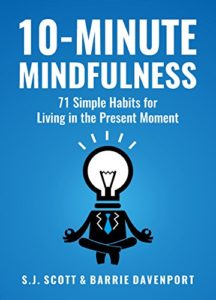
Book cover for 10-Minute Mindfulness by S.J. Scott and Barrie Davenport

One of my goals for this year is to be more present, to live in the moment. It’s a recurring theme in my meditation practices, and, as I recently wrote about, one I consistently struggle with. I have a tendency to get wrapped up in my thoughts, whether it’s about the past, the future, or my latest work project. These distractions can keep me from being fully present and engaged in the now.

So what do when I’m struggling with something? I research and read about it.

Therefore, I decided to read 10-Minute Mindfulness: 71 Simple Habits for Living in the Present Moment by S.J. Scott and Barrie Davenport. I figured that I would find at least a few of their recommendations useful on my journey to living more mindfully.

Continue reading

Being present

A recurring theme in meditation is living in the moment. I’ve been practicing meditation for over a year, and living in the moment is a skill I’m still working on. So what does it mean to be present, to live in the moment?

Being present is about learning to let go. It’s developing the ability to let go of worries about the future and regrets about the past. It’s about letting go of the painful thoughts that cause emotional suffering. It’s about letting go of the attachments to people, things, and events that distract and agitate us. It’s not about controlling the here and now, it’s letting it flow naturally, moment by moment.

Letting go is not easy, at least it hasn’t been for me. It’s perhaps the most difficult part of learning to be consistently present in the moment. It requires adopting a different mindset. It’s taken me the better part of a year and a lot of meditation sessions, but I feel like I’m finally starting to get it. Here’s what I’ve discovered through the process.

Continue reading

Book review: Everything We Keep

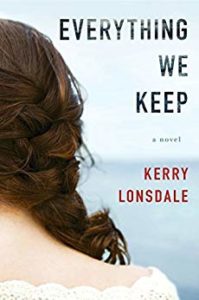
Book cover for Everything We Keep by Kerry Lonsdale

My favorite reading genre is science fiction, which you already know if you frequent my blog. However, every once in a while, I’ll step outside my comfort zone and read something a bit, well, different. Such was the case with Everything We Keep by Kerry Lonsdale.

Clearly, the book does not fit into the science fiction category. There is no mention of sentient robots, super-intelligent AI, space travel, or alien beings. In fact, there is pretty much no mention of any technology whatsoever. If anything, it fits into the romance genre, which I don’t like much and rarely read. But you know what, I liked Everything We Keep, a lot. I’m not afraid to admit it, and here’s why.

Continue reading

Improving the quality of STEM education in our schools

Computer Science For All. Were you aware this was a federal government program?

It was announced by the White House January 30, 2016, over four years ago (see the full announcement here). The initiative appropriated $4B for states and $100M directly to school districts to expand computer science in grades K-12 for, among other things, “training teachers, expanding access to high-quality instructional materials, and building effective regional partnerships. It would seem that such a program would have an impact on the types of courses offered at the high school level and below.

Well, my daughter recently chose the classes she wanted to take for her senior year of high school here in Southern California. I looked over the classes offered. Do you know how many computer science, technology, robotics, or other classes that may require programming?

Zero.

That’s right, zero.

Over the last four years, I haven’t seen any changes in the computer offerings at the high school my kids have attended. If anything, it’s gotten worse over the last 10 years. My oldest daughter may have had more choices when she selected classes back in 2010. There may, and I emphasize may, have been one class offered back then.

I give credit to the White House for making an effort. Saying you are going to do something is a start. Mandating it means more, but it’s still not enough. To effect change, you need to measure results and enforce accountability. As we all know, you get what you measure.

So how do we improve the quality of STEM education in our K-12 system?

Continue reading

Book review: The Jennifer Project

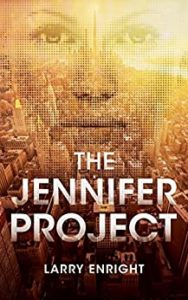
Book cover for The Jennifer Project by Larry Enright

My reading list is downright crazy. There are over 220 books on my “Want to Read” list on Goodreads. I do my best to prioritize the list every year, but even then a book can sit on it. Such was the case with The Jennifer Project by Larry Enright.

I first came across the book in March, 2017. I’m almost positive it came through an Amazon recommendation or one of their daily deal emails. The description looked good with numerous references to artificial intelligence (AI), so it fit in with my favorite reading genre – science fiction.

I put the book on my 2018 reading list, but it was pretty far down the queue. I moved it up considerably in 2019, but still wasn’t able to get to it. It finally made it up to the top of this year’s list, and I finished it last month.

Continue reading

Lessons Learned in Crisis Management

As with just about everyone, I’ve been unsettled, stressed, and concerned about the news of the Coronavirus over recent weeks, days, and hours. While I have my opinions on the virus and how events are being handled, they are just that – opinions, which I’m not going to share here. I will keep those to myself since I am neither an epidemiologist, scientist, or statistician, and I definitely did not stay at a Holiday Inn Express last night.

What I’ve found interesting is how the crisis has been handled by our government leaders, at all levels. Leaders aren’t made during good times, they are forged during times of crisis. These are my observations and lessons learned.

Continue reading

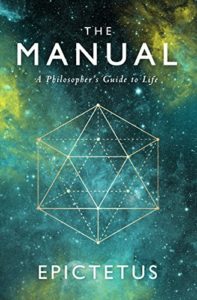
Book review: The Manual – A Philosopher’s Guide to Life

Book cover for The Manual: A Philospher's Guide to Life by Epictetus (modern translation by Sam Torode)

For most of my life, I had no interest in studying philosophy. Studying philosophy evoked images of college professors wearing corduroy jackets with elbow patches, smoking pipes, sitting around contemplating the meaning of life. The subject felt way too theoretical for me. I was always interested in the subjects of math and science where you were presented with problems and challenged to find the answers.

My attitude toward philosophy changed two years ago when I was encouraged to read The Daily Stoic by Ryan Holliday and Stephen Hanselman. Seeing how the writings of philosophers who lived 2,000 years ago were just as applicable today fascinated me. I learned a lot exploring each of the daily readings and was interested in learning more about Stoicism.

My interest has led me to start exploring more direct interpretations of the ancient philosophical writings of Marcus Aurelius, Epictetus, Seneca, and others. One of my first explorations was The Manual: A Philosopher’s Guide to Life, originally written by Epictetus. I read a translation that was compiled by Sam Torode, who also wrote a modern translation of the James Allen classic As a Man Thinketh.

Continue reading