Tag Archives: Books

Book review: Super Brain

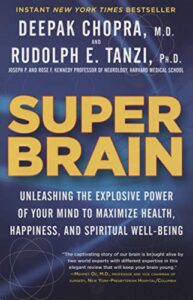
Book cover for Super Brain by Deepak Chopra and Rudolph E. Tanzi

I’m intrigued and constantly amazed by the power of the human brain. I’m convinced had I not taken a liking to computers and electronics growing up that I would have ended up a neuroscientist. The more I read about the brain, the more fascinated and interested I become. What’s most amazing to me is how little we understand of its operation, even after all the brain research that’s been done over the last century . After all that time and energy, researchers have only scratched the surface. There is still so much more they have yet to discover.

A lot of my interest in the brain is understanding how to maximize its utilization. If one was to compare the human body to a computer, the brain is the microprocessor. It has the job of processing the inputs our senses provide, which is our interface to our environment. Those inputs, which make up our experiences, in turn affect the make up of our brain, which in turn determine our personality, which is in effect who we are. In my opinion, the better we are at using our brain, the closer we get to realizing our true potential.

Based on these interests, when the book Super Brain: Unleashing the Explosive Power of Your Mind to Maximize Health, Happiness, and Spiritual Growth by Deepak Chopra and Rudolph E. Tanzi showed up in my Amazon recommendations, if felt like the perfect fit. Of course I had to read it.

Continue reading
Book review: Lexicon

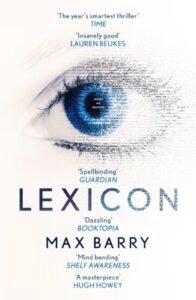
Lexicon by Max Barry

I enjoy reading, as evidenced by the number of book reviews on my blog. So it’s been great to see my two older daughters develop a regular reading habit. Our reading interests aren’t completely aligned, but there’s enough overlap that we occasionally recommend books to each other.

When I do get a recommendation from my duaghters, I do my best to move it toward the top of my reading list. Such was the case with Lexicon by Max Barry. The book had been languishing on my reading list for quite some time. My daughter Courtney read it recently, and given how highly she spoke of it, I decided it was time to move it up the queue.

Continue reading

Book review: Impossible Dreams

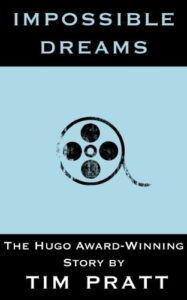
Book cover for Impossible Dreams by Tim Pratt

There are times when Amazon’s recommendation engine is off. And when I say off, I’m talking way off. I’d use the phrase ‘out in left field,’ but there are times when it’s not even in the same zip code let alone the same ballpark.

Then there are times when the Amazon recommendation engine is right on the money. It’s like it knows what I’m reading, which, of course, it does. Such was the case when it recommended Impossible Dreams by Tim Pratt. The book checked nearly all of my regular reading boxes – science fiction, new author (for me), and short story. It was a no-brainer to add to my reading list.

Continue reading

Book review: In Moments Like These

Book cover for In Moments Like These by Dr. David Jeremiah

I enjoyed reading the devotional Jesus Calling by Sarah Young during 2019. It helped me grow stronger in my faith and relationship with Christ. I liked it so much that I wanted to continue reading a devotional during 2020, which turned out to be a good thing given all that’s happened over the past year.

I had noticed during 2019 that my mother was reading the devotional In Moments Like These by Dr. David Jeremiah. She liked it a lot. So much so, that when I told her I wanted to read another devotional in 2020, she bought me a copy. Therefore, my decision on a devotional for 2020 was an easy one.

Continue reading

Books to read in 2021

Looking for books to read this year? Then, do I have a list of recommendations for you. As I’ve done in prior years, this year’s list is broken down into General Recommendations, Personal Development books, Business Reads, and a collection of what I like to call Fun Reads.

Since I did a better job this year of balancing my fiction and non-fiction titles, this year’s recommendations are strong mix of recreational and serious reads. Keep in mind that my tastes lean towards technology and science fiction, so most of the books on the list are from those genres.

Continue reading

Book review: Change Agent

Book cover for Change Agent by Daniel Suarez

I read a lot of near-term, hard science fiction. Hard doesn’t mean difficult. Hard means that it’s a realistic view of how technology could evolve in the near future, which is any time within the next 50 years.

A consistent theme in these books revolves around artificial intelligence. Specifically, it’s the threat posed by a runaway, super-intelligent AI that would threaten humanity’s existence. While the stories are fiction, the threat is real. Numerous technologists have warned about it, including Stephen Hawking and Elon Musk.

Another technological threat that doesn’t get as much attention is genetic editing. The technology is more commonly referred to as CRISPR. In simple terms, CRISPR gene editing involves changing the genetic structure of a living organism, humans included. While there are numerous positive uses for genetic editing such as vaccine development, the technology can also be used for nefarious purposes.

In his book Change Agent, author Daniel Suarez explores a near-future where gene editing technologies such as CRISPR are readily available. It raises a myriad of ethical questions. Should people be able to select and determine the personalities and capabilities of their children? What happens when the genetic structure of a person is changed, especially if it happens without their permission or knowledge?

Continue reading

Book review: How to Think Like a Roman Emperor – The Stoic Philosophy of Marcus Aurelius

Book cover for How to Think Like a Roman Emperor by Donal Robertson

Is it possible that philosophical and behavioral concepts practiced and taught over 2,000 years ago are still valid today?

Let’s consider a modern psychotherapy known as Cognitive Behavior Therapy (CBT). CBT is a treatment that modern psychologists use to help those who struggle with depression and anxiety. Using CBT, people are taught techniques and approaches to change destructive behaviors and thought patterns that trigger negative emotions.

As it turns out, many of these techniques are not new. They stem from ancient philosophical teachings, primarily those of Stoicism. In his book, How to Think Like a Roman Emperor: The Stoic Philosophy of Marcus Aurelius, psychotherapist and trainer Donald Robertson shows how the actions and practices of ancient Stoics, focusing primarily on Roman emperor Marcus Aurelius, are fundamentally similar to the techniques taught through CBT.

Continue reading

Book review: Altered Carbon

Book cover for Altered by RIchard K. Morgan

What is human consciousness? Is it an abstract concept, an ephemeral state, or a thing that can be captured and stored? If it’s a thing that can be stored, does that “thing” represent who we are? If that thing were put into another body, or a similar body, would we be the same person?

Based on my knowledge, modern science doesn’t have the answer to these questions. Fortunately, the lack of scientific evidence hasn’t stopped people from writing books about or based upon it.

A significant number of science fiction books I read treat the human mind as something that can be captured and stored. Depending on the book, that representation of the mind can live on inside a computer, or it can be placed into and/or transferred between bodies. Seeing how different authors explore the concept is an interesting thought experiment. It begs all sorts of questions such as is the stored representation really me? Will that representation realize it’s a copy? What are the ethical implications if multiple copies of me are active at the same time? It’s a long list that goes on and on.

Given that science fiction has a peculiar way of foreshadowing future technologies, it wouldn’t surprise me if some variation of these visions appear in the future, especially given the desire of those who want to live forever. My latest science fiction read to explore this concept was Altered Carbon by Richard K. Morgan.

Continue reading