Tag Archives: Books

Book review: Snow Crash

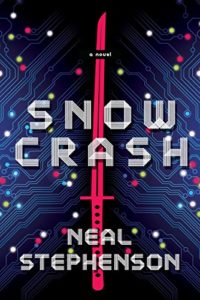
Book cover for Snow Crash by Neal Stephenson

As part of my reading list for the year, I make it a point to include “classic” science fiction. I consider pretty much anything written prior to the year 2000 as classic.

One of the other elements I look for in these classic works is their ability to stand the test of time. I’ve read books from Asimov, Philip K. Dick, William Gibson, Peter Hamilton, Joe Haldeman, Orson Scott Card, and others. I find it fascinating how many things these authors foreshadowed in their novels that have come to pass or are close to happening. It’s even more amazing when you consider that some of these novels were written over 50 years ago, and some are even older!

For my latest classic science fiction read, I read Snow Crash by Neal Stephenson. A good friend and former colleague suggested I read Stephenson’s works, and he strongly recommended that I start with this one.

Continue reading
Book review: Slow Burner

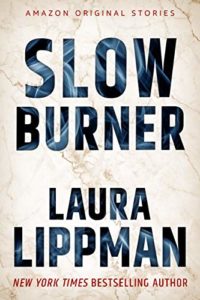
Book cover for Slow Burner by Laura Lippman (Amazon Hush Collection)

Next to science fiction, the short story format is one of my favorite types of fiction to read. I love how an author can capture your imagination and compress an engaging story into a compact form. I especially like how a really good short story comes to a close but leaves you with unanswered questions. It forces me to replay the story over and over in my mind and allows me to fill-in the blanks.

Amazon, my nemesis, has been doing a great job putting together short story collections. After reading their Forward collection, I recently finished reading the six short stories of their Hush Collection. Instead of reviewing each of the books individually, I’m going to focus on my favorite of the group, which was Slow Burner by Laura Lippman.


You can see my ranking of all the books in the Hush Collection here: Ranking the Amazon Hush collection of short stories


Continue reading

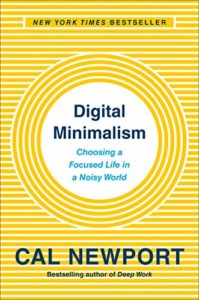
Book review: Digital Minimalism

Book cover for Digital Minimalism by Cal Newport

It’s amazing how fast life can change. When I think back 20 years ago, I spent time online, but not all the time. I would regularly check emails, and I might use the internet occasionally in the evening to check sport scores, read up on current events, or do some research. At most the internet was a diversion, a source of entertainment.

These days the internet is a pervasive, integral part of my life. I couldn’t do my work without it, and even when not working, I spend time online researching articles, or doing what I’m doing now – writing on my blog. Even when I’m not on my computer, I carry the internet around with me on my smartphone (currently using a Pixel 3 playing for Team Android). Not only does my phone keep me connected through voice calls and email, but I use it a lot for text messaging to keep in touch with friends and family.

For some, the connection goes even deeper. They are glued to the apps on their phone, whether it is Facebook, Twitter, Instagram, WhatsApp, TikTok, or whatever the latest social network du jour is. It begs the question, is there a point where you can be over-connected?

Continue reading

Book review: Chaos Monkeys

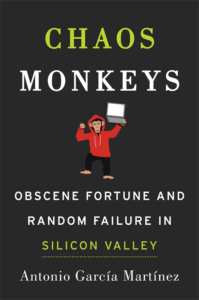
Book cover for Chaos Monkeys by Antonio Garcia Martinez

There are a number of notable technology startup communities across the U.S. There’s Boston, Austin, Los Angeles, San Diego, Boulder, Seattle, and Raleigh-Durham. Still, even today, the one that stands head and shoulders above all these areas and others is the Bay Area of Northern California. I liken it to being in the major leagues of technology, particularly when it comes to tech startups.

I’ve not been involved in a Bay Area startup, and at this point in my career, I doubt that I ever will be. But as someone who works in tech, it’s interesting to read stories about the Bay Area technology scene. From the outside it always seems so glamorous, but one knows that’s never the whole story. For every Facebook and Google, there are hundreds of forgettable companies, or ones that no one ever hears about.

Chaos Monkeys by Antonio Garcia Martinez is an autobiographical look at that other side of Silicon Valley. The subtitle, Obscene Fortune and Random Failure in Silicon Valley, is a good indication of what to expect when you read it.

Continue reading

Book review: Your Greatest Power

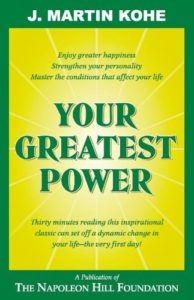
Book cover for Your Greatest Power by J. Martin Kohe

Our attitude towards the events that happen in our lives and around us has a huge impact on our outlook on life. It affects our mood. It determines our level of success (or failure). The choices we make determine if we are going to help make the world a better place or contribute to making it worse.

In Your Greatest Power, J. Martin Kohe examines the power of choice and how to use it to make a positive impact in your life, the lives of those around you, and the world in general.

Continue reading

Book review: The Term Sheet

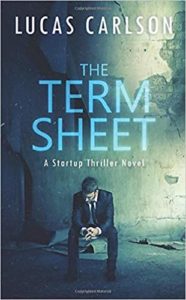
Book cover for The Term Sheet by Lucas Carlson

Goodreads tells me I’ve finished 29 books so far this year, but the pace has been very uneven. Some have been a slog that felt more like work. I almost gave up on one or two, which I rarely, if ever do. Others have been a breeze. Fortunately, my latest read, The Term Sheet by Lucas Carlson, fell into the breezy category. It took me less than a week start-to-finish, which is a good pace for me.

Continue reading

Benefits of reading

There are those who worry that our worst technological invention will be the creation of a runaway, artificially intelligent supercomputer. While it’s a valid concern, my greatest fear is that we may have already created the scourge of our generation – the internet. Watching The Social Dilemma certainly didn’t ease my fear.

On the other hand, the internet could also be considered the greatest invention of our time. It’s the collective hive. I use it to learn how to fix things around the house, to make all sorts of baked goods, and to program, which is essential to my career. I also discover intriguing content on it. For example, one of my favorite bloggers posted the link to a speech that I would have never found, heard about, or otherwise read.

You can read the full text of the speech by clicking here. It’s a long read, but well worth it. The speech, delivered to the plebe class at The United States Military Academy at West Point by William Deresiewicz in October 2009, is about the relationship between solitude and leadership.

So how is this related to a post about the benefits of reading?

It turns out it has a lot to do with it. It made me think about why I read, what the benefits of reading are, and why I encourage others to read.

Continue reading

Book review: On the Shortness of Life

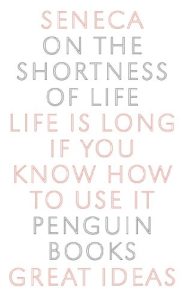
Book cover for On the Shortness of Life by Seneca (Penguin Great Ideas)

Over the last couple of years, I’ve developed an interest in Stoicism. I’m not sure how it started, although I’d bet it had a lot to do with Ryan Holiday and Stephen Hanselman’s book The Daily Stoic: 366 Meditations on Wisdom, Perseverance, and the Art of Living, which I read in 2018. What triggered me to dig further was the relevance of the passages in the book. They were written by philosophers over 2,000 years ago and are just as applicable today as they were then. It’s a testament to the constant of human nature. The times, the problems, and the technologies change, but the way we are wired is constant.

To develop a better understanding of Stoicism, I decided it was time to read the writings of the more notable Stoic philosophers from ancient Rome and Greece. I’ve read plenty of quotes from Marcus Aurelius, Epictetus, Seneca, Socrates, Zeno, Cato, and others, but I wanted to read the books and letters where the quotes originated since it’s not uncommon for quotes to be taken out of context.

For my first in depth reading, I choose On The Shortness of Life, which is a collection of three letter written by Seneca.

Continue reading

Book review: Pandora’s Star

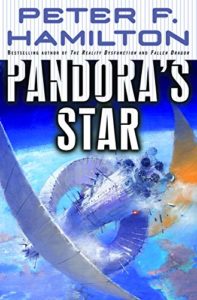
Book cover for Pandora's Star by Peter Hamilton

Projecting technology ten years into the future is a challenging task. Just look back over the last 10 years. The advances in phones, tablets, electric vehicles, home networking, machine learning, and medicine have been amazing. As a wise person once told me, we over estimate how technology will advance over the next year, but we under estimate the advances 10 years in the future.

So imagine projecting technology advances hundreds of years into the future. Impossible, you say? Well, Peter Hamilton takes a shot at in Pandora’s Star, the first book of the Commonwealth Saga.

Continue reading

Book review: Building a Story Brand

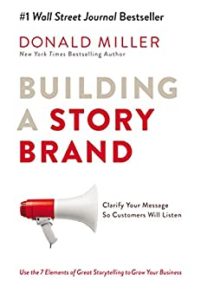
Book cover for Building a Story Brand by Donald Miller

I’d been vaguely aware that the ability to tell a good story was important to building your business. People like to be entertained. People can relate to stories.

What I didn’t understand was how to tell a good story. In the past, when I’ve tried to tell a story about my business, it fell flat. It was a meandering tale that I had a hard time condensing into a narrative that would capture someone’s attention. Basically, my stories lacked structure.

It turns out there is a formula that good books and movies use to tell a story. I had no clear concept of this formula until a close friend suggested I read Building a Story Brand by Donald Miller. In his book, Miller walks you through the formula that writers use to capture and keep their audience’s attention. As he does so, he shows you how you can apply it to create a strong brand message and grow your business.

So how do you tell a good story, why does the ability to tell a good story matter, and how does it help you grow your business?

Continue reading