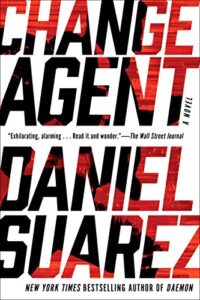
Book review: Change Agent

Book cover for Change Agent by Daniel Suarez

I read a lot of near-term, hard science fiction. Hard doesn’t mean difficult. Hard means that it’s a realistic view of how technology could evolve in the near future, which is any time within the next 50 years.

A consistent theme in these books revolves around artificial intelligence. Specifically, it’s the threat posed by a runaway, super-intelligent AI that would threaten humanity’s existence. While the stories are fiction, the threat is real. Numerous technologists have warned about it, including Stephen Hawking and Elon Musk.

Another technological threat that doesn’t get as much attention is genetic editing. The technology is more commonly referred to as CRISPR. In simple terms, CRISPR gene editing involves changing the genetic structure of a living organism, humans included. While there are numerous positive uses for genetic editing such as vaccine development, the technology can also be used for nefarious purposes.

In his book Change Agent, author Daniel Suarez explores a near-future where gene editing technologies such as CRISPR are readily available. It raises a myriad of ethical questions. Should people be able to select and determine the personalities and capabilities of their children? What happens when the genetic structure of a person is changed, especially if it happens without their permission or knowledge?

Continue reading
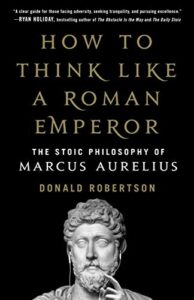
Book review: How to Think Like a Roman Emperor – The Stoic Philosophy of Marcus Aurelius

Book cover for How to Think Like a Roman Emperor by Donal Robertson

Is it possible that philosophical and behavioral concepts practiced and taught over 2,000 years ago are still valid today?

Let’s consider a modern psychotherapy known as Cognitive Behavior Therapy (CBT). CBT is a treatment that modern psychologists use to help those who struggle with depression and anxiety. Using CBT, people are taught techniques and approaches to change destructive behaviors and thought patterns that trigger negative emotions.

As it turns out, many of these techniques are not new. They stem from ancient philosophical teachings, primarily those of Stoicism. In his book, How to Think Like a Roman Emperor: The Stoic Philosophy of Marcus Aurelius, psychotherapist and trainer Donald Robertson shows how the actions and practices of ancient Stoics, focusing primarily on Roman emperor Marcus Aurelius, are fundamentally similar to the techniques taught through CBT.

Continue reading

Five sourdough discard ideas

Jar of sourdough discard

One of the by-products of growing your own sourdough starter is discard. As any experienced bread baker will tell you, you’re going to end up with a lot of it. And when I say a lot, I mean a LOT of it. Since I don’t like throwing food away, I needed a plan for it, which is one of the top lessons I learned from growing a sourdough starter.

As it goes with just about anything, sourdough discard can be a problem or an opportunity. I like taking an optimistic approach to life, so I chose to treat my sourdough discard as an opportunity, an opportunity to practice my baking skills.

Continue reading

The Contented Mind

Who doesn’t want to be happy? I suspect we all do.

All of us have a natural desire and tendency to want to be happy. Usually, our happiness is dependent on something. For example, how often do we say I’ll be happy when I have money, when I’m married, when I get that job, when I get a promotion, when I have a new car, when….

We are happy when our ‘when’ happens, but it doesn’t last. Happiness is temporal. It’s a point in time, an emotion. It comes. It goes. It’s not permanent.

Instead of wishing for happiness, we are better off choosing to be content. When we are content, we enable ourselves to experience happiness. As such, contentment is a precondition to being happy.

Contentment is not a point in time. It is an underlying condition that is present within everyone, at all times. Contentment means being at peace with yourself, your surroundings, your place in life. It is a state of mind that we can choose, or not choose, to be in.

If being content is a condition we can choose, how does one cultivate a contented mind?

Continue reading

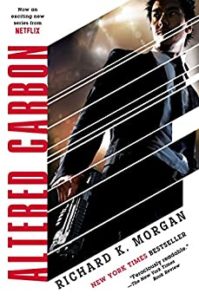
Book review: Altered Carbon

Book cover for Altered by RIchard K. Morgan

What is human consciousness? Is it an abstract concept, an ephemeral state, or a thing that can be captured and stored? If it’s a thing that can be stored, does that “thing” represent who we are? If that thing were put into another body, or a similar body, would we be the same person?

Based on my knowledge, modern science doesn’t have the answer to these questions. Fortunately, the lack of scientific evidence hasn’t stopped people from writing books about or based upon it.

A significant number of science fiction books I read treat the human mind as something that can be captured and stored. Depending on the book, that representation of the mind can live on inside a computer, or it can be placed into and/or transferred between bodies. Seeing how different authors explore the concept is an interesting thought experiment. It begs all sorts of questions such as is the stored representation really me? Will that representation realize it’s a copy? What are the ethical implications if multiple copies of me are active at the same time? It’s a long list that goes on and on.

Given that science fiction has a peculiar way of foreshadowing future technologies, it wouldn’t surprise me if some variation of these visions appear in the future, especially given the desire of those who want to live forever. My latest science fiction read to explore this concept was Altered Carbon by Richard K. Morgan.

Continue reading

Measuring Character

I was recently reminded of a post that came across my blog feed a while back by Dave Winer titled – “Your human-size life.” The entire post is worth a read, but the opening is great:

In the early years of this blog I wrote a lot about the personal struggles of people who had attained financial independence only to find out that it revealed that money was not what was standing in the way of happiness.

It’s a reminder that money is important, but it isn’t everything. Sure, we need it to live, but there is a point where it isn’t about how much you have.

Continue reading

Sourdough Lessons

Jar with the beginning of a sourdough starter

When I started my bread baking adventures a few months ago, growing my own starter was not on my radar. If anything, I was against it. It felt like so much work. The feeding, the maintaining. I didn’t want the responsibility. Even though one of my favorite books from last year made it sound like a lot of fun, I wasn’t convinced.

My curiosity got the best of me. After baking a number of loaves with commercial yeast, I wondered why people were infatuated with sourdough. Could sourdough loaves be that much better than what I was already baking?

I’m here to tell you yes, they are. They may not be worlds apart, but there’s a noticeable difference.

When starting out, it can be intimidating. How a simple mixture of flour and water (see picture above right) turns into an active concoction of live yeast is a marvel of nature. It’s also quite the science experiment, which I’m about 2 months into.

Here are a few lessons I learned in the process of growing a sourdough starter. This isn’t going to be about how to make one, or how to care for it. There’s plenty of how-to articles already out there.

Consider this a post to inspire you to grow your own starter or to press on if you’re struggling.

Continue reading

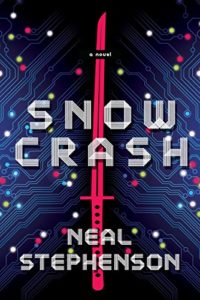
Book review: Snow Crash

Book cover for Snow Crash by Neal Stephenson

As part of my reading list for the year, I make it a point to include “classic” science fiction. I consider pretty much anything written prior to the year 2000 as classic.

One of the other elements I look for in these classic works is their ability to stand the test of time. I’ve read books from Asimov, Philip K. Dick, William Gibson, Peter Hamilton, Joe Haldeman, Orson Scott Card, and others. I find it fascinating how many things these authors foreshadowed in their novels that have come to pass or are close to happening. It’s even more amazing when you consider that some of these novels were written over 50 years ago, and some are even older!

For my latest classic science fiction read, I read Snow Crash by Neal Stephenson. A good friend and former colleague suggested I read Stephenson’s works, and he strongly recommended that I start with this one.

Continue reading