Making a goal is the easiest part of the goal setting process. Holding yourself accountable is the hardest part. I set out fitness and reading goals for 2014. So in the name of accountability, here is my progress at the halfway point of the year.
Book review: Wired
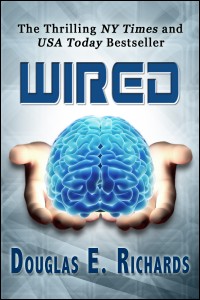
One way that I’ve been building my reading list is through the Amazon recommendation engine, which I lovingly hate. Wired by Douglas E. Richards is a book which had been consistently showing up in the recommendation lists, so I figured it must be worth checking out. The description fit into my science fiction themes, and the reviews were generally positive. It finally popped to the top of my list, and I was eager and excited to dig into it.
Migrating away from Rackspace
It’s been a slow month or so for keeping things updated on the site. There’s been a couple of reasons. First, my son’s high school graduation involved attending numerous events and entertaining a house full of out-of-town guests. Second, I decided it was time to make the move away from Rackspace and migrate the blog to Amazon’s EC2 service. Here’s why I decided to make the switch and some lessons learned in the process.
Book review: Lean UX – Applying Lean Principles to Improve User Experience
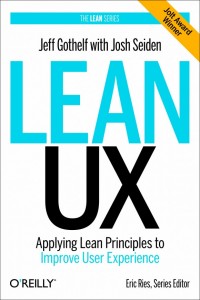
While I’ve been enjoying my reading binge over the last two years, particularly the science fiction parts, I’ve made it a point to mix-in business, or educational, books every so often. The latest one to make it to the top of my reading list was Lean UX: Applying Lean Principles to Improve User Experience by Jeff Gothelf with Josh Seiden. I’m always interested in continuous improvement and Lean UX seemed like it could be very applicable, especially given how much time I spend on user experience and user interface design.
UCSB ECE189 Capstone Project Day – 2014

Dr. John Johnson addresses the audience at the 2014 UCSB Captone Project Day
Last year, I had an opportunity to preside as a judge for the UCSB ECE189 Capstone project presentations. I had an incredible time, which I documented here, and was hoping that I would have the opportunity to do it again. Fortunately, my good friend and UCSB professor Dr. John Johnson asked me earlier this year if I’d like to judge the projects from this year’s class. Needless to say, I accepted.
Book review: Kill Decision
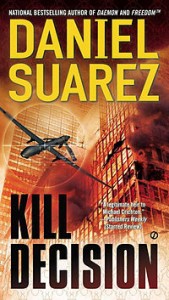
When I decided to get back into reading, one of the first books I picked up was the Daemon/Freedom book series by Daniel Suarez. I really liked it. Suarez did a great job of mixing near-term technology into an action-packed story that kept me on the edge of my seat. In fact, there were many evenings where I found myself staying up later than normal because I couldn’t put the book down. Because of how much I liked those books, I figured I should add Suarez’s next book, Kill Decision, onto my reading list for this year. I was pretty excited when it finally popped to the top of my list recently.
Should Apple support multiple platforms?
As we approach Apple’s WWDC event for this year, I am reminded of an article I saw on Engadget earlier this year titled, “Apple reportedly considering iTunes store for Android phones“. It was a surprising article given how Apple likes to lock customers into both its hardware and software ecosystem. However, it was one the of the smartest and boldest moves I’ve seen Apple consider in some time. While it’s possible that Apple could announce this at WWDC, it’s highly unlikely.
Book review: Who Owns the Future
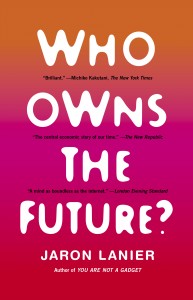
What if the promise of technology, to make our lives better, simpler, and more fulfilling, was a sham? What if the proliferation of technology destroyed the fabric of our society instead of improving it? In the book Who Owns the Future, Jaron Lanier examines the evolution of technology and how the current path of development is concentrating wealth and power in the hands of a few select companies and individuals. His contrarian viewpoint is eye opening, and the solution he proposes to move us to an alternate, more equitable path for society, makes for an interesting read.
Paying college athletes isn’t the answer
I had a chance to visit The Big House in Ann Arbor recently. I was visiting colleges with my son, Brad, and couldn’t resist checking it out since it was my first time in the area. To say I was blown away is an understatement. It’s a mammoth structure that is nice, really nice. It’s puts most professional stadiums I’ve been in to shame. As Brad and I walked around the outside of the facility, I couldn’t help but think about all of the noise about college athletics and whether or not the athletes should be paid. After seeing the sight of the Big House, it hit me. Universities have lost touch with their core mission.
Continue reading
Why aren’t we using mobile to solve credit card fraud?
Whenever I want to access my Dropbox account using their website, I have to use two-factor authentication to login. Two-factor authentication means that in addition to using my username and password, I have to enter a code that comes from my mobile phone. The code is either sent to me via text, or I can use a token generating application such as Google Authenticator. I also use two-factor authentication to access a number of other online accounts – some sensitive, some not. Anyway, it got me thinking, why aren’t we using two-factor authentication to solve credit card fraud?
Continue reading