When I was growing up, my parents taught me to be wary of strangers. “Don’t take candy from strangers” was ingrained in my memory. My parents also taught me to avoid dark alleys and the areas of town where danger lurked. They taught me how to stay safe in the real world.
While I’ve passed those lessons on to my children, a new danger has emerged. It’s the danger of the online world, of surfing the internet. It affects all of us, both young and old.
Criminals, who are always looking for ways to exploit weaknesses, have moved online to carry out their nefarious activities. Not only are the weaknesses easier to exploit on the internet, they are also easier to scale. In the real world, a thief has to rob a person or a store one at a time to make their money. They take the risk of doing it face-to-face hiding behind a mask. In the online world, a thief can write a script that can steal the credit card information for thousands of people at one time. The internet makes it easy for them to hide their identity and cover their tracks. They can also carry out their attacks from anywhere in the world, which can make it difficult to bring them to justice in the countries where the victims are located.
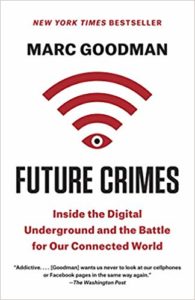
In Future Crimes: Inside the Digital Underground and the Battle for Our Connected World, Marc Goodman looks at how criminals are carrying out their online attacks, the risks posed by future technology, and what can we do to improve online security now and in the future.
Continue reading