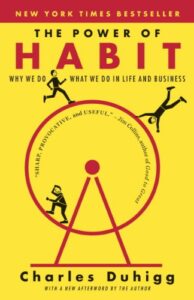
My best source for book recommendations are from those who I know well, whether they are family, friends, or close acquaintances. We talk about books enough that they have a good feel for the types of books that I might like. It’s also easy for me to figure out how to prioritize a book by how they describe it to me. It’s how I learned about The Power of Habit by Charles Duhigg. A couple of years ago, my daughter Courtney read it for one of her college classes and recommended it to me. She even went as far as to lend me her personal copy, which was an old school traditional hardback. Before we dive into this review, I only have one regret with this book – that I let it languish on my book shelf for the better part of two years before opening it up.
Continue readingShortcuts
Wouldn’t it be great if life had an easy button? Something you could press when you wanted to take the shortcut to success. Instead of putting in the time and effort to learn, to do the hard work, you could simply wish what you want into existence.
Unfortunately, life doesn’t work that way. It doesn’t seem like it from what you see on the internet, but what you read isn’t reality. These stories can generally be broken down into the following categories:
- The lies
Yes, whether you want to believe it or not, fake news is real. The story of the person who put in the hours is not interesting. People like to hear about the instant rags-to-riches stories. Unfortunately, most of these aren’t real. - The glamorized success story
While not a lie, some success stories are made to look like they happened overnight when they were actually years in the making. Following someone who’s plodding along isn’t interesting. What’s interesting is taking years of hard work and boiling down into the 5 minutes of fame YouTube video, which seems to be the limit of our attention span these days. - The long and winding road
While not popular, these stories are out there. They’re not fun because it shows that real success takes time, a lot of time. They take work, a lot of work. Not only is the reward worth the effort but so is the journey to get there. - Getting rich quick
Rare, but they do exist. They’re like the searching for Moby Dick. You can spend you’re entire life chasing the short path to success and miss out on the rewards that are part of the long journey.
So what’s my point? Life is a journey, and our reward is that journey. Instead of looking for the easy button, life is about putting in the time and effort, learning and growing every day, and committing to the hard work it takes to achieve lasting success. It’s both more rewarding and more fulfilling.
Don’t fall into the trap of searching for the easy button. It’s easy to do, and even if you do find it, you might be surprised that it’s not all that’s it cracked up to be.
Inspired by Seth Godin’s post, Chasing the cool kids. It’s worth the read, and some of the best advice I’ve seen on searching for shortcuts on the internet.

Book review: Veil
Eliot Peper is near the top of my current list of favorite authors. I’ve read most of his books, including the Uncommon Stock Series, Cumulus, and Bandwidth. I really like the way he weaves together mystery and suspense using present day technologies as a backdrop. So it was with high expectations that I read his latest work, Veil.
Continue readingThe Office of the Future
It’s been an interesting year for people who used to go into an office to work every day. The pandemic has forced almost everyone into a work from home (WFH) situation. With vaccination rates rising and infections starting to wane, companies are starting to mull over plans for returning to the office. It begs the question, what will the office of the future look like? Will it be a return to the way it was, or will companies ditch their office spaces en masse and embrace the WFH model?
Continue readingBook review: The God’s Eye View
In June 2013, Edward Snowden provided reporter Glenn Greenwald with top secret documents from the NSA. It was the first of many leaks Snowden would supply to various media organizations. Those leaks revealed both the breadth and depth of the US government’s surveillance programs.
The leaks ignited a firestorm of controversy. People were appalled at the amount of information the government was collecting from individuals around the world, including its own citizens. Reforms of surveillance programs were requested, demanded even.
Were these reforms ever implemented? We’ll never know.
One would be naive to think our government no longer collects people’s personal information, listens to their private conversations, or monitors their movements. I’m convinced the government is collecting even more data about us than when Snowden made his revelations.
Apparently, I’m not the only one who thinks this way. In his fictional novel, The God’s Eye View, author Barry Eisler explores how the government might still be collecting data on us, and the consequences of such a program if a megalomaniac happened to be in charge of the agency responsible for safeguarding that information.
Continue readingBaking: The Long and Winding Road
It’s interesting to see the path people take developing their skills, interests, and hobbies. I’ll read stories about those who are passionate about something and have focused intently on building a skill since they were little kids. They’ve written books, created television shows, maintain active social media channels, and have loyal fan bases. It seems so simple. Pick something. Focus on it. Become an expert.
I’ve rarely found that to be the case for me. I also doubt that it’s the case for most other people as well.
When I look back on my hobbies, it’s more of a long and winding road than a straight path to success. I find that I tend to dabble in lots of things, working on them here and there. I’ll accumulate knowledge and skill until it reaches a flashpoint. Then, out of nowhere, a spark comes along, and wham! I’m hooked.
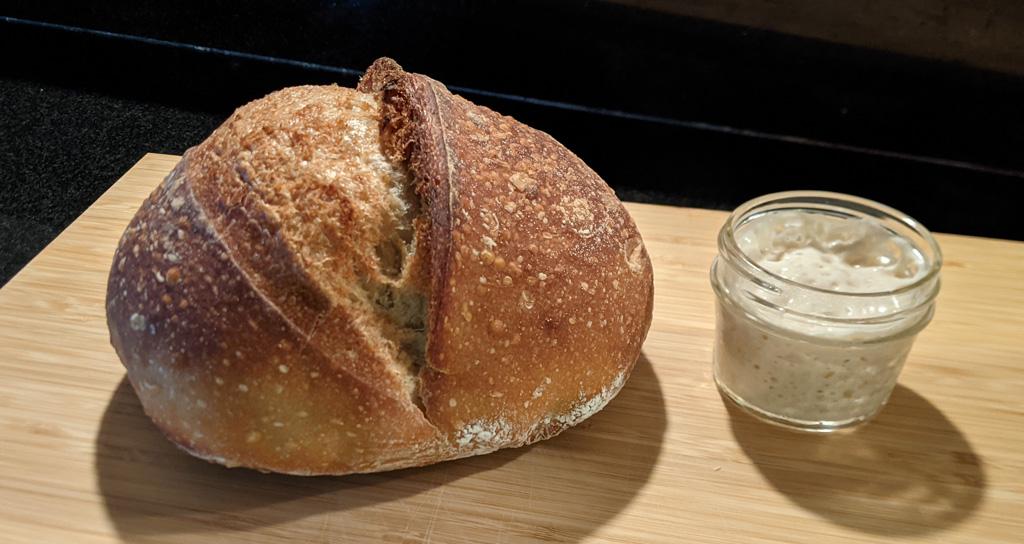
Such is the case with how I developed my passion for baking.

Book review: Systemology
When it comes to business books, I tend to drop them into one of 5 categories:
- Founder/CEO autobiographies – these are the glamorized stories told by the founder recounting their effortless journey to massive success.
- Founder/CEO biographies – these are told by a third party and go behind the scenes to tell the real stories of how a founder succeeded or failed.
- Company biographies – these describe how a business evolved from inception to success, demise, or to present day.
- Theoretical frameworks – these are those books that feel like college textbooks and are usually told by people who haven’t run a business but by researching successful businesses publish the common themes that led to their success.
- Practical handbooks – these are the books written by people in the trenches who have experienced the emotional highs and lows of starting a business, lived to tell about it, and then documented their findings into a handbook that others can use.
I find the books in categories two and three entertaining, and generally dislike those in categories one and four. Founder/CEO autobiographies feel too much like a self-congratulatory pat on the back, while theoretical frameworks are a slog that try to separate a framework from a complex business system. The resulting framework is hard to apply and rarely succeeds, especially when trying to apply it to a small business.
It leaves those books in category five, which I’ve really come to enjoy. I call these practical handbooks because they teach you straightforward concepts and give you suggestions on how to apply them in your business. In some cases, these suggestions are broken into steps you can follow to help get you started. Books like Allan Dib’s1-Page Marketing Plan and Donald Miller’s Building a Story Brand fall into this category.
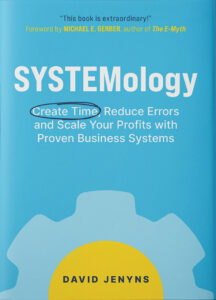
The latest book I read that clearly falls into the practical handbook category is Systemology: Create Time, Reduce Errors and Scale Your Profits with Proven Business Systems by David Jenyns.
Continue readingChanging Content Consumption Habits
Our lives right now are built around consumption.
A Learning a Day – February 12, 2018
Read it again. Slowly. Let it sink in.
I’m a big fan of Rohan’s Learning A Day blog. He does a great job synthesizing complex topics into powerful statements. In this case, his point is that “media companies have somehow convinced us that there are few things that matter more than staying up to date.” We are bombarded by content from emails, news articles, blogs, podcasts, social media, and television. There is so much coming at us that it’s impossible to stay up to date. As he would say, it’s a “fool’s errand.”
Believe me, there was a point in time where I bought into what the media companies were selling. I tried to stay up to date, and I failed. And out of the failure came a valuable lesson. Life is not about the amount of content you consume, it’s about the quality.
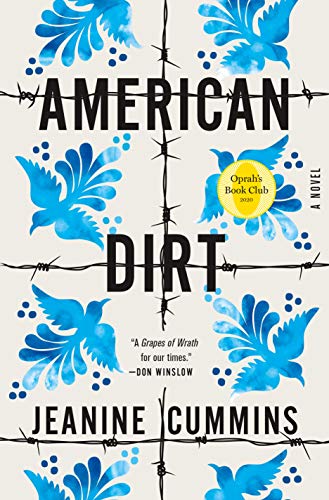
Continue readingBook review: American Dirt
The best book recommendations come from those who are closest to you. They are the ones who know you best. Since my two oldest daughters have started reading regularly, one of the side benefits has been getting book recommendations from them. For example, last summer Amanda recommended Recursion by Blake Crouch, which I really liked. Then, later in the year, Courtney recommended Lexicon by Max Barry, which I thoroughly enjoyed. As it turned out both books had been on my reading list, but their recommendations pushed them to the top.
So when both of them recommended American Dirt by Jeanine Cummins, a book that wasn’t previously on my radar, I didn’t just add it to my reading list. I put it at the top. I figured it deserved priority treatment since they both suggested I read it.
Needless to say, I wasn’t disappointed.
Continue readingWe need to do our part
This is a follow-up, or unofficial part 2 if you will, to my earlier post – We must do better before it’s too late.
Even if you haven’t watched the movie The Social Dilemma, which I would highly recommend by the way, you know that users are being exploited on the internet. It’s no secret that social media, news, and many other types of websites and mobile apps make money selling their users’ data. If we know this, why do we keep giving it to them?
Yes, the website owners, app developers, and software engineers bear a lot of the responsibility, but it’s not all their fault. We, as users, bear a lot of the responsibility by enabling them. So long as we are willing to trade our data for “free” software, the owners and producers will continue exploiting us for their gain. It’s like a person addicted to smoking blaming the cigarette makers for their poor health. Yes, the cigarette makers are responsible. But, if one knows smoking is bad for you, why would one keep doing it?
Giving away our data and engaging in questionable online behaviors are bad for us. It’s time for us to “just say no” and change our internet and overall software habits.
Continue reading