The first, and only, William Gibson novel I’ve read is Neuromancer. It’s been nearly five years since I read it. I don’t remember a lot of details about the book. What I do remember is that I liked it a lot, and I was impressed by the amount of technology foreshadowing in the novel. The immersive cyberspace environment and human augmentation concepts that he wrote about back in 1984 were way ahead of their time. Those seemingly far-fetched concepts are close to becoming a reality today, if not here already.
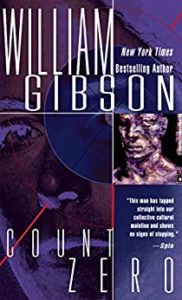
Ever since finishing Neuromancer, I’ve wanted to read more of Gibson’s works. It’s taken a while for some reason or another, but I finally got around to it. So, for my second venture into Gibson’s extensive library, I choose to read the follow-up to Neuromancer, Count Zero.
One of my goals for this year is to be more present, to live in the moment. It’s a recurring theme in my meditation practices, and, as I recently wrote about, one I consistently struggle with. I have a tendency to get wrapped up in my thoughts, whether it’s about the past, the future, or my latest work project. These distractions can keep me from being fully present and engaged in the now.
So what do when I’m struggling with something? I research and read about it.
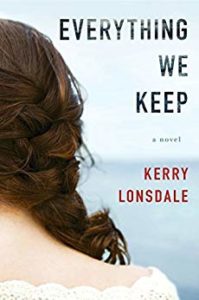
My favorite reading genre is science fiction, which you already know if you frequent my blog. However, every once in a while, I’ll step outside my comfort zone and read something a bit, well, different. Such was the case with Everything We Keep by Kerry Lonsdale.
Clearly, the book does not fit into the science fiction category. There is no mention of sentient robots, super-intelligent AI, space travel, or alien beings. In fact, there is pretty much no mention of any technology whatsoever. If anything, it fits into the romance genre, which I don’t like much and rarely read. But you know what, I liked Everything We Keep, a lot. I’m not afraid to admit it, and here’s why.
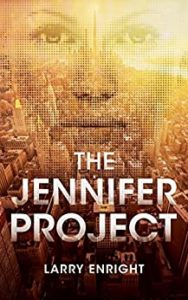
My reading list is downright crazy. There are over 220 books on my “Want to Read” list on Goodreads. I do my best to prioritize the list every year, but even then a book can sit on it. Such was the case with The Jennifer Project by Larry Enright.
I first came across the book in March, 2017. I’m almost positive it came through an Amazon recommendation or one of their daily deal emails. The description looked good with numerous references to artificial intelligence (AI), so it fit in with my favorite reading genre – science fiction.
I put the book on my 2018 reading list, but it was pretty far down the queue. I moved it up considerably in 2019, but still wasn’t able to get to it. It finally made it up to the top of this year’s list, and I finished it last month.
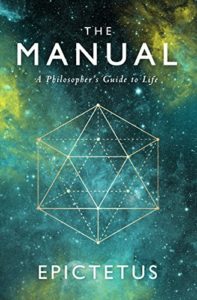
For most of my life, I had no interest in studying philosophy. Studying philosophy evoked images of college professors wearing corduroy jackets with elbow patches, smoking pipes, sitting around contemplating the meaning of life. The subject felt way too theoretical for me. I was always interested in the subjects of math and science where you were presented with problems and challenged to find the answers.
My attitude toward philosophy changed two years ago when I was encouraged to read The Daily Stoic by Ryan Holliday and Stephen Hanselman. Seeing how the writings of philosophers who lived 2,000 years ago were just as applicable today fascinated me. I learned a lot exploring each of the daily readings and was interested in learning more about Stoicism.
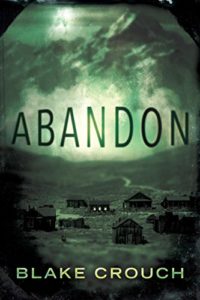
One of my favorite authors is Blake Crouch. Ever since reading the Wayward Pines trilogy, I’ve made an effort to keep at least one or two Crouch novels in my reading list at all times. So far, I haven’t met a Crouch novel that I didn’t like.
Abandon was the latest book of his that I read. It’s written in classic Crouch style. He doesn’t waste anytime drawing you into the story. He builds the characters on the fly. There’s also a lot of time shifting, which is another characteristic of his writing. There’s also a lot that’s different, which I liked.
I would consider myself a follower of Seth Godin. I discovered his blog over 10 years ago and have been a daily reader ever since.
Seth has also written a lot of books on marketing and business, but I hadn’t read any of them. I might be changing my tune after recently reading The Bootstrapper’s Bible.
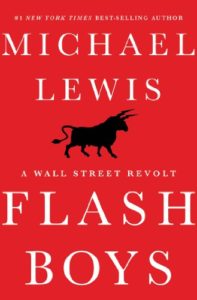
Modern crime has become a lot more sophisticated. Back in the day, as my grandfather liked to point out, Jesse James used a gun to rob people. Today, in the age of computers and the internet, people hide behind terminals and sophisticated algorithms that do their dirty work for them. It also allows them to steal on a much larger scale.
In Flash Boys: A Wall Street Revolt, author Michael Lewis exposes how money was stolen from both sophisticated and average investors shortly after the economic collapse of 2008. That crimes were committed and money stolen is not all that shocking. Bad actors are everywhere, and Wall Street is no exception. What’s shocking is who the bad actors were in this case. They were the investment firms, trading firms, and big, household name banks that we trust to do the right thing with our money.
Imagine waking up tomorrow morning in your house or apartment. You are going about you’re morning routine – making coffee, eating breakfast, watching the morning news. There is an unexpected knock at your door. You answer and are greeted by group of uniformed men. They enter your house, uninvited. Two of them immediately bind your hands behind your back while the others gather the other members of your family – your spouse, your children, other family members living with you. You are led out to a truck without the opportunity to gather any of your personal effects. They put you and your family in the back, where you see other people you recognize from your neighborhood. You are led to a train station where you are separated from your family and placed into a crowded cattle car. The car is enclosed so you cannot tell where you are going. At your destination, you are shaved head to toe, sprayed down, and given rags for clothes. For the foreseeable future, your life involves limited food, limited sleep, and hours of forced manual labor. All of the modern amenities you enjoy have been taken away from you – no cell phone, no internet, no email, no social media, no television. You have no connection to the outside world. Your only connection is to the guards and other prisoners who are in your camp.
Sound far-fetched and unbelievable? It isn’t.
Such was the fate of many Jews across Western Europe during the Second World War. They were rounded up, removed from their normal every day lives, and taken as prisoners by the Germans. They were separated from their families, subject to inhumane living conditions, and forced into performing manual labor in support of the German war effort. Many of those who were taken prisoner were doctors, lawyers, and other professionals. They were hard-working, law-abiding citizens who had done nothing wrong.
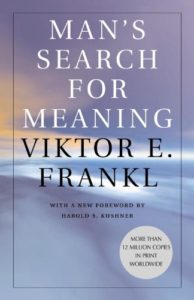
Remarkably, some survived these conditions. One of the survivors was Viktor E. Frankl, and his book Man’s Search for Meaning documents his experience in the concentration camps. More importantly, Frankl talks about how he survived, what the experience taught him about himself, and what he learned about man’s existence. His experience inspired the formulation of logotherapy, the methodology that he used as a basis for psychological treatment.
Reading a short story is different than reading a long form novel. The author has a limited amount of pages to develop characters and explore a topic. It means there are usually fewer characters, the pace of the plot tends to be faster, and the author leaves it up to you the reader to fill in more of the details. In a well written short story, the ending is typically a stunning plot twist or reveal – the more unexpected the twist, the better. It’s not unusual for the ending to be abrupt, lacking closure. One gets to use their imagination to create their own ending, or to debate possible endings with others who have read the book.
Some are put off by this format, but I like it, a lot.