Category Archives: Must Reads

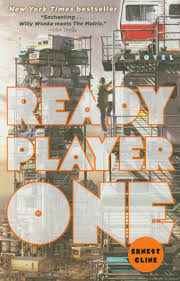
Book review: Ready Player One

Ready Player One by Ernest ClineFor my first book of the year, I chose Ready Player One by Ernest Cline. It fit with one of my reading themes regarding futuristic, dystopian versions of the future with an interesting twist. The story contains a lot of references to 1980’s pop culture, with a particular emphasis on video games of the era. Since I grew up during the eighties and spent a lot of time during my junior high and high school days on an Atari 2600, Colecovision, Commodore 64 and various TRS-80 models, I figured it would be an interesting read as well as a nostalgic trip down memory lane.

Continue reading

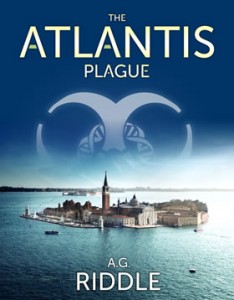
Book review: The Atlantis Plague

The Atlantis Plague: A Thriller by A.G. RiddleWhile browsing for my next read, I noticed that The Atlantis Plague by A.G. Riddle was available. Since I liked The Atlantis Gene a lot, I figured the sequel would be worth reading. The reviews were overwhelmingly positive, and it didn’t hurt that I could “borrow” it from the Kindle lending library. That was an added bonus.

Continue reading

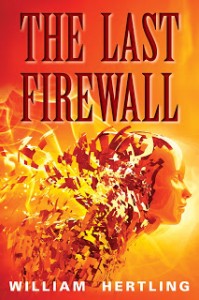
Book review: The Last Firewall

The Last FirewallHaving read Avogadro Corp. and A.I. Apocalypse, the first two books in the Singularity Series, it was with great excitement that I picked up The Last Firewall by William Hertling. I wasn’t disappointed. I highly recommend it, especially if you’ve read the first two books.

Hertling does a great job in The Last Firewall of building upon the story arc he introduced and developed in the first two books. In particular, I like how he ties all three books together through the characters and the technology. It would be possible to read The Last Firewall without picking up the first two books, but I wouldn’t recommend it. The story won’t make as much sense, the technology won’t be as believable, and the characters won’t be as deep. To get the most of out of the series, you need to read all three in order starting with Avogadro Corp.

Continue reading

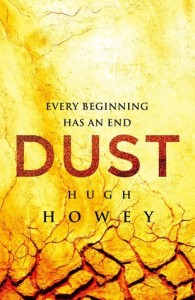
Book review: Dust

Dust by Hugh HoweyAfter finishing Shift, I had to wait almost seven months for Hugh Howey to finish the conclusion to his Silo series, Dust. It was a long seven months, but it was worth the wait. Dust is just as good as Wool and Shift, and Howey brings the Silo story to an end that fills in the holes and questions that were raised in the first two books. It should go without saying that if you read the first two books, you’ll want to pick up Dust.

Continue reading

Book review: Atlantis Gene

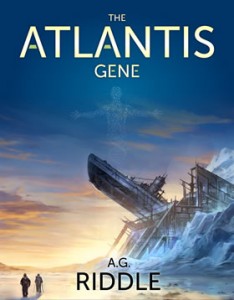
The Atlantis Gene by A.G. RiddleThe Amazon recommendation engine contains a bottomless pit of suggestions, especially after you fill it up with enough purchases. Since I’ve been on a reading binge this year, the book recommendations have been coming faster than ever, and they’ve gotten better (which is why I “hate” the engine). One of the latest recommendations I received was for The Atlantis Gene by A.G. Riddle. It was the trifecta of Amazon recommendations – the description looked interesting, it had received an overwhelming number of positive reviews, and I could borrow it through the Kindle lending library. Obviously, I loaded it up.

Continue reading

Book review: Terms of Enlistment

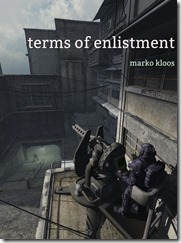
Terms of EnlistmentIn searching for my next entertainment novel, I stumbled across Terms of Enlistment by Marko Kloos. Given that I could read it for free via the Kindle Owners’ Lending Library, I figured that I’d give it a try. I’m glad I did.

Terms of Enlistment paints a dystopian view of the future. America’s major cities have deteriorated into welfare slums where people have no way out unless they are selected by lottery to colonize other planets, or they join the military. In the case of Andrew Grayson, he decides to join the military to escape the slums of Boston.

Continue reading

Book review: Nexus

Nexus by Ramez NaamThrough the wonders of the Amazon recommendation engine, the next science fiction book that caught my eye was Nexus by Ramez Naam.

Nexus has a fascinating plot. A nano drug has been created that permits people to link their brains together wirelessly. The effect allows people to tap the powers of the brain to do amazing things, or extremely nefarious activities depending on the intentions of the user.

Continue reading

Book review: Ender’s Game

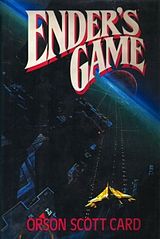
Ender's Game by Orson Scott CardOn my sci-fi reading binge over this year, Ender’s Game by Orson Scott Card appeared on my Amazon suggested reading list. I’d heard about it through a number of sources as a classic science fiction book, saw that the movie was coming out this fall, and figured it was worth reading.

Fortunately, I was right.

Ender’s Game is classic science fiction. It’s set in a future where Earth has fended off an attack by aliens due to the heroic efforts of a battle commander named Mazer Rackham. In an effort to defeat the alien force, the Earth’s countries have formed an alliance to preemptively strike them. To achieve their objective, they’ve decided that training exceptionally bright children for battle are their best hope.

That’s where Ender, whose full name is Andrew Wiggins, enters into the plot. He is a highly intelligent child who has the stigma of being a “third”, meaning that his parents had him in violation of Earth’s two child policy. Besides being picked on by his older brother, he is also ostracized at school. His older sister tries to protect him, but after an altercation at his school, he is drafted into service by the International Fleet.

It is at this point where the action begins, and the story gets intense. I don’t want to spoil the plot, but I will tell you that Card does a great job of keeping you engaged throughout the book while using Ender’s teachers as well as his brother and sister to demonstrate the flaws and misgivings of our society and humanity in general.

I was captivated by the story and thoroughly enjoyed the book. So much so, that I’m not certain whether I’ll see the movie or not. The special effects look awesome, and they’ve certainly enlisted a great cast with Harrison Ford and Ben Kingsley, but I’m concerned how true they can stay to the story. For one thing, Ender starts the story as a six year old and is only ten during his time at Command School. I’m not sure the movie will be able to accurately portray his youth, which is an integral part of the overall story in my opinion.

By the way, Card continues the story of Ender in subsequent novels. I believe there are five in total. I’ve not decided whether I will continue onto the next book in the series. While I thoroughly enjoyed the first installment, it’s difficult for me to envision how Card can maintain the same action and intensity throughout the series given the outcome of the first.

Anyways, I would put Ender’s Game in the must read category and highly encourage anyone who is remotely interested in the movie to make sure they read the book first. It’s a great read and will let you experience the story the way Card intended it without any adaptations that may have been required to turn it into a feature film.


Book review: Brave New World

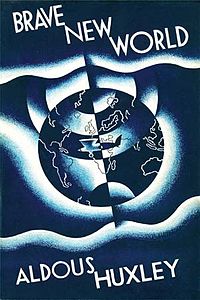
Brave New WorldAfter reading Neil Postman’s Amusing Ourselves to Death, I was drawn in to reading Brave New World by Aldous Huxley. Unlike many, I wasn’t required to read it during high school, and Postman’s numerous references and comparisons to how prescient Huxley was piqued my curiosity about what could possibly be in it.

Knowing that the book was required high school reading, that it was written in the 1930’s, and that it was branded a classic, I approached the book cautiously, figuring I’d be bored to tears and struggle to move from page to page. To my surprise, Huxley’s work blew me away.

In addition to confirming all of Postman’s observations, I found the overall story to be deep and suspenseful. I had a hard time putting the book down and finished it in a surprisingly short amount of time.

I was captivated by the plot and amazed at the parallels between events in the book and the trajectory our society is on. Huxley does an amazing job of portraying how humans could be controlled by overwhelming their sensory input with so many conveniences, technology, and distractions, that they have no reason to think independently. When you consider how much of our life is controlled today by the technology around us, whether it is our computers, tablets, mobile phones or television, and how everyday diversions such as sports and entertainment influence our lives, it makes one wonder which direction we are heading – the Orwell state where the government controls us through constant surveillance, or the Huxley state where the government controls us by premitting us to be overwhelmed with diversions and distractions. Or as Postman put it

In short, Orwell feared that what we hate will ruin us. Huxley feared that what we love will ruin us.

Brave New World is a must read book, especially after reading Postman’s Amusing Ourselves to Death. Even if you read the book in high school, after reading Postman’s work, you will see Huxley’s work in a different light. It will make you ponder and consider just what the advent of all of this technology around us is really doing to our lives.

Book Review(s): Wool and Shift

Wool by Hugh C. HoweyAfter mowing through Daniel Suarez’s Freedom, I was casually browsing my Kindle for new material when a recommendation for Wool by Hugh Howey popped up. I had recalled an article on Brad Feld’s blog, and since his other recommendations had turned out so well, I figured I’d give it a try. It didn’t hurt that the first book in the series was free, so what did I have to lose other than a little time.

I found myself cruising through the short story in a little over an hour, which is pretty good for me since I’m not the fastest reader in the world. The book was an intriguing character study about a civilization that is relegated to living underground but has a fascination with the outside world that they cannot venture into without paying a substantial price – their life.

At the end of book one, Howey gives you a preview of Book 2 in the series, which gets you hooked into buying it, for the steep price of $0.99. In the second book, Howey paints an even deeper and more vivid picture of the underground environment, the politics of operating the silo (as its called) and the implied class system that has emerged. The imagery, the details, and the characters leave you wanting more, and by the end of Book 2, you’re ready for Book 3, which means you’ll be buying Book 4 and Book 5. At the end of the day, you’re probably best of just getting the Omnibus edition from the outset and saving yourself the angst of whether you’ll continue buying each book in the series, and save a dollar in the process.

Shift by Hugh C. HoweyAfter finishing Wool, you’ll be ready to jump into Shift. Again, it’s a series of short stories, three in total, but I would recommend buying the Omnibus edition again as you’ll find yourself reading all three in no time.

Shift is the prequel to Wool, but make sure you read Wool before Shift, or you’ll miss out on the brilliant story-telling of Howey and the genius with which he brings the story arcs of the two books together.

In addition to the connection between the two series, I also liked how Howey introduces pieces of hard science fiction into the Shift story. It helps to explain a lot of the background and events of Wool, but it’s done in a way that keeps you on the edge of your seat page after page. It’s truly amazing how he is able to connect the two books, and I give him a lot of credit for keeping the events of the two stories in sync. I’m sure they exist, but I’d be hard pressed to find any holes in the stories from the two books.
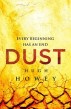
Dust by Hugh C. HoweyWool and Shift are in my must read category. Put together, it’s a great story, it’s very well written, it’s easy to read, and it’s very enjoyable. To top it off, Howey is in the process of releasing Dust, due out this month, which is the conclusion of the Silo story, so I’m sure you can guess what’s up next on my reading list.