Book review: Bandwidth

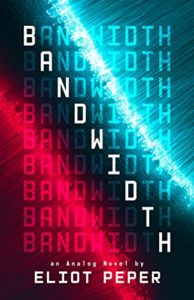
Book cover for Bandwidth by Eliot Peper

I enjoy discovering authors, especially those who are somewhat new and under the radar. It provides a great source of new books for my reading list that I can generally trust. Every year, I like to have a book by these authors on my list.

I don’t have a long list of these authors. Names that come to mind are Hugh Howey, William Hertling, A.G. Riddle, Blake Crouch, and Daniel Suarez. There are also classic authors like William Gibson, Isaac Asimov, and Philip K. Dick.

I expect that I will soon be adding Eliot Peper to the list.

I first discovered his work in 2015 with the Uncommon Stock trilogy. I liked that trilogy, so I read his follow-up Cumulus, which was also quite good. When Bandwidth was made available for free through Amazon Prime’s First Reads for April 2018, it was an easy decision to grab a copy. It took me a while, but I finally got around to reading it at the end of last year.

Continue reading
Book review: Mastery

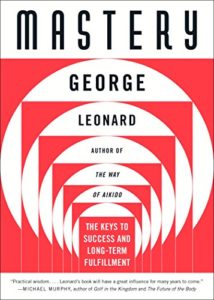
Book cover for Mastery by George Leonard

For my last morning read of 2019, I chose Mastery by George Leonard. Mastery was regularly referenced in other books I’ve been reading as part of my personal development journey. When it showed up on The Learning a Day blog that I follow, I knew it was time to move it up towards the top of my reading list.

Mastery was originally published in 1992, almost 30 years ago. Personal development books typically follow the latest trends and fads. I try to stay away from those and stick to the classics that stand the test of time. The question is, was Mastery one of those classics or just a book that built off the trends of its time?

Continue reading

Is your time spending you?

“Either you’re spending your time. Or your time is spending you.” – Seth Godin

I’m reminded of the classic story where you are given a magical bank. Each day it puts $86,400 into your bank account, but there’s a catch. (There’s always a catch, right?)

At the end of the day, whatever you don’t invest, whatever you don’t give away, whatever you don’t spend, it vaporizes. It goes away without anything to show for it.

If you were granted this magical account, what would you do with it?

I’m sure most of us would blow it on ourselves, but eventually, that would get old (or then again, maybe not). We would start to find ways to invest it in future opportunities. And once we experienced the joy of spending it with and giving it to others, we would start spending it with and giving it to those around us. Eventually, we would realize that every dollar is precious and would make certain that we were getting the most of every dollar, every day.

Where am I going with this?

Continue reading

Book review: Company Town

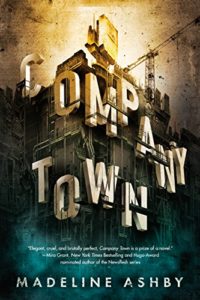
Book cover for Company Town by Madeline Ashby

Each year, I like to put books by authors I haven’t read on my reading list. It keeps my reading fresh, keeps me from falling into a rut, and best of all, I usually discover an author or two each year that I want to get more familiar with.

One of the new authors on my reading list last year was Madeline Ashby. Her books Company Town and vN appeared repeatedly in my Amazon recommendations and through my other book recommendation sources. Since her writing falls squarely into my near-term science fiction interest, adding one of her books to my list was an easy decision. For my first selection, I chose to read Company Town.

Continue reading

Book review: Ark

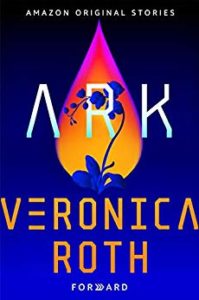
Book cover for Ark (Amazon Forward Series) by Veronica Roth

I’m a fan of the short story format. It’s impressive when an author tells a captivating story with well-developed characters in a condensed number of pages. I’ve also found it a great way to explore new authors to get a feel for their writing style.

So in the breaks between books on my reading list, I’ve been working through the short stories in the Amazon Forward series. I’ve read four of the six stories, and recently finished the 5th – Ark by Veronica Roth. If the author sounds familiar, she wrote the Divergent series of books that was made into a series of movies starting back in 2014.

Continue reading

Planting trees

“A society grows great when old men plant trees whose shade they know they shall never sit in” – Greek proverb

I’ll admit it. There are a lot of things in life that I take for granted. Here’s a few of them:

  • Turning the handle on a faucet and having clean water come out
  • Flipping a switch to light the darkness
  • Driving my car on well-maintained roads
  • Heating my house during the cold winter months
  • Having access to a wealth of information through the internet

I could continue on, but you get the point. The common thread in this list of amenities is that they are the result of infrastructure built by those before me. At some point, people made decisions to put their time and effort into building things that were bigger than themselves. They had the foresight and took the initiative to build something that would not only benefit them and their direct descendants but also society as a whole.

Continue reading

Book review: Don’t Just Roll the Dice

Book cover for Don't Just Roll the Dice: A usefully short guide to software pricing

No, this isn’t a book review about gambling. although it tends to be the way most companies price their product, especially when the product is software. Why is that?

Pricing a software product is a difficult, challenging task. The problem is that the cost of software doesn’t lie in making another copy. The marginal cost to make an additional unit is effectively zero. The internet has eliminated the cost of distributing it. So if production and distribution are free, what makes software so expensive?

It’s the cost of the people required to develop, market, and sell it. These elements add up quickly and can get very expensive.

In Don’t Just Roll the Dice, Neil Davidson addresses the difficulties pricing software. And as the subtitle states, it is a ‘usefully short guide to software pricing,’ with the operative words being short and software.

Continue reading

Hearing something regularly doesn’t make it true

Do you know what the “illusory truth effect” is? It’s our tendency to treat a false or misleading statement as fact after repeated exposure. You see, as humans, we tend to take shortcuts when assessing if what we hear is true or not. Instead of racing out to collect facts, we evaluate statements based on prior knowledge and how familiar we are with them. Researchers have shown that people who are exposed repeatedly to statements, even when false, are more likely to believe they are true.

How does this work you ask? Let’s take a look at a specific example.

Continue reading

Book review: The Five Dysfunctions of a Team

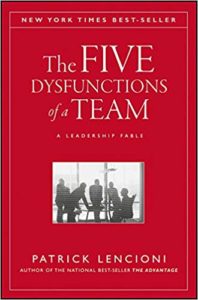
Book cover for The Five Dysfunctions of a Team: A Leadership Fable by Patrick Lencioni

If you’ve been following my latest business book reviews, you’ll notice they’ve been mostly of the storytelling type. They include The Energy Bus, The Go-Giver Leader, and Get A Grip. I like business books written in this style. They’re much easier to read than business books written like academic textbooks. They’re more entertaining, obviously. Best of all, when they’re written well, I learn from them.

Therefore, it should come as no surprise that my latest business book read was also of the fable variety. My nemesis, the Amazon recommendation engine, has clearly figured me out. It suggested The Five Dysfunctions of a Team by Patrick Lencioni, multiple times. I finally relented, purchased the book, and added it to my reading list.

Continue reading