
Please, please stop the TV integrations

I look forward to CES every year. I’ve been to a few shows in the past, but even when I don’t go, I like seeing and hearing about the new products that are in the works.

I didn’t attend this year’s event, and I’m kind of glad I didn’t. I wasn’t very impressed by what was announced or demonstrated. Maybe I’m getting older, or maybe my “impress me” bar is set a little too high. Either way, I didn’t see anything that got me excited (here’s a quick rundown of some of the top products as covered by Wired).

There was one disturbing trend that continued from last year’s show – the continued emergence of smart TVs. For example, Google, with partners Sony, Sharp and TP Vision (Philips), announced the integration of Android TV into televisions. As I wrote after last year’s CES, I don’t want a smart TV. I want a 4K television that provides the clearest and sharpest picture at a reasonable price. I don’t want it to be smart. I can provide that on my own.
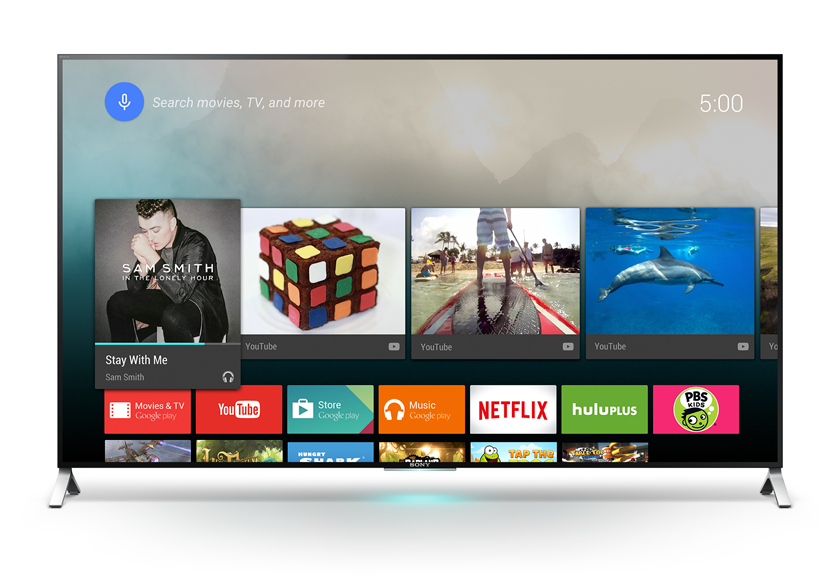
Sony Android TV

There was a great article written by Darren Orf at Gizmodo titled “3D TV Is Dead. Let’s Hope Smart TV Is Next.” It’s worth the read, and he’s right on. In case you don’t have time to read it, here are a few high points from the article:
Continue reading
Book review(s): User Stories

Running a software development business, I am always looking for ways that we can improve. We use agile development concepts to manage our projects, but I felt like we weren’t getting the most out of the agile methodology. In an attempt to get better , I decided to pick-up a book on user stories. It’s one of the basic philosophies of agile development that makes it different from other development methodologies such as classic waterfall and requirements method.

My quest to read one book turned into reading three. In this post, I’m going to do a brief review of each book, and at the end, I’ll share what I learned about user stories and the agile development methodology by reading all three books.
Continue reading

Kicking off Startup Lessons

One of my blogging goals for this year is to start a new category about business, startup and bootstrapping lessons I’ve learned while running my own business over the past ten years. I realize that there are many sites out there that cover business and startups. I’m sure I’ll repeat some lessons learned, but I may also share a few new ones. In short, I’m doing it to share my experience and as a way to collect all of the things I’ve learned in one place.

For the first entry, I want to review “The Men Who Built America“, an 8-epsiode mini-series that was on The History Channel recently. It is the story of the first American capitalists who built businesses in the aftermath of the Civil War. It chronicles the rise of railroad tycoon Cornelius Vanderbilt, oil magnate John Rockefeller, steel mogul Andrew Carnegie, financier J.P. Morgan, inventor Thomas Edison, and auto pioneer Henry Ford.

Continue reading

Installing DD-WRT on the TP-LINK TL-WR841N

I finally got frustrated with the wireless coverage in my house last year. I have my FiOS wireless router in the garage, because that’s where the cable comes into the house. Plus, my house is wired, so I can keep my switches, NAS, and other networking gear out of sight there. I also got frustrated that the Chromecast I have kept getting dropped from the network. Since the wireless router was over 6 years old, it was time for an upgrade.

Now I love the Verizon FiOS service, but their equipment policies stink. They want $100 to upgrade to the latest router, which uses wireless-N technology and supposedly extends the range of the wireless network. I figured there had to be a cheaper, and possibly better way.

TP-LINK TL-WR841NA friend of mine recently extended his network with a TP-LINK TL-WR841N router. He suggested loading on the open source router firmware, DD-WRT. The router is $20 on Amazon, and since I like working on tech projects, I figured it was worth a shot.

I found plenty of information that helped with the loading of the firmware, but the rest of this post will detail my experience setting up the router. Below are instructions and a few photos should you want to put DD-WRT on a TP-LINK TL-WR-841N router.

Continue reading

Book review: The Mythical Man-Month – Essays on Software Engineering

The Mythical Man-Month by Frederick P. Brooks, Jr.Like a fine wine, some books just get better with age. Examples that I’ve read are Brave New World (Aldous Huxley – 1931) and Amusing Ourselves to Death (Neil Postman – 1985). Both books are just as relevant now as they were when they were written, if not more so. I recently completed The Mythical Man-Month: Essays on Software Engineering (Anniversary Edition) by Frederick P. Brooks, Jr. It was first published in 1975, and updated in 1982. The anniversary edition, which I read, was published in 1995 and added four extra chapters. Even though material in the book is almost 40 years old, it’s just as applicable in today’s software development environment as it was back when it was written.

There are so many nuggets of wisdom in the book, that it would be impossible to cover them all in one blog post. I just wouldn’t be able to do them justice. However, here are a few points that I found quite interesting.

Continue reading

The dependency begins

For some reason, I can still remember the moment clearly. I was in my late twenties. I had just moved into a marketing role. I was at a breakfast meeting with our sales team at the beginning of multi-city road trip in Dallas. The question came: “Would you like a cup of coffee?” I replied quickly, “No, I don’t drink coffee.” I received an incredulous look. The response, “You will. You can’t survive on the road without it.”

I had tried coffee before but didn’t like it. I couldn’t get over the taste. I was also concerned I would turn into one of the “coffee zombies” I saw around the office. They couldn’t start their day without woofing down two cups, and then needed three or four more cups to get through the rest of their day. I didn’t want to be one of them.

I made it a point to stay away from coffee. To fit in with the coffee drinkers, I made tea my drink of choice. It worked. Even with the proliferation of Starbucks, I stuck with teas – either straight up or as a tea latte. Life was good.

Continue reading

My 2015 reading list and goals

I had a goal last year to read 25 books, 20 of which were supposed to come off my 2014 reading list. As far as number of books went, I succeeded and read 27. Unfortunately, I only got through 19 on my list. I was halfway through book number 20 when the ball dropped.

Still, it was a good year for reading. I’ve enjoyed it so much the last two years, that I decided to up the level of difficulty this year. I’m going to make an effort to read 35 books, which equates to about 3 per month. I’ve also upped my reading list from 20 to 33 books.

Continue reading

Books to read in 2015

In 2014, I read 27 books. I realize that some people may read that many over a month or two, but it was a lot by my standards. I had a goal to get through a list of 20. and I managed to finish 19 of them. Only 8 jumped the queue during the year.

Based on the books I read, here are my recommendation to seed your reading list for 2015. There’s a mix of fiction, non-fiction and business books on the list. The fiction books are going to tend toward the science fiction genre, and the non-fiction/business books will lean towards technology readings. Even if you’re not into science fiction, I’d still suggest picking up a couple of the books on this list. They’re just that good.

I’ve also segmented this year’s list into general recommendations, specific business book recommendations, books I found interesting that aren’t in my Must Reads category, and a couple of recommendation reminders from last year, just in case you didn’t read them yet.

With that out of the way, here’s my recommended reading list for 2015.

Continue reading