Book review: Terms of Enlistment

Terms of EnlistmentIn searching for my next entertainment novel, I stumbled across Terms of Enlistment by Marko Kloos. Given that I could read it for free via the Kindle Owners’ Lending Library, I figured that I’d give it a try. I’m glad I did.

Terms of Enlistment paints a dystopian view of the future. America’s major cities have deteriorated into welfare slums where people have no way out unless they are selected by lottery to colonize other planets, or they join the military. In the case of Andrew Grayson, he decides to join the military to escape the slums of Boston.

Continue reading

Companies are not rational entities

During my time of despair after Google decided to kill Reader, one of my favorite bloggers, Michael Mace, wrote a great article titled “Google Logic: Why Google Does the Things it Does.” As with most of Mace’s articles, it’s a long read, but very well written, insightful, and thought-provoking.

In the article, Mace theorizes on why Google does a lot of things that it does, like killing products that people love (e.g. Reader), buying Motorola, and even things like the evolution of Google Docs. He does a great job of showing how the corporate culture and actions & egos of the founders influence how and why Google does what it does. He also points out what he sees as Google vulnerabilities, why their competitors (Apple, Microsoft, Facebook, and others) succeed against them, and how those same competitors can continue to do so going forward.

The most important point he makes in the article is not about Google. Near the beginning of the article, he states:

…it’s a mistake to assume there’s a logical reason for everything a company does. Sometimes managers act out of fear or ignorance or just plain stupidity, and trying to retrofit logic onto their actions is as pointless as a primitive shaman using goat entrails to explain a volcano.

In my opinion, what he’s trying to say is that companies are not rational entities.

For whatever reason, we on the outside want to believe that a company is led by rational decision makers who use nothing but data and quantitative factors in their decision-making process. Unfortunately, having personally been involved in key decisions at a large company, most are driven more by ego, emotion, politics and inertia than quantitative factors. That’s why we are regularly frustrated when Google kills are favorite product, Apple fails to announce an updated Apple TV or smartwatch, HP does nothing with WebOS, Microsoft flubs Windows 8, and so on.

To put it another way, companies are not designed to make intelligent rational decisions. Their job is to satisfy stakeholders (employees, customers, investors) and to keep the company running smoothly, which sometimes involves stroking the egos of key employees, reacting emotionally to competitive pressures, or playing corporate and industry politics. It’s why I believe Mace’s article is spot-on and a must read for anyone who wants to understand corporate dynamics. He breaks down the qualitative factors that are most likely playing into Google’s decision making process and strategy. It will help you understand why companies are not rational entities.


Book review: Nexus

Nexus by Ramez NaamThrough the wonders of the Amazon recommendation engine, the next science fiction book that caught my eye was Nexus by Ramez Naam.

Nexus has a fascinating plot. A nano drug has been created that permits people to link their brains together wirelessly. The effect allows people to tap the powers of the brain to do amazing things, or extremely nefarious activities depending on the intentions of the user.

Continue reading

Looking in the Mirror

I’m a fan of Neil Postman’s work. His book, Amusing Ourselves to Death: Public Discourse in the Age of Show Business, is an incredible work, and not just for the concepts it covers. It’s most amazing accomplishment is that is was written 30 years ago and is more relevant today than it was then. I’ve already read the book and written a review on it, and I consistently recommend it to everyone I interact with.

So you may be wondering why I’m writing about it again.

Well, in the midst of the government shutdown earlier this month, a close friend of mine, Jeff Turner, wrote an incredibly thought-provoking blog entry entitled, “The Illusion of Knowing Something”. In it, Jeff references Postman to support his point that, in this country, we value “the appearance of knowledge, not actual knowledge”. To say you’d be doing yourself a disservice by not reading Jeff’s post is an extreme understatement. I implore you to read it. It’s short, sweet, and to the point. (If I only had a fraction of his writing talent…, but that’s a post for another time.)

As a Postman fan, I completely agree with Jeff. On the whole, we have become lazy. We rely on the media and others to summarize complicated issues into 5 second sound bytes so we can feel informed. We regurgitate these sound bytes to support and defend our views. Few of us are genuinely interested in researching the issues on our own to formulate our own opinions, and those who do are accused of wasting their time. The end result is the situation we find ourselves in today. A government that is more interested in winning the war of public support through sound bytes and imagery rather than serious debate over what is really in our best interests.

I mean, seriously, how many of us would be willing to sit through a 6 hour unbiased recap of the Patient Protection and Affordable Care Act. (Frankly, as Jeff points out, I’m not sure how many of our elected officials would be interested in doing that.) Instead, we’re content to get a summary from CNN, Fox News, Jon Stewart, or our favorite news outlet, which aren’t designed to inform us. They’re designed to entertain us in the name of ratings so we continue to tune in the next day, the day after that, and so on.

So the next time you find yourself complaining about the ineffectiveness of the politicians we’ve elected, especially those in Washington, remember that we are all to blame for what’s happening. Until all of us decide to spend the effort to educate ourselves on the issues shaping our future and form our own opinions, our destiny will be determined by those who job it is to entertain rather than inform us. It’s a decision that will not only affect us today but also affect our country for generations to come.


Book Review: Cyberstorm

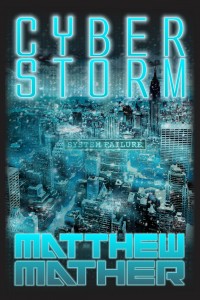
CyberStorm by Matthew MatherAs part of my recent reading binge, I’ve taken a liking to hard science fiction books and tech thrillers. The description for Cyberstorm by Matthew Mather fit both of those areas, so I decided to pick it up (it didn’t hurt that it was also available at a special promotional price of $0.99).

The brief plot description, without giving too much away, is that an electronic attack on the country’s infrastructure grinds New York City to a halt just as a series of major snowstorms is about  to hit. From there, the story’s chief protagonist, Mike Mitchell, has to team up with other members of his apartment to fight for his, his family’s and his friends’ survival.

While the overall premise of the story is plausible, there were a number of elements of the book that bothered me to the point of making the story unbelievable:

  • The description of the series of storms that hit the city are described as though they come out of the movie “The Day After Tomorrow”I could understand one big storm of that nature, but I can’t recall a series of storms of such devastation hitting the east coast in a long, long time, if ever. Piling additional storms on top of one another wasn’t necessary for Mather to get his point across.
  • The string of bad luck that Mike Mitchell runs across gets tiring. Every time he runs into a situation that you think can’t get worse, it does. It feels like you are reading the story line for a B-rate horror movie. On the other hand, it does keep you reading just to see if the guy can ever catch a break.
  • I also found the level of paranoia exhibited by Mitchell and the other main characters to be exaggerated. Again, it takes a good story to the point of becoming unbelievable. Primarily, people who exhibit that much paranoia generally don’t survive catastrophic situations very well, particularly when they begin to distrust all those around them and begin looking out only for themselves.

Overall, I wouldn’t recommend the book. It turned out there wasn’t enough in the way of hard science fiction to satisfy my taste, and the tech thriller side of things felt more like a low budget horror movie. There’s much better apocalyptic cyber thrillers out there that contain a better description of the technology behind cyberattacks as well as a more engaging plot. For example, I’d recommend Daemon by Daniel Suarez or Zero Day by Mark Russinovich before Cyberstorm.

Book Review: Spin

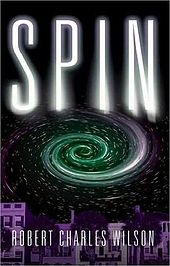
Spin by Robert Charles WilsonFor my next dive into science fiction, I chose to read Spin by Robert Charles Wilson. Spin was published in 2005 and is the opening of a three part  book series that includes Axis and Vortex.

The premise behind Spin is very intriguing. The earth has been placed in a “spin membrane” which slows time down for the inhabitants of earth while the universe continues to age naturally. On the surface, this seems like a story line that would be hard to develop, but Wilson does a great job of stretching your imagination to grasp the ramifications of a universe that ages faster than earth as well the possibilities it presents.

The primary character in the book is Tyler Dupree, who, when the book opens, is struggling through some sort of illness which Wilson chooses not to explain. Through the liberal use of flashbacks, it becomes apparent why Tyler is sick and how he fell ill. Wilson also uses the flashbacks to explain how and why the “spin membrane” was put around the earth.  To divulge any more would spoil the book as it is full of plot twists that keep you guessing as to how the present relates to the past.

I wouldn’t put the book into my must read category, but I found it very entertaining. It’s a fun recreational read that will keep your imagination engaged while Wilson explores deeper issues around human nature, particularly around issues such as greed, power and religion. As mentioned at the top, there are two follow on books, Axis and Vortex, that expand upon the original story, but I got my fill with Spin and intend to pass on the sequels for the time being.

Aging, a state of mind

I recently came across an article on the Blackstone Blog titled Blackstone’s Byron Wien Discusses Lessons Learned in His First 80 Years. There are 20 lessons in total, some which are obvious, some which are good rules to live by, and others which are personal observations and opinions. I highly recommend that you read the article as there are takeaways for people of all ages. Anyway, the article got me to thinking about my philosophy towards aging.

I’ve been lucky enough to know a few octogenarians and nonagenarians. From my observations and interactions with them, I’ve come away convinced that age is a state of mind. Those who choose to stay active and have a positive outlook on life live a far better quality of life than those who have chosen to give up. There are four key items, in order of importance, that I’ve noticed these “old-timers” do that I’ve tried to integrate into my lifestyle:

  1. Stay physically active
    In a book titled “Younger Next Year“, internist Dr. Henry Lodge explains how the body is designed to destroy itself. When one is young, the signals to build and regenerate the body are strong and occur naturally, but they weaken with age. Through his research, Dr. Lodge has found that regular physical activity helps alert the body to rebuild itself. Therefore, it becomes more important to stay physically active as you age to counteract the weakening of your body’s natural regeneration signals. I don’t know how accurate the theory is, but it certainly make sense to me.
  2. Stay mentally active
    Your mind is no different than the muscles in your body. It needs exercise in order to stay sharp. A number of Mr. Wien’s lessons are directly related to staying mentally active, such as his suggestions to read regularly, to travel extensively, and to look for ways to do your job better every year.
  3. Stay socially active
    Like it or not, humans are pack animals. We require social interaction and membership in group(s) in order to maintain our mental health. Think about it. If you’re like me, the best times in your life have always be with groups of people – typically family, friends or both.
  4. Everything in moderation
    What you put into your body is important, really important. You become what you eat, so if you are always filling your body with junk, well, your body will turn into junk. Now, I’m not saying that you should avoid all junk foods, sweets, red meat, or alcohol, but I am a firm believer in moderation. There’s nothing wrong with enjoying an occasional treat, just try to avoid over indulging.

Will following these four principles allow you to live forever? No. Unfortunately, we aren’t designed to live forever, and I haven’t been around anyone who has. The idea here isn’t to figure out how to live forever, but how maintain a reasonable quality of life as we age.

Will following these four principles guarantee good health? No. There are no guarantees in life, particularly when it comes to your health. It all comes down to one variable that none of us control, our genetic code. The genes we are born with have a large influence over our health. So even if you were to live the perfect life, bad genes could still cause you to suffer health issues. However, doing these four things will give you the best chance to overcome any health issues, or at least make them more bearable.

My philosophy on aging is to stay physically active, stay mentally active, stay socially active, practice moderation, and incorporate lessons learned from elders around me, including some of the 20 from Mr. Wien so I can live a more fruitful, productive and enjoyable life.

Book review: Fahrenheit 451

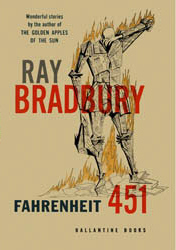
Fahrenheit 451Since I was so blown away after reading Brave New World, I was inspired to read the Ray Bradbury classic, Fahrenheit 451. Much like Brave New World and 1984, Fahrenheit 451 is about the effects of government control and censorship on society.

The story focuses on Montag – a fireman whose main focus isn’t to fight fires, but to start them. In order to control information and its dissemination, the government has banned books. Anyone found in possession of them is subject to having their house burned to the ground by the fire department.

Montag has become disillusioned with the societal distractions his wife engages in, which involves heavy doses of television and drugs. He becomes fascinated with the people who hide and defend the books he is ordered to destroy. As such, he begins secretly hoarding books from the houses he is sent to destroy, and therein lies the main plot line of the story.

I’ll admit the story is a classic, but I found it a tough read. Unlike Brave New World, which I found captivating and intense, Fahrenheit 451 felt like it went on forever before getting to the point. In other words, it felt like some of the assigned reading from my high school English classes.

While I can’t recommend reading this book, there was a valuable takeaway for me. Towards the end, Montag is befriended by individuals who have been labeled outcasts for their love of books and knowledge. Montag is speaking with one of them, named Granger, who says:

“Everyone must leave something behind when he dies, my grandfather said. A child or a book or a painting or a house or a wall built or a pair of shoes made. Or a garden planted. Something your hand touched some way so your soul has somewhere to go when you die, and when people look at that tree or that flower you planted, you’re there. It doesn’t matter what you do, he said, so long as you change something from the way it was before you touched it into something that’s like you after you take your hands away. The difference between the man who just cuts lawns and a real gardener is in the touching, he said. The lawn-cutter might just as well not have been there at all; the gardener will be there a lifetime.”

So while I found Bradbury’s work disappointing on the whole, the message in it is profound. That message is not to accept what we are told is right or wrong, or what we should do, but to have the courage to create our own way. Or, in the words of Granger, one should be a gardener rather than a lawn-cutter. The gardener will be remembered, the lawn-cutter won’t.

Am I the only one not excited about Google Glass?

There’s a lot of buzz these days about “wearable” technology. From things like Google Glass to smartwatches, they seem to be popping up everywhere. While wearables may be the future of technology, I’m not all that excited about them.

As tech pundit Robert Scoble, a Google Glass fanatic, has pointed out, there are a lot of conveniences a wearable offers. He talks about how easy it would be to buy things or get directions to a local coffee shop by just saying it. It all sounds great, but I think he and the other proponents are neglecting to point how selfish these devices are and what the cost is to those around them.

The ability of these devices to capture photos and videos without one’s knowledge or consent seems to be a really big issue that is not being addressed. With past technologies, society has implemented norms and laws regarding the capture and transmission on one’s recorded likeness or voice. For example, I’m not legally permitted to record a phone conversation without the other party’s consent. Even photos and videos are subject to privacy laws surrounding broadcast and retransmission.

To put it bluntly, I’m not comfortable with the proliferation of these devices before the moral, ethical and legal ramifications have been discussed, which it seems as though everyone wants to sweep under the rug.  As another example, take a look at this article by Gizmodo author Leslie Horn who was at the Galaxy Gear smartwatch launch. She was able to take video and snap photos of someone without them noticing. Not only is it creepy, as she points out, but it seems invasive. At least if she was pointing her phone at them, they’d have some reason to believe that she was capturing my actions. With the watch, it can be done very discreetly.

On top of the privacy concerns, there’s also the whole government/NSA/PRISM monitoring debate. I’ve already written my piece on these programs, and these devices certainly aren’t going to allay my concerns about them. In fact, it only further fuels my concern as we head deeper into Brave New World territory where the government doesn’t have to develop the tools to monitor us, we’re happy to give up our freedoms away and do it to ourselves. I can already see the justification for future privacy invasion – “it’s not different than what people are already doing with Google Glass.” How convenient.

I guess my point is that just because we can doesn’t mean we should. Yes, a wearable computing device does have its uses. I can clearly see how it could be helpful in surgical applications, educational settings, or other industrial applications. However, that doesn’t mean that we should use it in social applications. I can easily see why most bars, nightclubs, and other social gathering areas would want to ban these devices. It would certainly curtail the mentality of “what happens in Vegas, stays in Vegas”.

I fear that we continue to create technologies that satisfy our own personal indulgences and make our lives more convenient at the expense of future generations. It makes me wonder whether our generation will be remembered as the one that created technology to improve our lives or to strip us of our humanity.

Book review: Ender’s Game

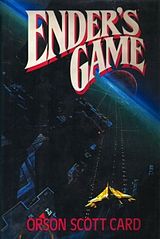
Ender's Game by Orson Scott CardOn my sci-fi reading binge over this year, Ender’s Game by Orson Scott Card appeared on my Amazon suggested reading list. I’d heard about it through a number of sources as a classic science fiction book, saw that the movie was coming out this fall, and figured it was worth reading.

Fortunately, I was right.

Ender’s Game is classic science fiction. It’s set in a future where Earth has fended off an attack by aliens due to the heroic efforts of a battle commander named Mazer Rackham. In an effort to defeat the alien force, the Earth’s countries have formed an alliance to preemptively strike them. To achieve their objective, they’ve decided that training exceptionally bright children for battle are their best hope.

That’s where Ender, whose full name is Andrew Wiggins, enters into the plot. He is a highly intelligent child who has the stigma of being a “third”, meaning that his parents had him in violation of Earth’s two child policy. Besides being picked on by his older brother, he is also ostracized at school. His older sister tries to protect him, but after an altercation at his school, he is drafted into service by the International Fleet.

It is at this point where the action begins, and the story gets intense. I don’t want to spoil the plot, but I will tell you that Card does a great job of keeping you engaged throughout the book while using Ender’s teachers as well as his brother and sister to demonstrate the flaws and misgivings of our society and humanity in general.

I was captivated by the story and thoroughly enjoyed the book. So much so, that I’m not certain whether I’ll see the movie or not. The special effects look awesome, and they’ve certainly enlisted a great cast with Harrison Ford and Ben Kingsley, but I’m concerned how true they can stay to the story. For one thing, Ender starts the story as a six year old and is only ten during his time at Command School. I’m not sure the movie will be able to accurately portray his youth, which is an integral part of the overall story in my opinion.

By the way, Card continues the story of Ender in subsequent novels. I believe there are five in total. I’ve not decided whether I will continue onto the next book in the series. While I thoroughly enjoyed the first installment, it’s difficult for me to envision how Card can maintain the same action and intensity throughout the series given the outcome of the first.

Anyways, I would put Ender’s Game in the must read category and highly encourage anyone who is remotely interested in the movie to make sure they read the book first. It’s a great read and will let you experience the story the way Card intended it without any adaptations that may have been required to turn it into a feature film.