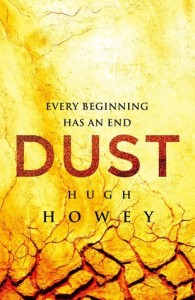
After finishing Shift, I had to wait almost seven months for Hugh Howey to finish the conclusion to his Silo series, Dust. It was a long seven months, but it was worth the wait. Dust is just as good as Wool and Shift, and Howey brings the Silo story to an end that fills in the holes and questions that were raised in the first two books. It should go without saying that if you read the first two books, you’ll want to pick up Dust.
My first mini-ITX build
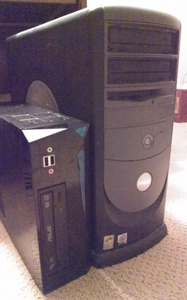
I’ve been extremely pleased with my last PC build. It’s been working so good that I figured it was time to replace the oldest machine in my house – a Dell Dimension that I bought in 2002. The old machine still works great given what it’s used for – primarily email, web browsing, and light document editing. I’ve just gotten tired of waiting the five minutes it takes from power on to ready-to-use. In addition, I figure at 11 years old, the machine is probably an accident waiting to happen given that I’m still on the original hard drive.
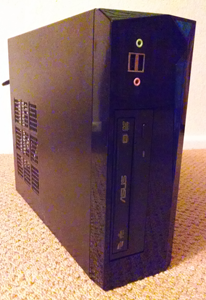
About the only thing I would have done differently with my latest build was go smaller. Therefore, I chose to go with a mini-ITX form factor for my latest build. Since I was planning on using the integrated graphics on the CPU, there really wasn’t any reason to go with a bigger case.
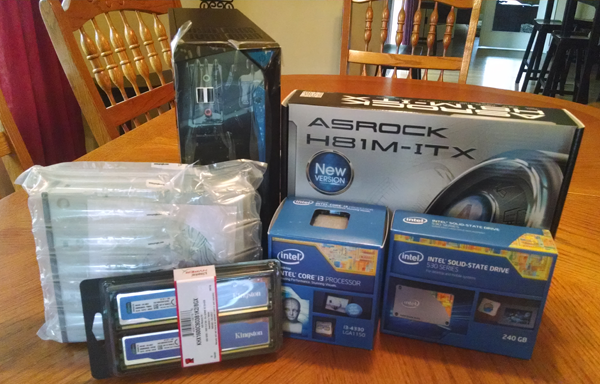
As usual, picking the components is the hardest part of the project. Here’s the list of components I ended up buying, along with their price (excluding tax and shipping):
| Processor | Intel Core i3-4330 | $146.19 |
| Motherboard | ASRock H81M-ITX | $69.99 |
| RAM | Kingston Hyper X Blu 8GB (2 x 4GB) | $64.99 |
| SSD | Intel 530 Series 240GB | $149.99 |
| Optical Drive | ASUS DVD-Writer DRW-24F1ST | $15.99 |
| Case | In-Win 200-Watt Mini-ITX case (incl. power supply) | $44.99 |
| Monitor | ASUS VS248H-P 24-inch Full-HD LED Monitor | $119.99 |
| Operating System | Windows 7 Home Premium | $79.99 |
| Total Component Cost | $692.12 |

I got quite a few killer components all for under $700, including the SSD (which I won’t build another machine without). I’ve had the machine running for about a week, and it works just as well as the rig I built back in March. Power on to operational only takes about 15 seconds, and I haven’t noticed any limitation using the onboard graphics given what it is being used for.
Here are some more notes from the build:
I’m re-using the keyboard and mouse from the current machine, so I didn’t include them in the cost of the components.- I could have saved money by reusing the monitor, but $120 was too good a deal to upgrade from an old school 19-inch LCD monitor to a 24-inch widescreen LED monitor.
- I could have also saved by using an Ivy Bridge Intel processor, but since I figure this PC could be in operation for 7-10 years, I wanted to use the latest Haswell architecture.
- Since I don’t anticipate doing much media viewing or editing on the machine, I chose to go with 8 GB RAM and skipped the Blu-ray drive. I can always upgrade later if necessary.
- I stayed with Windows 7 for this build. I wanted to keep the interface more familiar to the less technically inclined in my house. Plus, I’ve heard that Windows 8 works better on touch screens. Otherwise, it doesn’t offer an improvement over Windows 7. I also decided to go with Home Premium since I didn’t the need the extra features in Professional.
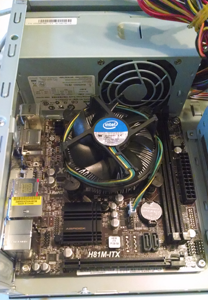
- This is the first build using an ASRock motherboard, and I was pleasantly surprised with the ease of use and quality. I’ll definitely consider them for my next PC build. About the only drawback on the motherboard, and this is not a knock against ASRock, is that there are only two SATA connections on the board. I had to use one for the DVD drive and one for the SSD, so I couldn’t have included an HDD, even if I wanted.
- I was a little hesitant with the In-Win case given the price, but so far it’s been great. The case is high quality, and no complaints with the power supply (yet). I also like the fact that a chassis fan was included, and there is a mesh opening directly over the CPU to help with the cooling of both the CPU and motherboard. I’ve also found the sound level of the fans to be very reasonable. I wouldn’t say it’s whisper quiet, but it’s not annoying either.
I’ve been spending most of the last week transitioning the key files and programs from the old machine, which has served the family quite well over the years. It’ll be sad to see the old beast go, but it was time. I have a feeling that within a couple of weeks, none of us will realize its gone. In fact, I bet we’ll be wondering why we didn’t upgrade to a new machine sooner!
Book review: The Startup Playbook
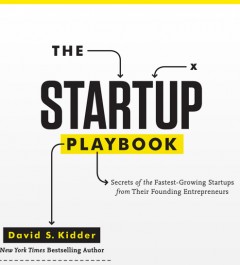
It had been a while since I last read a business book (The Wide Lens by Ron Adner). I was looking to find a little inspiration to get me through to the end of the year, so I decided to pick up The Startup Playbook by David Kidder. To be fair, I wouldn’t consider The Startup Playbook a book. It’s a collection of interviews that Kidder has with successful entrepreneurs in which he lets them offer up their best advice for startups. At the end, Kidder provides “The Best Advice”. It’s a collection of excerpts from interviews in the book divided into “The Best Advice” categories such as Boards, Business Operations, Culture, Leadership, Marketing, Raising Capital, Sales and more.
Kidder interviews over 40 people for the book. Some of the notables included are Steve Blank, Matt Blumberg, Jeff Bussgang, Steve Case, Chris Dixon, Reid Hoffman, Ben Horowitz, Tony Hseih, and Elon Musk. Overall, I found the quality of the interviews and advice varied widely. Some were hard to get through, while others left me wanting more. Of the 40+ interviews, a couple that stood out to me were the interviews with Elon Musk and Chip Conley.
Musk’s story stood out due to what drives him. As he puts it in his interview:
I’ve always treid to be involved in things that will impact the future of humanity and have a good effect on the world. I wasn’t necessarily thinking about whether my ideas were the best way to make money.
I also found he had one of the best pieces of advice in the book:
I’m always surprised when people think they can make a great company without having a great product. The most important thing an entrepreneur can do is focus on making a great product or service.
I found the interview with Musk to be inspiring and only wish that it could have gone a few more pages. It also gave me a whole new respect for ventures he is involved in and his desire to truly make a difference in the world.
The reason I enjoyed Conley’s interview can be summarized in one word – passion. It’s obvious that Conley’s passion is to “create joy”, as he puts it. He has taken an idea that the industry downplayed, the boutique hotel business, and transformed it with Joie de Vivre Hospitality. As with Musk’s interview, I found it inspirational as it spoke to the passion that I recognize one has to have to build a successful business.
The other thing that I got out of The Startup Playbook were pointers to further reading and resources. A few new books made it to my ever expanding Amazon Wish List which I hope I will be able to get to at some point in 2014.
I like reading stories and lessons learned from other entrepreneurs, particularly if it can help me to learn and understand what it takes to succeed or how to avoid making the same mistakes others have made. However, as I mentioned earlier, I found The Startup Playbook to be of mixed quality and wouldn’t put it into my must read category of books.
If you’re interested like I am in reading entrepreneur stories and about lessons learned, I recommend that you pick up Founders At Work by Jessica Livingston first, and then The Startup Playbook. The overall quality of Founders At Work is better, and the interviews are more focused on the entrepreneurs and their stories. I also liked that Livingston focused on both successful and unsuccessful ventures as well as those of varying sizes.
Grandma’s apple pie recipe
One of my favorite memories growing up was going to my Grandma’s house after she baked her homemade apple pie. I can still remember the smell in her kitchen, and there was nothing like the taste of warm apple pie fresh out of the oven.
My mother, who is a great cook in her own right, took over my Grandma’s apple pie recipe. She can, and still does, make a pretty mean apple pie herself. I’d be hard pressed to choose which one I like better – Mom’s or Grandma’s.
In any case, I decided a few years ago that it was time for me to start learning how to make Grandma’s apple pie myself. On one of my mom’s trips out to Southern California, she brought the recipe and assisted me on my first try. It was good, but not like what I remembered.
Since then, I’ve made a few pies, but the one I recently baked over Thanksgiving came out best. It’s the closest I’ve come to matching my mom and grandma’s work. I still need more practice, but I figured I’d share my variation of the recipe along with a few secrets I’ve learned so far.
Book review: Atlantis Gene
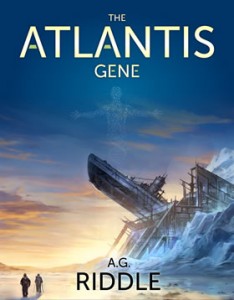
The Amazon recommendation engine contains a bottomless pit of suggestions, especially after you fill it up with enough purchases. Since I’ve been on a reading binge this year, the book recommendations have been coming faster than ever, and they’ve gotten better (which is why I “hate” the engine). One of the latest recommendations I received was for The Atlantis Gene by A.G. Riddle. It was the trifecta of Amazon recommendations – the description looked interesting, it had received an overwhelming number of positive reviews, and I could borrow it through the Kindle lending library. Obviously, I loaded it up.
My favorite time of the year
Now that we’ve made it through Black Friday, I’m ready to jump into my favorite time of the year. I am NOT a fan of Black Friday and all the hype leading up to it, but I absolutely love the four weeks between Thanksgiving and Christmas. I know that it stresses some people out, but I see it a fun and enjoyable time.
For starters, I thoroughly enjoy listening to Christmas music. As soon as I finish Thanksgiving dinner, I’m ready to start playing my Christmas playlists, CDs, , Pandora, and Sirius-XM holiday stations. I wish I could list all of my favorite tunes here, but there are just too many. I don’t know what it is, but Christmas songs are timeless classics for me.
Second, I really enjoy building up the anticipation of Christmas with the family. This time of year can be such a fun time for the kids, and I try to make sure they see it this way. I want them to enjoy so they will be able to impart the same feelings sense of excitement to their families when they get older.
Perhaps, most of all, I enjoy the get togethers and parties that mark this time of the year. It’s so much fun to get together, spend time with friends and family, and enjoy good food and drink. Even though I see my friends throughout the year, spending time with them over the holidays is even more special to me.
Finally, this time of year is a good time to reflect on the past year and get ready to start fresh in a new year. I like to live by the motto of learning from the past, living for today, and dreaming about tomorrow. In other words, I don’t dwell on the past, but I like to take what I can from the past year and apply to the next year to improve upon whatever areas need work. I’m not sure yet what I’m going to choose to focus on next year, but I’m pretty pleased about how this past year turned out. Hopefully, I’ll feel the same way next year at this time!
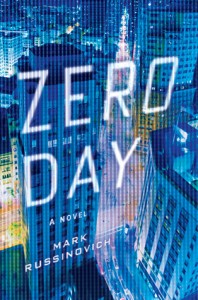
Book Review: Zero Day
After being a bit disappointed with Cyberstorm by Matthew Mather, I decided to read Zero Day by Mark Russinovich. Zero Day is similar to Cyberstorm in that both books are stories about computer viruses gone wild that wreak havoc and destruction on the computer infrastructure of the United States.
Zero Day starts out by describing a series of apparently unrelated computer glitches. One of these glitches threatens to bring down a major New York City law firm, so their IT department calls upon Jeff Aiken to identify and fix the problem. Aiken has a history in IT security, as well as a history working within the IT groups of various government intelligence agencies. Aiken ends up calling in a couple of favors from one of his former government colleagues, Daryl Haugen, an attractive government IT security specialist who is investigating the source of these unrelated computer glitches.
Through their work together, they discover that the glitches are related. What ensues is an action packed trek across the globe to identify the source of the virus and stop those behind it before they unleash destruction on the infrastructure of both the United States and the world at large. It’s a page turner that is full of action and suspense that I found hard to put down.
Unfortunately, the chase to stop the virus only takes up the last third of the book. The first two-thirds of the novel is slow developing and was difficult for me to power through. Sure, some of it helped to build up to the ending, but there were a couple of gratuitous violence and sex scenes that felt unnecessary and loosely connected to the story. It was like scenes you see in a movie that are purely inserted for visual entertainment but serve no real purpose in moving the story forward.
That being said, I found Zero Day to be much better than CyberStorm. While Zero Day moved a little slower at the beginning, the story felt more believable than the surreal catastrophic picture that Cyberstorm painted. It also got into more of the details and explained the science behind computer viruses, which I enjoyed.
I wouldn’t put Zero Day in my must read category, nor would I recommend putting it at the top of your reading list. However, if you’re interested in being entertained while learning about the risks and effects that a large scale computer virus attack could have our infrastructure, then Zero Day is one of the best books out there. Let’s just say that it was good enough that I’ve put the second book in the series, Trojan Horse, on my reading list for next year.
Analyzing the cost of the triple play
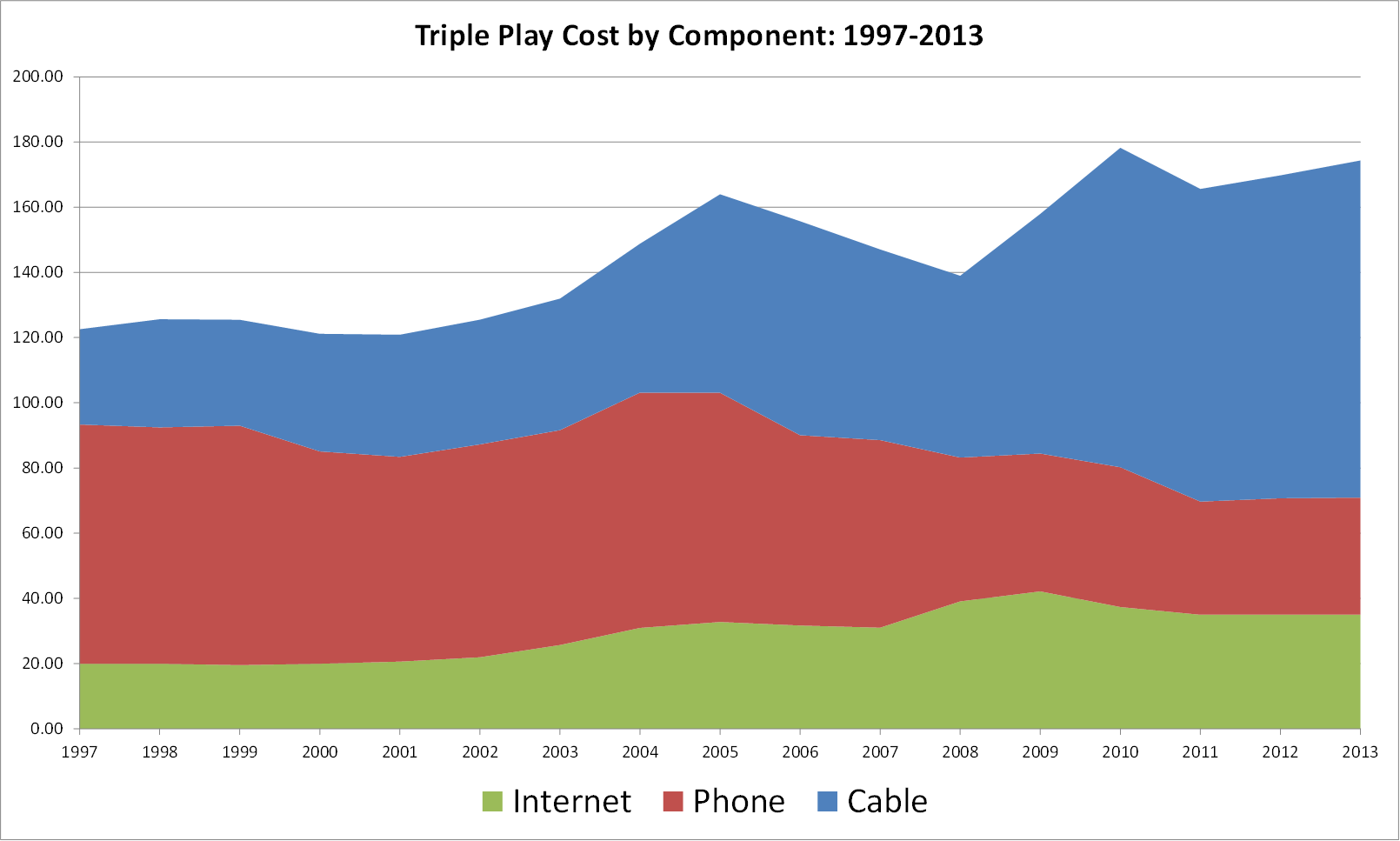
As a fun exercise using the magic of Quicken, I created a graph of my triple play cost (phone+cable+internet) since 1997. Even though the data was collected in monthly intervals, I averaged the cost annually to smooth out fluctuations, which were especially prevalent in the phone data pre-2008 when long distance phone calls were still being charged by the minute.
Analyzing the triple play cost
What the data shows us is not a surprise, and I suspect that is indicative of what is happening in most households. The overall cost of the triple play has increased ~50% over the last 15 years from $120/month to $175/month. However, it’s not the total cost of the triple play that’s noteworthy. It’s trends in the individual components that are interesting. Namely,
- The value of landline phone service is declining
The cost of phone service has been cut in half over the last 15 years and will continue to drop, eventually reaching zero. I’m not surprised given that I rarely use my landline. I’m paying $30/month to rent a phone number to give to telemarketers. When I look at my children, who have grown up with a cellphone as their primary means of communication, I doubt any of them will ever pay for landline service in their lifetime, which portends the end of landline service as we know it in the not too distant future. - Advances in internet service have far outpaced the cost
Once could argue that paying $20/month for unreliable 56kbps internet service that was metered by the hour was ridiculously overpriced, but it is the baseline. Compare that to paying $35/month for a pipe that is reliable, is always on and delivers 15Gbps, and it’s clear that internet service is a bargain these days, a HUGE one! Stated more bluntly, the service is infinitely more reliable and over 250,000 times faster. If speed and cost were directly proportional, I should be paying over $5,000,000/month for internet service today. As it stands, internet costs haven’t even doubled over the last 15 years. - Cable’s cost increase doesn’t match it’s value proposition
While the number of channels I receive has increased from 70 to over 600, the number of channels I watch has changed from 10 to about 15. I’m paying over 3x the amount for a service whose value proposition hasn’t changed significantly. If you were to cut off my cable service tomorrow, I might miss watching sports and a few Seinfeld reruns, but other than that, I’m not sure I’d notice. On other hand, if you were to turn off my internet service, I’d be reaching for my checkbook.
What the analysis tells us
- Cord-cutting is not a fad
Disputes over content distribution, like the one that happened between Time-Warner and CBS are becoming more and more common and are continuing to drive up the cost of the cable. People are tired of being held hostage to the cable companies and content providers and aren’t going to tolerate it. The result will be more cord-cutting. You can get by without cable today by using an over the air antenna and internet services like Netflix and Amazon Instant Video, but it’s not quite the same. However, these solutions are improving rapidly, and it’s only a matter of time before cord-cutting catches up to and surpasses the content provided by cable. - The cable business is ripe for disruption
Bundling of content is not a sustainable business model. I don’t want to pay for a service where I don’t use 90% of what is being supplied. If the cable companies do not recognize that their value is in the delivery network and not the bundling of content, they will be marginalized by more innovative and progressive thinking companies like Netflix, Amazon, HBO and YouTube (Google). Cable needs to move to a different model, such as a la carte or on-demand programming, sooner rather than later.
Where we’re headed
I’ve believed for over 10 years that content programming would migrate to an on-demand model. I thought for sure that it would’ve happened by now, but the entrenched players have been slow to move and have used government lobbying to slow down and impede competitive services. History has shown that these tactics only delay the inevitable. The companies that refuse to change are eventually replaced by those that embrace the new business models.
Bottom line, the cable companies and content providers need to start allowing us to choose what we want, when we want it, and only charge us for what we use. Otherwise, we’re going to start letting companies into our living rooms that will.
Book review: Technopoly
I was so impressed with Amusing Ourselves to Death by Neil Postman, that I decided to read his follow-up, Technopoly: The Surrender of Culture to Technology. Overall, it’s a well written piece that reinforces the concepts from Amusing Ourselves to Death, which was my biggest disappointment with the book. It just didn’t feel like Technopoly covered a lot of new ground.
Now don’t get me wrong, I’m not saying or suggesting that the concepts covered in the book aren’t thought provoking or relevant in today’s tech-centric society. In fact, the concepts in the book are more relevant today, and will be even more relevant in the future, than when Postman originally wrote the book in 1992. It’s just that I had set the bar so high after reading Amusing Ourselves to Death that I was let down a bit.
If I had read Technopoly prior to reading Amusing Ourselves to Death, then I’m sure I’d be writing a different review. I’d be rambling on about how Postman predicted the dark side of technology and its adverse effects on society and how we need to be heed his concerns to avoid becoming tools of technology rather than using technology as tools.
In summary, I’m a huge fan of Postman’s work, and Technopoly does not change my opinion of Postman or his teachings. If anything, it reinforces it with more examples of how technology is continually fraying the fabric of our society, most time in ways that we are unaware of or oblivious to. I’d recommend reading Technopoly, especially if you haven’t read, or don’t intend to read Amusing Ourselves to Death. On the other hand, if you’ve already read Amusing Ourselves to Death, set your expectations appropriately and don’t expect to be blown away by Technopoly. It will merely build upon and reinforce the concepts Postman introduces in his earlier work.
Places to go – San Francisco
Since I’ve lived in California, I’ve never been a big fan of Northern California, especially the Silicon Valley-San Jose-Sunnyvale area. I’m not sure what bothers me, but I never enjoyed traveling there. San Francisco, however, is an exception. It is one of my favorite cities in the world to visit.
I was in San Francisco last week for a conference and had some time to explore the city. Here’s a few of my favorite places to go while I’m there, and a couple of new places I discovered:
1. Scala’s Bistro
One of my favorite places to eat in the city. It’s just off Union Square on Powell Street. I’ve had a couple of great meals there, although I wasn’t able to eat there last time around. I failed to make a reservation and didn’t feel like waiting 3 hours. Needless to say, it gets crowded, especially on the weekends.
2. Ghiardelli Square
Yes, this is a bit touristy, but I always enjoy stopping by Ghiardelli Square while I’m in the city. There’s nothing like swinging by the Ghiardelli chocolate shop for a few treats. My favorites are the dark chocolate sea salt and caramel squares and the chocolate covered strawberries.
3. Union Square
Union Square is the center of the city in my mind. It’s hard for me to recall a visit to San Francisco where I didn’t end up spending quite a bit of time around Union Square area, and my most recent trip was no exception.
4. The Cable Cars
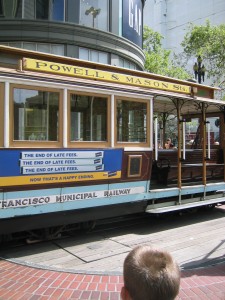
Like Ghiardelli Square, it’s a bit touristy, but it never gets old for me, particularly on the Powell & Mason Street Line. The views are absolutely incredible on a clear day, especially when you crest the hill on Powell Street and get a clear view of Alcatraz Island. Plus, it sure beats the walk from Union to Ghiardelli Square.
5. Blue Bottle Coffee

I’m not the biggest coffee drinker, but Blue Bottle Coffee was highly recommended on my latest trip to the city. It’s a bit tough to find in Mint Plaza, which is a bit off the beaten path, but you’ll know you’ve found it when you see the line. I waited 20 minutes for a Cafe Mocha, and it was worth every minute of it. My only regret was eating breakfast before I went. I should’ve waited and had a bowl of the steel cut oats that was on their menu.
6. Tank 18
On Sunday evening, I was looking for a place where I could relax and have a glass of wine. Tank 18 showed up on a Google search, so I decided to check it out. I was pleasantly surprised. They bottle their own wine and had a very tasty Syrah. I was drawn there by a Meritage I saw on their website, but the waitress told me that it was extremely popular (and very good) and had sold out. I’m sure I’ll find my way back here on a subsequent trip.
7. Rue Lepic
When my daughter and her boyfriend, whom I met up with while on my last trip, couldn’t get into Scala’s Bistro on Saturday evening, we headed up the hill to Rue Lepic, a small French restaurant at he corner of Pine & Mason. It’s an intimate setting with only about 8-10 white-cloth tables. We had a great dinner, and I would recommend it. I’ve added it to my list of restaurants to head back to while in the city.
I’m looking forward to my next trip to San Francisco and adding a few more items to my list of places to check out.