
Should Health Care be handled like Education?

Photo by Hush Naidoo on UnsplashCompulsory education has existed for over 100 years in our country. The overwhelming majority attend public elementary and high schools. According to the Council for American Private Education (CAPE), ~10% of all US students attend private schools.  According to the US Department of Education, around 3% are home schooled. If I do my math correctly, it means ~87% of our children our taught by the public school system. A system that is funded by our tax dollars.

Why do we spend the money and time to educate our children? We’ve determined that our society functions better and that people are more productive if they are provided a minimum level of education. And in today’s international arena, having an educated workforce is a requirement if a country and its business want to be and stay competitive.

Education carries such a high level of importance that every state has public funded institutions of higher learning. These exist as community colleges, teaching colleges, and world-renowned research universities. In my opinion, making higher education accessible and affordable is the cornerstone to a state’s growth. As a resident of California, I would content that affordable access to the University of California system was one of the primary elements leading to the growth of California in the second of the 20th century. It does not surprise me that California’s growth has stagnated in recent times as access to this system has been restricted through reduced public funding and higher tuition costs, but that’s a topic for another time.

If education is important enough to warrant public funding, shouldn’t the health and welfare of our populace be handled the same way?
Continue reading

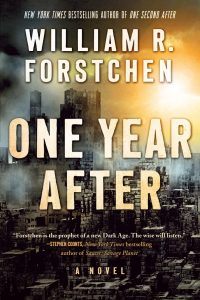
Book review: One Year After

One Year After by William R. ForstchenIt’s been over three years since I read One Second After by William Forstchen. In the book, the United States is struck by an electromagnetic pulse (EMP) generated by a high altitude nuclear explosion. Forstchen details how such an event would cripple all the daily items we have come to depend on such as computers, phones, cars, and most importantly, the infrastructure that delivers electricity and clean, running water. Society rapidly devolves into chaos destroying the fabric of the United States from within. Sure, it’s a fictional book, but given today’s situation with North Korea, it’s not an outside the realm of possibility.

One Year After is the sequel that, as you can rightly guess from the title, picks up the story one year later. The small North Carolina towns of Black Mountain and Montreat are still in disarray but doing their best to return to some sense of normalcy. The United States as a whole is struggling to get back on its feet and slowly trying to rebuild itself, which leads to the main premise of the story – the conflict between the goals of the local communities and the federal government, both of which who are trying to rebuild.

Continue reading

Smartphone warning signs

The Guardian has become one of my favorite news outlets due to the quality of its long form journalism. Last month, they posted an article about the dangers of smartphone addiction (click here to read). It wasn’t your standard, “we need to spend time away from our smartphones” rant. It was in-depth look at how smartphones have enabled a small handful of people in Silicon Valley to control the psychology of over a billion people around the world.

For me, working in the mobile software development industry, it was a warning sign. A foreboding of what could happen if we, as a society, don’t heed the warning and take action.

You see, many worry about the development of a superior, runaway artificial intelligence that will destroy humanity. They argue that it could happen within the next 25 years if sufficient controls are not put in place.

After reading The Guardian article, I’m beginning to think that future danger could already be upon us, and we don’t even know it. Instead of the AI confronting us head-on in a war-like manner, it could be destroying us from within by turning us against each other, and ultimately against ourselves.

In the past, I’ve written about privacy and warned how the internet endangers that fundamental right. I’m now concerned that the combination of the internet and smartphones may be one of the most dangerous inventions created by mankind if allowed to go unchecked.

Allow me to explain.

Continue reading

Book review: Born to Run

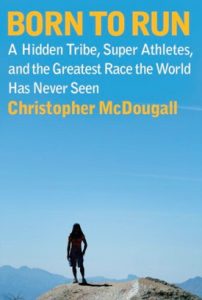
Born To Run by Christopher McDougall coverI’m not a runner. My entire running career consists of my one and only 10K (which I completed in just under 50 minutes by the way). So it would seem odd that I would read a book about running.

On the other hand, friends are one of the recommendation sources for my reading list. In fact, out of all my sources, friends are my favorite, even more than my nemesis – the Amazon recommendation engine. The reason is pretty obvious. My friends and I share many of the same interests.

Therefore, it really isn’t much of a surprise that I ended up reading Born to Run by Christopher McDougall. It was recommended to me by Steve Hudson, a good friend of mine who has been a good source of book recommendations. We’ve been sharing our experiences related to food, diet, and fitness. During one of our discussions, he suggested I read McDougall’s book.  While he’s more of a runner than I am, he still felt that I would enjoy it.

Continue reading

What I Learned from Reading Food Labels

This is the third post of my personal experience with diet modification after reading books such as Wheat Belly, Grain Brain, Primal Body – Primal Mind, and It Starts with Food. The other posts are Food as Medicine and Weight, it’s all about food, which you can read here and here. As mentioned in a previous post, this post is not medical advice. It is simply my personal experience which you may (or may not) find interesting.

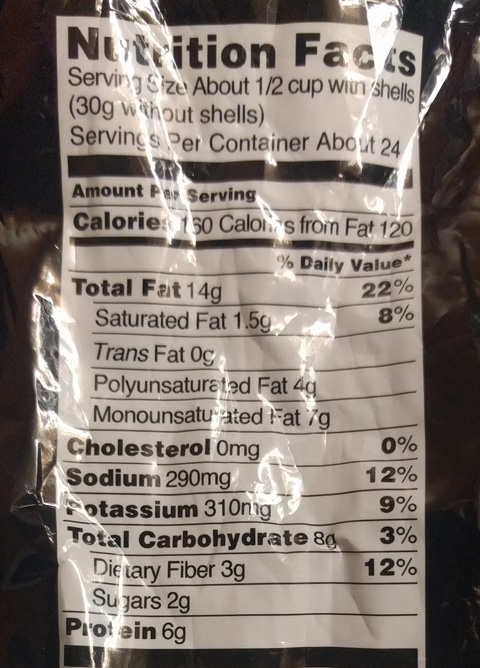
Ingredients label for salt & black pepper pistachiosAs part of my effort to eat healthier, cutting added sugars out of my diet was at the top of my priority list. Little did I know just how difficult this would be. I quickly learned that you had to be careful with anything processed, in a box, or sealed in a bag. When you buy something in that form factor, the question isn’t whether it has sugar. The question is how much.

Here’s just one recent example that shocked me. To change up my routine and add some spice to my pistachio habit, I wanted to give salt & black pepper pistachios a try. When I saw them at Costco, I couldn’t resist and grabbed a bag. Midway through my first serving, something seemed…, well, off. In addition to the pepper seasoning, I was detecting a bit of a sweetness. I didn’t think much of it, but decided to check the ingredients. Bingo! Sugar. Now granted, it was pretty far down the ingredient list, and it wasn’t a lot. But we’re talking about pistachios. Why is there any sugar added?

As it so happens, this is just one example of many.

Continue reading

Book review: Think and Grow Rich

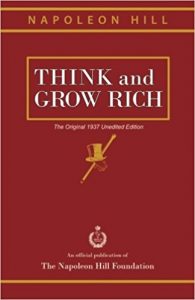
Think and Grow Rich by Napoleon HillAs part of my new routine, I’ve been reading “learning” books in the morning. Many of these books reference other books from where they’ve derived their ideas, or used their concepts as a foundation to build upon. My general rule of thumb is that I don’t add a book to my reading list unless it is mentioned in more than a couple of books. One book that consistently appeared in many of the self improvement books I’ve read recently is “Think and Grow Rich” by Napoleon Hill. Naturally, it made it to my reading list and moved quickly to the top given the number of mentions.

To say Think and Grow Rich is a classic is an understatement. It was first printed in 1937, and it’s still relevant 80 years later. That makes it more than a classic. It makes it a timeless treasure.

Continue reading

Weight, it’s all about food

I’d like to preface this post by saying that I am NOT a doctor, nor am I a nutritionist. I have no medical training, and I didn’t stay at a Holiday Inn Express last night. What am I about to share is my personal experience and the results I got when I adjusted my diet based upon the information that I gleaned from Wheat Belly, Grain Brain, Primal Body – Primal Mind, and It Starts with Food. With that out of the way, I would be curious if anyone who reads this has experienced similar results.

Weight scale and tape measureAt my last job, I did an extensive amount of travel. On average, I spent about 2 weeks out of every month on the road. What you don’t notice when you travel that much is how you slowly start packing on the pounds. Sitting on airplanes, the lack of exercise, and the regular eating out does not lend itself to maintaining a healthy weight.

I did my best to stay active and eat properly while I was at home and not on the road. Still yet, I peaked at 180 pounds, which was well above what I consider my fighting weight of 160. After I left the job, I decided I would make an effort to lose the 20 or so pounds that had somehow deposited itself on my body.

Continue reading

Book review: The Alchemist

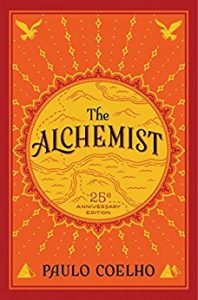
The Alchemist by Paulo CoelhoAn amazing thing happens when you start reading positive, inspirational, motivational readings and books. The infamous Amazon recommendation engine kicks in and starts recommending more. It should be no surprise then that an inspirational classic showed up in one of my Amazon recommendation emails – The Alchemist by Paulo Coelho. I added it to my reading list at some point during the first half of 2016 and decided to make it a priority for 2017.

I enjoyed the story in the book, but that’s not its focus. The primary point is about following your dreams, or your “Personal Legend” as Coelho calls it. I found this post on Paulo Coelho’s blog which is an excellent summary of the 10 Powerful Life Lessons in the book, but here are the top three which I took away from it.

Continue reading

Food as medicine

High resolution photo from Cecilia Parr via unsplash.comA couple of years ago, I became interested in the link between food and health. What really set me off was when I noticed how much sugar went into everyday foods. For example, I was completely caught off guard when I realized that there were 20g of added sugar in a jar of tomato sauce, per serving! It really got me thinking about what the industrialization of food has done to our diets.

Around that same time, I met someone during a technology meetup at my office. Somehow, the conversation turned to food, and we both lamented over the effects that processed food has over our body. He made a great comment, or observation if you will, when he said that we should treat “food as medicine”. His comment really hit home and got me thinking about our relationship with food.

Continue reading

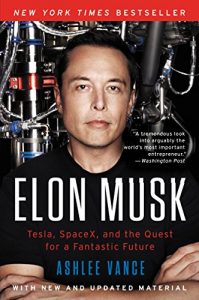
Book review: Elon Musk – Tesla, SpaceX, and the Quest for a Fantastic Future

Elon Musk: Tesla, SpaceX, and the Quest for a Fantastic Future by Ashlee VanceBack in early 2015, I watched the documentary series, “The Men Who Built America”. It was inspiring to watch how industrialists such as Vanderbilt, Rockefeller, Carnegie, and Ford transformed America during the late 19th and early 20th century. While it can be debated how much came at the expense of the lower and middle classes, the fact remains that their ideas and the businesses they created had a profound impact felt around the world.

On the whole, I am rather disappointed with the innovation in our current generation. Too much energy and money is spent chasing the latest “quick buck” ideas rather than exceptional breakthroughs. Fortunately, there are two clear exceptions in my opinion – Jeff Bezos and Elon Musk.

I enjoy following and learning about how they have pursued their passions and built companies around their visions. One of my favorite books from 2015 was “The Everything Store” by Brad Stone. It was a fascinating tale of how Jeff Bezos conceived and built Amazon. When I saw that a similar book had been written about Elon Musk, I knew I had to read it.

Continue reading