Books to read in 2016

I set an ambitious reading goal for 2015. I wanted to read 35 books, 33 of which were supposed to come from this list. I managed to read 25 books for the year, which was down from the 27 I read in 2014. Of the 25 I read last year, 17 came from my list, and 8 jumped the queue. For some reason, 8 seems to be the magic number as that was the same number that jumped the queue in 2014.

Even though I didn’t make my goal of 35, it was still a good year for reading. I focused my reading on authors that I like, recommendations from trusted sources (of the human variety), and a mix of primarily science fiction and business. I did my best to stay away from book series and trilogies, and focused my business reading on story-based biography books.

Here are the best books I read in 2015, which you may want to use to seed your 2016 reading list. As I did last year, I’ve broken the list into three categories: general recommendations, business books, and those I found entertaining which didn’t make my Must Reads list.
Continue reading

Saving Your Code with Git

For the Ventura County WebMob Meetup in January, I did a presentation titled “Saving Your Code with Git.” Since revision and version control is such a huge part of software development, I volunteered to present Git, which has become the de-facto standard due to the emergence of hosted repository services such as GitHub and Atlassian’s Bitbucket.

Continue reading

Book review: Uncommon Stock

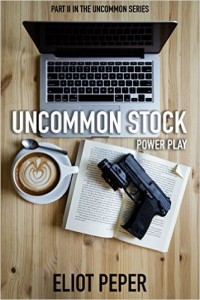
Uncommon Stock: Power Play by Eliot PeperI’ve grown tired of the trilogy. I really have. I wish authors would write one book that is a complete story, or just publish the three books as one tome. I’m not a fan of drawing a story out into three books, and I don’t get the rationale behind it. Then again, I’m not an author, so what do I know?

There are exceptions, however, and the Uncommon Stock series by Eliot Peper is one of them. After reading Uncommon Stock 1.0, the book was good enough that I decided to venture into Uncommon Stock: Power Play, which then drew me into Uncommon Stock: Exit Strategy.

Continue reading

Sass: An Introduction

For the November Ventura County WebMob Meetup group, I did an introductory presentation on Sass, a CSS preprocessor. The goal was to explain what Sass is along with what it isn’t, do a brief demo to get people interested and show them how it works, and provide people with information and resources to get started.

Here are the slides that I covered during my presentation. They make more sense live because of the demo I did after slide 8, but there are links to resources in the slides that are very useful if you are just starting out.


If you’re interested in front-end web development, or are a front-end developer who is not using a preprocessor. I would strongly suggest that you learn Sass. It will make you a lot more productive in your work, and it’s a skill that will make you more attractive and marketable to prospective employers.

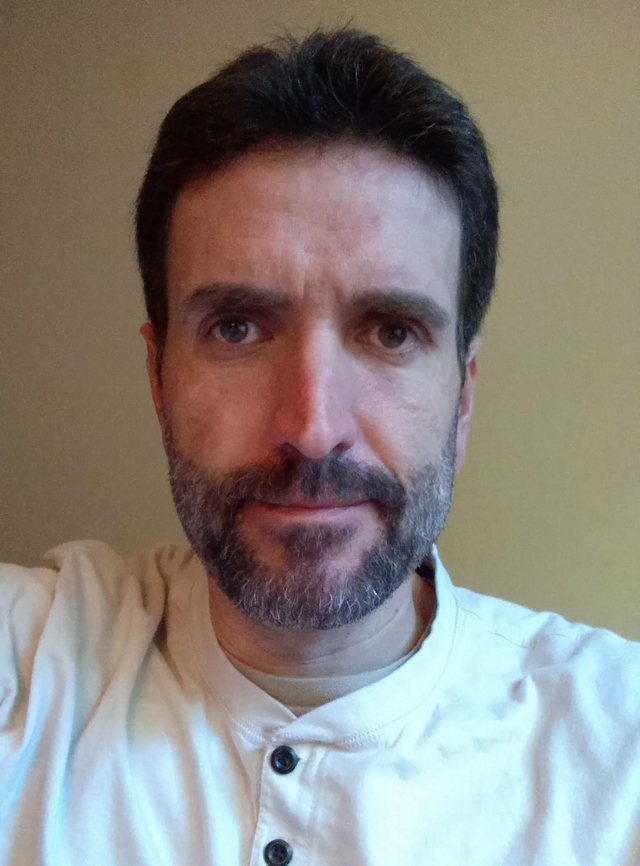
Bearded

After last year’s edition of the beard, in which it got pretty full, I decided that I was going to retire the beard for a few years. I’m not a huge fan of the facial hair look, and it isn’t any less work than staying clean shaven in my opinion.

I don’t know exactly how it happened, but I woke up one morning, and the beard was back.

Gregg Borodaty - the 2016 beard

Continue reading

Book review: In the Plex

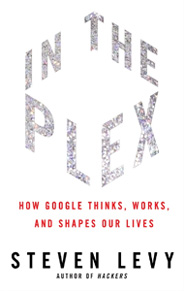
In the Plex by Steven LevyOne of my favorite books from last year was The Everything Store – Jeff Bezos and the Age of Amazon. It was one of my favorite types of business books, a third party account that chronicled the building of Amazon. In the comments to my book review, one of my favorite bloggers, Rohan (author of the blog A Learning a Day), mentioned In the Plex – How Google Thinks, Works, and Shapes Our Lives by Steven Levy.  Since the book fit my theme of a biography/story-based business book and came recommended from a trusted source, I decided to let it jump the queue in my 2015 reading list.

Continue reading

My first (and possibly only) 10K

10K Running TageI’m not a runner. I don’t like running. I don’t understand why people run.

My daughter Amanda, who’s run both a full and half marathon, roped me into running a 10K recently. Well, she didn’t twist my arm too hard. I do my best to stay is shape at the gym, and I do a lot of walking with my dog. Running a 10K was one of those things I wanted to cross of my list of fitness things to do.

Here’s my experience running my first, and quite possibly my only, 10K.

Continue reading

Old Town San Diego

In the nearly 25 years that I’ve lived in Southern California, I’ve visited San Diego a dozen or so times. I’ve been to the Zoo and Sea World, toured UCSD and San Diego State, spent time at the Convention Center, taken in the view at Point Loma, and enjoyed the night life in the Gaslamp Quarter. Surprisingly, I had never ventured to Old Town San Diego. I don’t know why. Maybe it was the name that made it sound tired, run down, and not much fun.

On a recent trip into San Diego, a colleague who lived in the area suggested I give it a try. He said that it would be a great place to take the family and get dinner. Since I had never been, I figured it would be worth giving it a try for something different. I must admit that I was pleasantly surprised.

Continue reading

Book review: Neuromancer

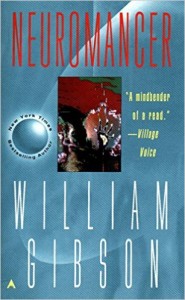
Neuromancer by William GibsonWhen I started my deep dive into sci-fi reading a couple of years back, a friend of mine, Andrew Schmitt, recommended that I read Neuromancer by William Gibson. While some shy away from a classic written 30 years ago, I looked at it as required reading if I wanted to really understand the genre. Plus, the book came highly recommended, which has become one of the key criteria in screening my extensive reading list that I’ve been stumbling through this year.

To say that Neuromancer is a classic sci-fi novel is an understatement. It really needs to be required reading for anyone venturing into the genre. In addition to coining the term “cyberspace”, there are many other themes that have been taken forward in other science fiction works. As I was reading the book, I could see how the book influenced classic science fiction movies like The Matrix. The themes present in other books are too numerous to mention.

Continue reading

Anatomy of a Pseudo-Event

In his book, The Image: A Guide to Pseudo-Events in America, Daniel Boorstin defines a pseudo-event as a happening that posses the following characteristics:

  1. It is not spontaneous, but comes about because someone has planned, planted or incited it.
  2. It is planted primarily (not always exclusively) for the immediate purpose of being reported or reproduced. Therefore, its occurrence is arranged for the convenience of the reporting or reproducing media. Its success is measured by how widely it is reported.
  3. Its relation to the underlying reality of the situation is ambiguous. Its interest arises largely from this very ambiguity.
  4. Usually it is intended to be a self-fulfilling prophecy. [Example] The hotel’s thirtieth-anniversary celebration, by saying that the hotel is a distinguished institution, actually makes it one.

Most of what we are fed by mainstream media are pseudo-events that are meant to entertain us (or in certain cases to influence or manipulate us). The media is not interested in educating or enlightening us – there isn’t any money to be made doing that. However, if they can sufficiently entertain us so we tune in each night, then they have done their job, in their mind.

In addition to mainstream media, marketing agencies and public relations entities are masters of the pseudo-event. They create pseudo-events for their clients to influence the public’s perception and to create an aura of importance. Whether it’s a corporate entity, celebrity, or politician, a good PR person can spin any story, whether good or bad, in their client’s favor. In fact, the more negative the story, the better the PR person is able to spin it.

To understand just how prevalent pseudo-events are, how they work, and how they twist the underlying meaning of a situation, let’s take a look at a few events from the political arena.

Continue reading