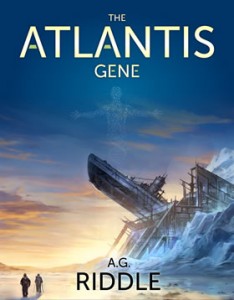
The Amazon recommendation engine contains a bottomless pit of suggestions, especially after you fill it up with enough purchases. Since I’ve been on a reading binge this year, the book recommendations have been coming faster than ever, and they’ve gotten better (which is why I “hate” the engine). One of the latest recommendations I received was for The Atlantis Gene by A.G. Riddle. It was the trifecta of Amazon recommendations – the description looked interesting, it had received an overwhelming number of positive reviews, and I could borrow it through the Kindle lending library. Obviously, I loaded it up.
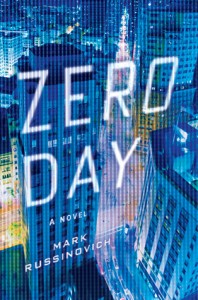
After being a bit disappointed with Cyberstorm by Matthew Mather, I decided to read Zero Day by Mark Russinovich. Zero Day is similar to Cyberstorm in that both books are stories about computer viruses gone wild that wreak havoc and destruction on the computer infrastructure of the United States.
Zero Day starts out by describing a series of apparently unrelated computer glitches. One of these glitches threatens to bring down a major New York City law firm, so their IT department calls upon Jeff Aiken to identify and fix the problem. Aiken has a history in IT security, as well as a history working within the IT groups of various government intelligence agencies. Aiken ends up calling in a couple of favors from one of his former government colleagues, Daryl Haugen, an attractive government IT security specialist who is investigating the source of these unrelated computer glitches.
Through their work together, they discover that the glitches are related. What ensues is an action packed trek across the globe to identify the source of the virus and stop those behind it before they unleash destruction on the infrastructure of both the United States and the world at large. It’s a page turner that is full of action and suspense that I found hard to put down.
Unfortunately, the chase to stop the virus only takes up the last third of the book. The first two-thirds of the novel is slow developing and was difficult for me to power through. Sure, some of it helped to build up to the ending, but there were a couple of gratuitous violence and sex scenes that felt unnecessary and loosely connected to the story. It was like scenes you see in a movie that are purely inserted for visual entertainment but serve no real purpose in moving the story forward.
That being said, I found Zero Day to be much better than CyberStorm. While Zero Day moved a little slower at the beginning, the story felt more believable than the surreal catastrophic picture that Cyberstorm painted. It also got into more of the details and explained the science behind computer viruses, which I enjoyed.
I wouldn’t put Zero Day in my must read category, nor would I recommend putting it at the top of your reading list. However, if you’re interested in being entertained while learning about the risks and effects that a large scale computer virus attack could have our infrastructure, then Zero Day is one of the best books out there. Let’s just say that it was good enough that I’ve put the second book in the series, Trojan Horse, on my reading list for next year.
I was so impressed with Amusing Ourselves to Death by Neil Postman, that I decided to read his follow-up, Technopoly: The Surrender of Culture to Technology. Overall, it’s a well written piece that reinforces the concepts from Amusing Ourselves to Death, which was my biggest disappointment with the book. It just didn’t feel like Technopoly covered a lot of new ground.
Now don’t get me wrong, I’m not saying or suggesting that the concepts covered in the book aren’t thought provoking or relevant in today’s tech-centric society. In fact, the concepts in the book are more relevant today, and will be even more relevant in the future, than when Postman originally wrote the book in 1992. It’s just that I had set the bar so high after reading Amusing Ourselves to Death that I was let down a bit.
If I had read Technopoly prior to reading Amusing Ourselves to Death, then I’m sure I’d be writing a different review. I’d be rambling on about how Postman predicted the dark side of technology and its adverse effects on society and how we need to be heed his concerns to avoid becoming tools of technology rather than using technology as tools.
In summary, I’m a huge fan of Postman’s work, and Technopoly does not change my opinion of Postman or his teachings. If anything, it reinforces it with more examples of how technology is continually fraying the fabric of our society, most time in ways that we are unaware of or oblivious to. I’d recommend reading Technopoly, especially if you haven’t read, or don’t intend to read Amusing Ourselves to Death. On the other hand, if you’ve already read Amusing Ourselves to Death, set your expectations appropriately and don’t expect to be blown away by Technopoly. It will merely build upon and reinforce the concepts Postman introduces in his earlier work.
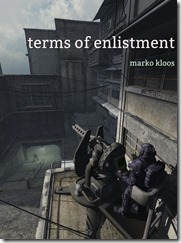
In searching for my next entertainment novel, I stumbled across Terms of Enlistment by Marko Kloos. Given that I could read it for free via the Kindle Owners’ Lending Library, I figured that I’d give it a try. I’m glad I did.
Terms of Enlistment paints a dystopian view of the future. America’s major cities have deteriorated into welfare slums where people have no way out unless they are selected by lottery to colonize other planets, or they join the military. In the case of Andrew Grayson, he decides to join the military to escape the slums of Boston.
Through the wonders of the Amazon recommendation engine, the next science fiction book that caught my eye was Nexus by Ramez Naam.
Nexus has a fascinating plot. A nano drug has been created that permits people to link their brains together wirelessly. The effect allows people to tap the powers of the brain to do amazing things, or extremely nefarious activities depending on the intentions of the user.
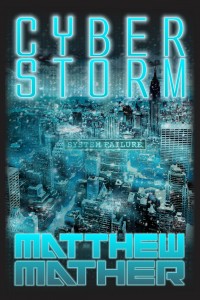
As part of my recent reading binge, I’ve taken a liking to hard science fiction books and tech thrillers. The description for Cyberstorm by Matthew Mather fit both of those areas, so I decided to pick it up (it didn’t hurt that it was also available at a special promotional price of $0.99).
The brief plot description, without giving too much away, is that an electronic attack on the country’s infrastructure grinds New York City to a halt just as a series of major snowstorms is about to hit. From there, the story’s chief protagonist, Mike Mitchell, has to team up with other members of his apartment to fight for his, his family’s and his friends’ survival.
While the overall premise of the story is plausible, there were a number of elements of the book that bothered me to the point of making the story unbelievable:
The description of the series of storms that hit the city are described as though they come out of the movie “The Day After Tomorrow”. I could understand one big storm of that nature, but I can’t recall a series of storms of such devastation hitting the east coast in a long, long time, if ever. Piling additional storms on top of one another wasn’t necessary for Mather to get his point across.
The string of bad luck that Mike Mitchell runs across gets tiring. Every time he runs into a situation that you think can’t get worse, it does. It feels like you are reading the story line for a B-rate horror movie. On the other hand, it does keep you reading just to see if the guy can ever catch a break.
I also found the level of paranoia exhibited by Mitchell and the other main characters to be exaggerated. Again, it takes a good story to the point of becoming unbelievable. Primarily, people who exhibit that much paranoia generally don’t survive catastrophic situations very well, particularly when they begin to distrust all those around them and begin looking out only for themselves.
Overall, I wouldn’t recommend the book. It turned out there wasn’t enough in the way of hard science fiction to satisfy my taste, and the tech thriller side of things felt more like a low budget horror movie. There’s much better apocalyptic cyber thrillers out there that contain a better description of the technology behind cyberattacks as well as a more engaging plot. For example, I’d recommend Daemon by Daniel Suarez or Zero Day by Mark Russinovich before Cyberstorm.
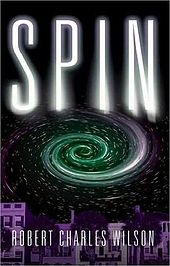
For my next dive into science fiction, I chose to read Spin by Robert Charles Wilson. Spin was published in 2005 and is the opening of a three part book series that includes Axis and Vortex.
The premise behind Spin is very intriguing. The earth has been placed in a “spin membrane” which slows time down for the inhabitants of earth while the universe continues to age naturally. On the surface, this seems like a story line that would be hard to develop, but Wilson does a great job of stretching your imagination to grasp the ramifications of a universe that ages faster than earth as well the possibilities it presents.
The primary character in the book is Tyler Dupree, who, when the book opens, is struggling through some sort of illness which Wilson chooses not to explain. Through the liberal use of flashbacks, it becomes apparent why Tyler is sick and how he fell ill. Wilson also uses the flashbacks to explain how and why the “spin membrane” was put around the earth. To divulge any more would spoil the book as it is full of plot twists that keep you guessing as to how the present relates to the past.
I wouldn’t put the book into my must read category, but I found it very entertaining. It’s a fun recreational read that will keep your imagination engaged while Wilson explores deeper issues around human nature, particularly around issues such as greed, power and religion. As mentioned at the top, there are two follow on books, Axis and Vortex, that expand upon the original story, but I got my fill with Spin and intend to pass on the sequels for the time being.
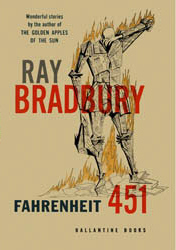
Since I was so blown away after reading Brave New World, I was inspired to read the Ray Bradbury classic, Fahrenheit 451. Much like Brave New World and 1984, Fahrenheit 451 is about the effects of government control and censorship on society.
The story focuses on Montag – a fireman whose main focus isn’t to fight fires, but to start them. In order to control information and its dissemination, the government has banned books. Anyone found in possession of them is subject to having their house burned to the ground by the fire department.
Montag has become disillusioned with the societal distractions his wife engages in, which involves heavy doses of television and drugs. He becomes fascinated with the people who hide and defend the books he is ordered to destroy. As such, he begins secretly hoarding books from the houses he is sent to destroy, and therein lies the main plot line of the story.
I’ll admit the story is a classic, but I found it a tough read. Unlike Brave New World, which I found captivating and intense, Fahrenheit 451 felt like it went on forever before getting to the point. In other words, it felt like some of the assigned reading from my high school English classes.
While I can’t recommend reading this book, there was a valuable takeaway for me. Towards the end, Montag is befriended by individuals who have been labeled outcasts for their love of books and knowledge. Montag is speaking with one of them, named Granger, who says:
“Everyone must leave something behind when he dies, my grandfather said. A child or a book or a painting or a house or a wall built or a pair of shoes made. Or a garden planted. Something your hand touched some way so your soul has somewhere to go when you die, and when people look at that tree or that flower you planted, you’re there. It doesn’t matter what you do, he said, so long as you change something from the way it was before you touched it into something that’s like you after you take your hands away. The difference between the man who just cuts lawns and a real gardener is in the touching, he said. The lawn-cutter might just as well not have been there at all; the gardener will be there a lifetime.”
So while I found Bradbury’s work disappointing on the whole, the message in it is profound. That message is not to accept what we are told is right or wrong, or what we should do, but to have the courage to create our own way. Or, in the words of Granger, one should be a gardener rather than a lawn-cutter. The gardener will be remembered, the lawn-cutter won’t.
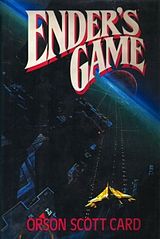
On my sci-fi reading binge over this year, Ender’s Game by Orson Scott Card appeared on my Amazon suggested reading list. I’d heard about it through a number of sources as a classic science fiction book, saw that the movie was coming out this fall, and figured it was worth reading.
Fortunately, I was right.
Ender’s Game is classic science fiction. It’s set in a future where Earth has fended off an attack by aliens due to the heroic efforts of a battle commander named Mazer Rackham. In an effort to defeat the alien force, the Earth’s countries have formed an alliance to preemptively strike them. To achieve their objective, they’ve decided that training exceptionally bright children for battle are their best hope.
That’s where Ender, whose full name is Andrew Wiggins, enters into the plot. He is a highly intelligent child who has the stigma of being a “third”, meaning that his parents had him in violation of Earth’s two child policy. Besides being picked on by his older brother, he is also ostracized at school. His older sister tries to protect him, but after an altercation at his school, he is drafted into service by the International Fleet.
It is at this point where the action begins, and the story gets intense. I don’t want to spoil the plot, but I will tell you that Card does a great job of keeping you engaged throughout the book while using Ender’s teachers as well as his brother and sister to demonstrate the flaws and misgivings of our society and humanity in general.
I was captivated by the story and thoroughly enjoyed the book. So much so, that I’m not certain whether I’ll see the movie or not. The special effects look awesome, and they’ve certainly enlisted a great cast with Harrison Ford and Ben Kingsley, but I’m concerned how true they can stay to the story. For one thing, Ender starts the story as a six year old and is only ten during his time at Command School. I’m not sure the movie will be able to accurately portray his youth, which is an integral part of the overall story in my opinion.
By the way, Card continues the story of Ender in subsequent novels. I believe there are five in total. I’ve not decided whether I will continue onto the next book in the series. While I thoroughly enjoyed the first installment, it’s difficult for me to envision how Card can maintain the same action and intensity throughout the series given the outcome of the first.
Anyways, I would put Ender’s Game in the must read category and highly encourage anyone who is remotely interested in the movie to make sure they read the book first. It’s a great read and will let you experience the story the way Card intended it without any adaptations that may have been required to turn it into a feature film.
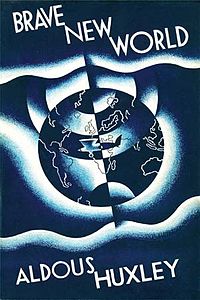
After reading Neil Postman’s Amusing Ourselves to Death, I was drawn in to reading Brave New World by Aldous Huxley. Unlike many, I wasn’t required to read it during high school, and Postman’s numerous references and comparisons to how prescient Huxley was piqued my curiosity about what could possibly be in it.
Knowing that the book was required high school reading, that it was written in the 1930’s, and that it was branded a classic, I approached the book cautiously, figuring I’d be bored to tears and struggle to move from page to page. To my surprise, Huxley’s work blew me away.
In addition to confirming all of Postman’s observations, I found the overall story to be deep and suspenseful. I had a hard time putting the book down and finished it in a surprisingly short amount of time.
I was captivated by the plot and amazed at the parallels between events in the book and the trajectory our society is on. Huxley does an amazing job of portraying how humans could be controlled by overwhelming their sensory input with so many conveniences, technology, and distractions, that they have no reason to think independently. When you consider how much of our life is controlled today by the technology around us, whether it is our computers, tablets, mobile phones or television, and how everyday diversions such as sports and entertainment influence our lives, it makes one wonder which direction we are heading – the Orwell state where the government controls us through constant surveillance, or the Huxley state where the government controls us by premitting us to be overwhelmed with diversions and distractions. Or as Postman put it
In short, Orwell feared that what we hate will ruin us. Huxley feared that what we love will ruin us.
Brave New World is a must read book, especially after reading Postman’s Amusing Ourselves to Death. Even if you read the book in high school, after reading Postman’s work, you will see Huxley’s work in a different light. It will make you ponder and consider just what the advent of all of this technology around us is really doing to our lives.

 The Amazon recommendation engine contains a bottomless pit of suggestions, especially after you fill it up with enough purchases. Since I’ve been on a reading binge this year, the book recommendations have been coming faster than ever, and they’ve gotten better (which is why I “hate” the engine). One of the latest recommendations I received was for The Atlantis Gene by A.G. Riddle. It was the trifecta of Amazon recommendations – the description looked interesting, it had received an overwhelming number of positive reviews, and I could borrow it through the Kindle lending library. Obviously, I loaded it up.