Tag Archives: Books

Book review: Crux

Spolier alert – if you haven’t read Nexus, or are in the middle of it, be aware that there are a few mild spoilers in this review of Crux. In case you’re wondering, the short summary is that I didn’t enjoy it as much as Nexus, and it didn’t make my must read list.

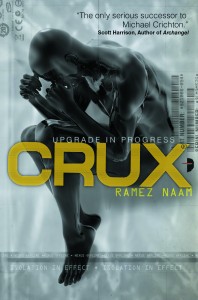
Crux by Ramez NaamWhile browsing my lengthy Amazon wish list recently, I noticed that Crux, the sequel to Nexus by Ramez Naam, was available. I thoroughly enjoyed Nexus, so I figured Crux would be worth a read. I was curious to see where Naam was going to take the story and the technology.

Continue reading

Book review: Ready Player One

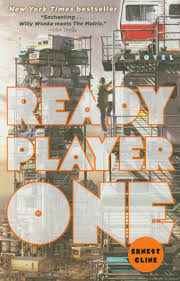
Ready Player One by Ernest ClineFor my first book of the year, I chose Ready Player One by Ernest Cline. It fit with one of my reading themes regarding futuristic, dystopian versions of the future with an interesting twist. The story contains a lot of references to 1980’s pop culture, with a particular emphasis on video games of the era. Since I grew up during the eighties and spent a lot of time during my junior high and high school days on an Atari 2600, Colecovision, Commodore 64 and various TRS-80 models, I figured it would be an interesting read as well as a nostalgic trip down memory lane.

Continue reading

My 2014 reading goals and list

As I mentioned in my “Books to Read in 2014” post, I did a lot of recreational reading during 2013. I’m planning to continue my reading binge in 2014. My goal is to finish at least 2 books per month and hit 25 (or more) for the year. I’d like to mix in a few more non-fiction, business books, too.

Since my Amazon wish list is currently over 60 items, I’m not going to have a hard time finding content. Here’s a look at the top 20 books I’m planning to read in the upcoming year.

Continue reading

Books to read in 2014

I read 20 books in 2013, which is the most recreational reading I’ve ever done in one year. In fact, since July 2012 I’ve read 26 books. I’ve documented all of them on this blog, and you can see my review of each book by clicking here or on the “Book Reviews” category in the sidebar.

My reading binge started after heeding a recommendation by venture capitalist Brad Feld. I follow his blog, and after seeing numerous reading recommendations on his site, I stumbled upon an article he wrote titled, “Why I Read Science Fiction“. Since I am also a believer that reading shapes your subconscious thoughts, I found these lines from his post particularly relevant (the bold, underlined emphasis in the following quote is mine):

When I think about all of the information I synthesize both by going backward in time and reading forward (Dick, Vonnegut, Heinlein, Asimov) as well as starting today and going forward 5 – 30 years (Clarke, Suarez, Stross, Banks, Stephenson, Gibson, Sterling) I realize that I’m creating a subconscious framework in my brain for a lot of the stuff I’m investing in.  Sometimes it maps directly; sometimes it’s the stuff that misses that it so interesting.

After seeing this post, it occurred to me that stretching my imagination with some hard science fiction might help me understand where technology is headed and how I could incorporate in my business. I started out by reading William Hertling’s Singularity Series, which started with Avogadro Corp. In a nutshell, I was hooked. Since then, I’ve consumed a lot of science fiction related material, along with a few nonfiction and classics mixed in.

Based on what I read over the last 18 months, here is what I would recommend to start off your reading list for 2014 (click any of the titles for a link to my book reviews). By the way, these are all from my “Must Reads“. You can click here to see my latest recommendations throughout 2014.

Recommended Reading List for 2014

  1. Amusing Ourselves to Death by Neil Postman
    I have to put the only nonfiction book on this list at the top. Absolute must read if you want to understand how the technology around us is shaping society. The most amazing part is that this book was written 30 years ago and is more relevant now than it was then.
  2. Singularity Series by William Hertling
    1. Book 1 – Avogadro Corp.
    2. Book 2 – A.I. Apocalypse
    3. Book 3 – The Last Firewall

    Excellent hard science fiction series that builds upon itself. The books must be read in order to get the full effect.

  3. Daemon and Freedom by Daniel Suarez
    A two-book hard science fiction series that will make the NSA surveillance programs feel like child’s play considering what’s possible, and then again….
  4. Silo Series by Hugh Howey
    1. Book 1 – Wool
    2. Book 2 – Shift
    3. Book 3 – Dust

    An interesting look at a dystopian future that becomes more plausible the more you read. Be careful, once you get started, it’s hard to put down.

  5. The Origin Mystery Series by A.G. Riddle
    1. Book 1 – The Atlantis Gene
    2. Book 2 – The Atlantis Plague

    These action-packed books will stretch your imagination, and then some. As with the other series, must be read in order, or you’ll be lost.

  6. Terms of Enlistment by Marko Kloos
    A dystopian future about the haves and have-nots. There’s a lot of military action and strategy in this story coupled with planetary exploration and colonization.
  7. Nexus by Ramez Naam
    What would happen if we could tap into our brain to control it and link it with others. The possibilities are limitless, and Naam explores them in this fictional thriller.
  8. Brave New World by Aldous Huxley
    A timeless classic. After reading Postman’s Amusing Ourselves to Death, you’ll want to pick it up, even if you’ve already read it when you were in high school – worth re-reading.
  9. Ender’s Game by Orson Scott Card
    Another classic that worth’s reading before you see the movie version.

I have a pretty big wish list for 2014 that I’ll be publishing in the next couple of days. In the meantime, if there are any books you’ve read over the past year that you’d recommend, please leave them in the comments.

Book review: The Atlantis Plague

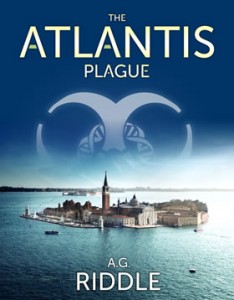
The Atlantis Plague: A Thriller by A.G. RiddleWhile browsing for my next read, I noticed that The Atlantis Plague by A.G. Riddle was available. Since I liked The Atlantis Gene a lot, I figured the sequel would be worth reading. The reviews were overwhelmingly positive, and it didn’t hurt that I could “borrow” it from the Kindle lending library. That was an added bonus.

Continue reading

Book review: The Phoenix Project

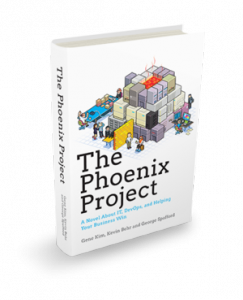
The Phoenix Project: A Novel About IT, DevOps, and Helping Your Business Win by Gene Kim, Kevin Behr, and George SpaffordOver the summer, a friend of mine (Andrew Schmitt) told me about The Phoenix Project: A Novel About IT, DevOps, and Helping Your Business Win by Gene Kim, Kevin Behr, and George Spafford. Since I’m running a software development shop these days, he thought I’d find it interesting, especially since it was written in the same format as The Goal and Critical Chain by Eliyahu M. Goldratt. For anyone not familiar with Goldratt’s work, this means the book is a fictional novel that contains relevant concepts, teachings and lessons that can be applied to business. In the case of The Phoenix Project, the story is about the IT division of an auto parts company . The business concepts are about how to more efficiently develop and release software projects.

Continue reading

Book review: Forging Zero

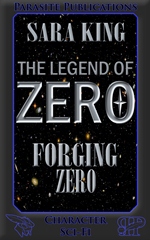
Forging Zero by Sara KingSince my last two reads, Dust and The Last Firewall, were books from a series I was very familiar with (and liked a lot), I decided it was time to start something new. Forging Zero by Sara King had been on my wish list for a while, so I figured it was worth a shot.

The premise of the story is built around Earth falling under alien control. The aliens draft the planet’s children into their army by kidnapping them. The children they choose are all under the age of 10, except for a few older “recruits” in the early teens who are chosen as a means to demonstrate to the younger ones what happens if you step out of line. Only one of these older recruits survives, a fourteen year old named Joe Dobbs. When the children are numbered by the aliens for tracking, he is given the number zero, which becomes his nickname.

From there, the story focuses on their trek from Earth to the alien planet that serves as their training ground. Throughout the training, King expands on the characters as they are hardened into soldiers. The book is an interesting study of human motives, our drive to survive, our need to be rewarded, and our desire to be accepted by our peers. Eventually, a series of events that are foreshadowed throughout the story (and that I won’t spoil) take place forcing Joe to step forward and develop into the leader that he is destined to become. His nickname Zero, combined with the events of the story, make the name of the book, Forging Zero, a great choice.

The development of the environment and the characters are the strong suits of this book. King spends a lot of time creating an alien world that can be taken forward into future stories, which she has through the series The Legend of Zero. She also spends a lot of time describing the characters to help you develop an emotional attachment to them. As I found out in the afterword, It turns out to be the goal of the publisher, Parasite Publications. As they put it:

…we want to produce memorable, sympathetic characters that reader will still be thinking about years after finishing our books.

Overall, Forging Zero is well written and a good story, but I wouldn’t put it in my must read category. The story drags a bit, and it takes a while to learn the slang, euphemisms, alien types, and technical terms that King uses throughout the book. Many times, I found myself unsure of a term or phrase, but I didn’t want to go back and try to find it to understand the meaning. Eventually, by the second half of the book, I was comfortable with the environment that King created, but it made the beginning of the book hard to get through. In fact, it was one of the few times that I considered putting a book aside and starting something new. I’m glad I didn’t, because it was worth finishing.

Bottom line, if you’re looking for an interesting sci-fi book that is focused more on the characters than the technology, then Forging Zero would be a good book to pick up. Since I like a more balanced approach that engages my imagination through the technology, I’m planning to move onto to a different series and away from The Legend of Zero.

Book review: The Last Firewall

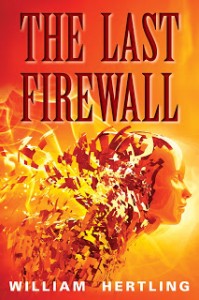
The Last FirewallHaving read Avogadro Corp. and A.I. Apocalypse, the first two books in the Singularity Series, it was with great excitement that I picked up The Last Firewall by William Hertling. I wasn’t disappointed. I highly recommend it, especially if you’ve read the first two books.

Hertling does a great job in The Last Firewall of building upon the story arc he introduced and developed in the first two books. In particular, I like how he ties all three books together through the characters and the technology. It would be possible to read The Last Firewall without picking up the first two books, but I wouldn’t recommend it. The story won’t make as much sense, the technology won’t be as believable, and the characters won’t be as deep. To get the most of out of the series, you need to read all three in order starting with Avogadro Corp.

Continue reading

Book review: Dust

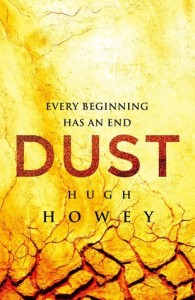
Dust by Hugh HoweyAfter finishing Shift, I had to wait almost seven months for Hugh Howey to finish the conclusion to his Silo series, Dust. It was a long seven months, but it was worth the wait. Dust is just as good as Wool and Shift, and Howey brings the Silo story to an end that fills in the holes and questions that were raised in the first two books. It should go without saying that if you read the first two books, you’ll want to pick up Dust.

Continue reading

Book review: The Startup Playbook

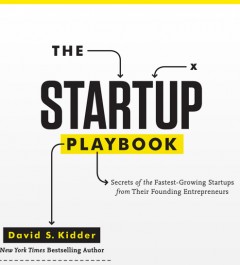
The Startup Playbook by David KidderIt had been a while since I last read a business book (The Wide Lens by Ron Adner). I was looking to find a little inspiration to get me through to the end of the year, so I decided to pick up The Startup Playbook by David Kidder. To be fair, I wouldn’t consider The Startup Playbook a book. It’s a collection of interviews that Kidder has with successful entrepreneurs in which he lets them offer up their best advice for startups. At the end, Kidder provides “The Best Advice”. It’s a collection of excerpts from interviews in the book divided into “The Best Advice” categories such as Boards, Business Operations, Culture, Leadership, Marketing, Raising Capital, Sales and more.

Kidder interviews over 40 people for the book. Some of the notables included are Steve Blank, Matt Blumberg, Jeff Bussgang, Steve Case, Chris Dixon, Reid Hoffman, Ben Horowitz, Tony Hseih, and Elon Musk. Overall, I found the quality of the interviews and advice varied widely. Some were hard to get through, while others left me wanting more. Of the 40+ interviews, a couple that stood out to me were the interviews with Elon Musk and Chip Conley.

Musk’s story stood out due to what drives him. As he puts it in his interview:

I’ve always treid to be involved in things that will impact the future of humanity and have a good effect on the world. I wasn’t necessarily thinking about whether my ideas were the best way to make money.

I also found he had one of the best pieces of advice in the book:

I’m always surprised when people think they can make a great company without having a great product. The most important thing an entrepreneur can do is focus on making a great product or service.

I found the interview with Musk to be inspiring and only wish that it could have gone a few more pages. It also gave me a whole new respect for ventures he is involved in and his desire to truly make a difference in the world.

The reason I enjoyed Conley’s interview can be summarized in one word – passion. It’s obvious that Conley’s passion is to “create joy”, as he puts it. He has taken an idea that the industry downplayed, the boutique hotel business, and transformed it with Joie de Vivre Hospitality. As with Musk’s interview, I found it inspirational as it spoke to the passion that I recognize one has to have to build a successful business.

The other thing that I got out of The Startup Playbook were pointers to further reading and resources. A few new books made it to my ever expanding Amazon Wish List which I hope I will be able to get to at some point in 2014.

I like reading stories and lessons learned from other entrepreneurs, particularly if it can help me to learn and understand what it takes to succeed or how to avoid making the same mistakes others have made.  However, as I mentioned earlier, I found The Startup Playbook to be of mixed quality and wouldn’t put it into my must read category of books.
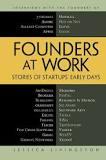
Founders at Work by Jessica LivingstonIf you’re interested like I am in reading entrepreneur stories and about lessons learned, I recommend that you pick up Founders At Work by Jessica Livingston first, and then The Startup Playbook. The overall quality of Founders At Work is better, and the interviews are more focused on the entrepreneurs and their stories. I also liked that Livingston focused on both successful and unsuccessful ventures as well as those of varying sizes.