Category Archives: Life Journal

Books to read in 2014

I read 20 books in 2013, which is the most recreational reading I’ve ever done in one year. In fact, since July 2012 I’ve read 26 books. I’ve documented all of them on this blog, and you can see my review of each book by clicking here or on the “Book Reviews” category in the sidebar.

My reading binge started after heeding a recommendation by venture capitalist Brad Feld. I follow his blog, and after seeing numerous reading recommendations on his site, I stumbled upon an article he wrote titled, “Why I Read Science Fiction“. Since I am also a believer that reading shapes your subconscious thoughts, I found these lines from his post particularly relevant (the bold, underlined emphasis in the following quote is mine):

When I think about all of the information I synthesize both by going backward in time and reading forward (Dick, Vonnegut, Heinlein, Asimov) as well as starting today and going forward 5 – 30 years (Clarke, Suarez, Stross, Banks, Stephenson, Gibson, Sterling) I realize that I’m creating a subconscious framework in my brain for a lot of the stuff I’m investing in.  Sometimes it maps directly; sometimes it’s the stuff that misses that it so interesting.

After seeing this post, it occurred to me that stretching my imagination with some hard science fiction might help me understand where technology is headed and how I could incorporate in my business. I started out by reading William Hertling’s Singularity Series, which started with Avogadro Corp. In a nutshell, I was hooked. Since then, I’ve consumed a lot of science fiction related material, along with a few nonfiction and classics mixed in.

Based on what I read over the last 18 months, here is what I would recommend to start off your reading list for 2014 (click any of the titles for a link to my book reviews). By the way, these are all from my “Must Reads“. You can click here to see my latest recommendations throughout 2014.

Recommended Reading List for 2014

  1. Amusing Ourselves to Death by Neil Postman
    I have to put the only nonfiction book on this list at the top. Absolute must read if you want to understand how the technology around us is shaping society. The most amazing part is that this book was written 30 years ago and is more relevant now than it was then.
  2. Singularity Series by William Hertling
    1. Book 1 – Avogadro Corp.
    2. Book 2 – A.I. Apocalypse
    3. Book 3 – The Last Firewall

    Excellent hard science fiction series that builds upon itself. The books must be read in order to get the full effect.

  3. Daemon and Freedom by Daniel Suarez
    A two-book hard science fiction series that will make the NSA surveillance programs feel like child’s play considering what’s possible, and then again….
  4. Silo Series by Hugh Howey
    1. Book 1 – Wool
    2. Book 2 – Shift
    3. Book 3 – Dust

    An interesting look at a dystopian future that becomes more plausible the more you read. Be careful, once you get started, it’s hard to put down.

  5. The Origin Mystery Series by A.G. Riddle
    1. Book 1 – The Atlantis Gene
    2. Book 2 – The Atlantis Plague

    These action-packed books will stretch your imagination, and then some. As with the other series, must be read in order, or you’ll be lost.

  6. Terms of Enlistment by Marko Kloos
    A dystopian future about the haves and have-nots. There’s a lot of military action and strategy in this story coupled with planetary exploration and colonization.
  7. Nexus by Ramez Naam
    What would happen if we could tap into our brain to control it and link it with others. The possibilities are limitless, and Naam explores them in this fictional thriller.
  8. Brave New World by Aldous Huxley
    A timeless classic. After reading Postman’s Amusing Ourselves to Death, you’ll want to pick it up, even if you’ve already read it when you were in high school – worth re-reading.
  9. Ender’s Game by Orson Scott Card
    Another classic that worth’s reading before you see the movie version.

I have a pretty big wish list for 2014 that I’ll be publishing in the next couple of days. In the meantime, if there are any books you’ve read over the past year that you’d recommend, please leave them in the comments.
Could this be the biggest issue facing America?

I found this video describing wealth distribution in the United States interesting, very interesting, as well as a bit shocking. It’s worth the 6+ minutes of your time to watch.

If you watch this on YouTube and click on “Show More” under the video, you’ll see links to the data sources used to make it. I haven’t personally read through the sources to verify the data. There’s also brief commentary about the video at the site Upworthy, which was where I originally found it.

The takeaways

For starters, it’s clear that the difference in wealth between the poor, middle class, rich, and super-rich has grown in the last 35 years and continues to widen. I’m not sure if the other takeaway is

  • that the average American’s perception of wealth distribution is skewed,
  • the magnitude of the wealth inequality,
  • the fact that those who are wealthy control the media that influences perception, or
  • some combination of all of the above.

After reading so much Postman, I’d say I am most concerned that the media is in control of the message around wealth distribution and is influencing public perception. Since the rich, and in some cases super-rich, control the media, it’s in their best interest to promote a skewed perception of wealth inequality in order to keep the masses of people at the middle and lower income levels from demanding change. Truth be told, I find it surprising that this isn’t a bigger issue in the media given the level of wealth inequality.

Is uneven wealth distribution wrong?

To be clear, as he states in the video, I’m not against uneven wealth distribution and don’t feel it is wrong. After all, the United States is a capitalist country where those who work harder or take risks are permitted to be rewarded unevenly. It’s the primary reason the US is considered the “land of opportunity”.

However, as he concludes in the video, is one person’s value to a company worth more than 380 times another one’s? At some point, I do believe that there is a line that has to be drawn, somewhere. 

Conclusion

At the end of the day, it’s good that we can have these discussions and debates out in the open. It’s also another reason why it’s so important for us to preserve the openness of the internet and to strive to make it available to all people in order to promote, permit, and provide access to multiple sources of information to those who seek it.

We need to expose perception bias and misconceptions on issues of all types, not just wealth distribution. I feel this is one of the biggest issues America faces – that we allow a select few  to shape the message and discussion around our most critical, important topics. They will influence the message to fit their motives, which makes it difficult for the general public to tell the difference between facts, half-truths, and outright lies. Facilitating the free flow of information and allowing open, uncontrolled debate is one way (but certainly not the only way) to break up the control they have over the discussion.

Will ELOPe become a reality?

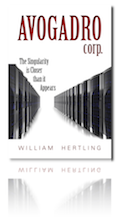
Avogadro Corp by William HertlingIn the William Hertling book Avogadro Corp., character David Ryan and his engineering team develop a machine learning algorithm called the Email Language Optimization Project, or ELOPe for short. As Hertling writes through character David Ryan in the book:

ELOPe works like a sophisticated grammar checker. As the user edits an email, we start to make suggestions about the wording to the user in the sidebar.

Behind the scenes, complex analysis is taking place to understand the user intent, and map it to effective language patterns we’ve observed in other users.

Ryan and his team succeed in developing ELOPe to the point of being too successful. The ELOPe algorithm develops a mind of its own, and in a bid to garner more computing resources for its machine learning algorithm, threatens to take control of the world.

The references to Avogadro Corp. and its AvoMail email tool are clearly meant to reference Google and Gmail, but the story is an obvious work of fiction. The premise of an artificial intelligent, machine learning algorithm that can read and respond to your emails seems pretty far fetched.

Then I saw this article last week on Mashable – Google Patent Will Let Software Do Your Socializing.

The patent describes a bot that would learn your “voice” by studying your social media accounts and then suggest updates and replies that you should make for future posts. It sounds eerily similar to ELOPe, right down to being developed by Avogadro Corp. Google. Are we already well on our way to seeing ELOPe become a reality?

Just seeing a reference to the filing of this patent brings back the memories of Avogadro Corp. and artificial intelligence run amuck. Hopefully, the creators of this new social media bot at Google will read Hertling’s Singularity Series and heed its warnings. I can at least hope that the Google engineers build in the necessary precautions to protect us from the machines in case they spiral out of control, right? At least that’s what I’m going to assume so I can sleep peacefully at night.

Google Chromecast – a quick review

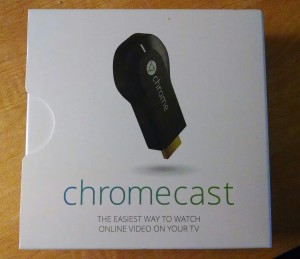
Chromecast by GoogleI’ve been wanting to check out Google’s Chromecast since it came out. Thanksgiving night, I noticed that Amazon was selling it for $30 with a $6 Google Play credit making the effective price $24. The deal was too good to pass up. I went for it. I’ll admit that it was an impulse purchase, but I’ve impulse bought worse. Much worse, and for a lot more money.

Thanks to the magic of Amazon Prime, the Chromecast arrived in Saturday’s mail. Don’t ask me how Amazon does it. Jeff Bezos must be practicing some kind of voodoo magic over there. As an aside, an Amazon Prime membership is the cheapest $80/year you’ll spend. Free two-day shipping, access to free streaming of hundreds of movies and TV shows, the Kindle lending library. It doesn’t get any better. Anyway, i digress – back to Chromecast.

The amount of time it took to go from out of the box to operational was ridiculous, in a good way. In fact, I think I spent more time figuring out which port to plug it into in my receiver and where to plug it in than I did setting it up. Here’s how easy it is:

  1. Plug it into an HDMI port on your TV or receiver.
  2. Plug the AC adapter in.
  3. Load the Chromecast app on your phone or tablet.
  4. Start the app, it asks you to verify that the code on the TV matches the code on your phone/tablet.
  5. Hit OK in the app, the Chromecast reboots.
  6. Through the app, enter your Wi-fi password
  7. Done. Chromecast is operational.

Chromecast iconIt is very easy to stream content through Chromecast. Simply load up any Chromecast enabled app, look for the Chromecast symbol (see picture right), and press it. You’ll be asked to connect to the name you gave the Chromecast app, and then you’re in business. Anything you select through the app will be played on the TV.
Trust me, this is simple to setup and easy to use.

Likes

  • For all the grief Google takes for being a consumer unfriendly company focused on technology, the Chromecast is incredibly easy to setup. Google nailed it here and knocked it out of the park.
  • Chromecast worked flawlessly with all of the apps I’ve tried so far: YouTube, Google Music, Netflix, HBO Go. It’s a great way to share content with the family on the big screen.
  • It’s awesome that you can search for additional content in the app while Chromecast is streaming content
  • Another great feature is allowing multiple people to connect to the Chromecast at one time. No more, “hey, can you load this next?” Everyone in the room can search for content to push to the TV. It’s great if you’re into YouTube viewing parties.
  • The Google Cast extension for the Chrome browser is the bomb. Once you install the extension, you can mirror whatever you are doing in that Chrome browser tab to your TV, and I mean anything. I was able to push content from Vimeo, Hulu and ESPN without much trouble. It would be much nicer (and smoother) with an app, but the browser mirroring bridges the gap while I wait for the official Chromecast apps.
  • It really improved the value of my Nexus 7 tablet, which has mostly sat in a drawer since last Christmas. It’s now an awesome remote for the Chromecast.

Requests (aka Dislikes)

  • More apps, and I mean a lot more apps. The situation is improving slowly, as Google announced a number of new apps this past week, but a few simple additions like access to Amazon Prime Instant Video would up the value of the device tremendously.
  • A dead simple way to stream content from your home network. This is a major hole.
  • Display photos from your own network in the background on startup, or while playing music. Being able to create instant slideshows would be an added bonus.

The verdict

Chromecast is effectively a poor man’s Apple TV or Roku box. If you already have one of those, you don’t need it. In fact, given the relatively few apps that are available, you’ll probably find that it’s a step back, especially from Apple TV. The biggest drawback is the difficulty streaming content (music, video and photos) from your home network.

On the other hand, if you don’t have a streaming media box connected to your TV, Chromecast is the best bang for your buck. I’d highly recommend it and don’t regret making the impulse buy. I also believe that if Google keeps giving it a little love, like adding more apps and content streaming from your home network, then Chromecast has the ability to be a killer device, especially at a price point of under $40.

My first mini-ITX build

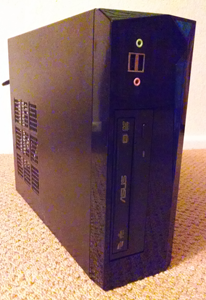
mini-ITX form factor DIY PCI’ve been extremely pleased with my last PC build. It’s been working so good that I figured it was time to replace the oldest machine in my house – a Dell Dimension that I bought in 2002. The old machine still works great given what it’s used for – primarily email, web browsing, and light document editing. I’ve just gotten tired of waiting the five minutes it takes from power on to ready-to-use. In addition, I figure at 11 years old, the machine is probably an accident waiting to happen given that I’m still on the original hard drive.

About the only thing I would have done differently with my latest build was go smaller. Therefore, I chose to go with a mini-ITX form factor for my latest build. Since I was planning on using the integrated graphics on the CPU, there really wasn’t any reason to go with a bigger case.

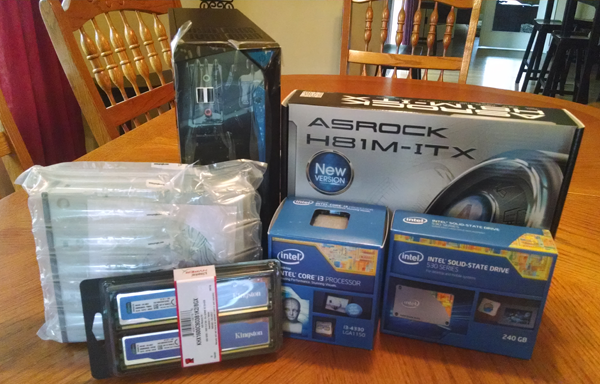
As usual, picking the components is the hardest part of the project. Here’s the list of components I ended up buying, along with their price (excluding tax and shipping):

Processor Intel Core i3-4330 $146.19
Motherboard ASRock H81M-ITX $69.99
RAM Kingston Hyper X Blu 8GB (2 x 4GB) $64.99
SSD Intel 530 Series 240GB $149.99
Optical Drive ASUS DVD-Writer DRW-24F1ST $15.99
Case In-Win 200-Watt Mini-ITX case (incl. power supply) $44.99
Monitor ASUS VS248H-P 24-inch Full-HD LED Monitor $119.99
Operating System Windows 7 Home Premium $79.99
Total Component Cost $692.12

PC components for mini-ITX PC build

I got quite a few killer components all for under $700, including the SSD (which I won’t build another machine without). I’ve had the machine running for about a week, and it works just as well as the rig I built back in March. Power on to operational only takes about 15 seconds, and I haven’t noticed any limitation using the onboard graphics given what it is being used for.

Here are some more notes from the build:

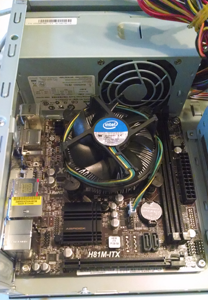
  1. motherboard in mini-ITX PC caseI’m re-using the keyboard and mouse from the current machine, so I didn’t include them in the cost of the components.
  2. I could have saved money by reusing the monitor, but $120 was too good a deal to upgrade from an old school 19-inch LCD monitor to a 24-inch widescreen LED monitor.
  3. I could have also saved by using an Ivy Bridge Intel processor, but since I figure this PC could be in operation for 7-10 years, I wanted to use the latest Haswell architecture.
  4. Since I don’t anticipate doing much media viewing or editing on the machine, I chose to go with 8 GB RAM and skipped the Blu-ray drive. I can always upgrade later if necessary.
  5. I stayed with Windows 7 for this build. I wanted to keep the interface more familiar to the less technically inclined in my house. Plus, I’ve heard that Windows 8 works better on touch screens. Otherwise, it doesn’t offer an improvement over Windows 7. I also decided to go with Home Premium since I didn’t the need the extra features in Professional.
  6. This is the first build using an ASRock motherboard, and I was pleasantly surprised with the ease of use and quality. I’ll definitely consider them for my next PC build. About the only drawback on the motherboard, and this is not a knock against ASRock, is that there are only two SATA connections on the board. I had to use one for the DVD drive and one for the SSD, so I couldn’t have included an HDD, even if I wanted.
  7. I was a little hesitant with the In-Win case given the price, but so far it’s been great. The case is high quality, and no complaints with the power supply (yet). I also like the fact that a chassis fan was included, and there is a mesh opening directly over the CPU to help with the cooling of both the CPU and motherboard. I’ve also found the sound level of the fans to be very reasonable. I wouldn’t say it’s whisper quiet, but it’s not annoying either.

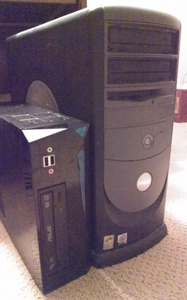
Comparing mini-ITX and a mid-Tower ATXI’ve been spending most of the last week transitioning the key files and programs from the old machine, which has served the family quite well over the years. It’ll be sad to see the old beast go, but it was time. I have a feeling that within a couple of weeks, none of us will realize its gone. In fact, I bet we’ll be wondering why we didn’t upgrade to a new machine sooner!

Grandma’s apple pie recipe

One of my favorite memories growing up was going to my Grandma’s house after she baked her homemade apple pie. I can still remember the smell in her kitchen, and there was nothing like the taste of warm apple pie fresh out of the oven.

My mother, who is a great cook in her own right, took over my Grandma’s apple pie recipe. She can, and still does, make a pretty mean apple pie herself. I’d be hard pressed to choose which one I like better – Mom’s or Grandma’s.

In any case, I decided a few years ago that it was time for me to start learning how to make Grandma’s apple pie myself. On one of my mom’s trips out to Southern California, she brought the recipe and assisted me on my first try. It was good, but not like what I remembered.

Since then, I’ve made a few pies, but the one I recently baked over Thanksgiving came out best. It’s the closest I’ve come to matching my mom and grandma’s work. I still need more practice, but I figured I’d share my variation of the recipe along with a few secrets I’ve learned so far.

Continue reading

My favorite time of the year

Now that we’ve made it through Black Friday, I’m ready to jump into my favorite time of the year. I am NOT a fan of Black Friday and all the hype leading up to it, but I absolutely love the four weeks between Thanksgiving and Christmas. I know that it stresses some people out, but I see it a fun and enjoyable time.

For starters, I thoroughly enjoy listening to Christmas music. As soon as I finish Thanksgiving dinner, I’m ready to start playing my Christmas playlists, CDs, , Pandora, and Sirius-XM holiday stations. I wish I could list all of my favorite tunes here, but there are just too many. I don’t know what it is, but Christmas songs are timeless classics for me.

Second, I really enjoy building up the anticipation of Christmas with the family. This time of year can be such a fun time for the kids, and I try to make sure they see it this way. I want them to enjoy so they will be able to impart the same feelings sense of excitement to their families when they get older.

Perhaps, most of all, I enjoy the get togethers and parties that mark this time of the year. It’s so much fun to get together, spend time with friends and family, and enjoy good food and drink. Even though I see my friends throughout the year, spending time with them over the holidays is even more special to me.

Finally, this time of year is a good time to reflect on the past year and get ready to start fresh in a new year. I like to live by the motto of learning from the past, living for today, and dreaming about tomorrow. In other words, I don’t dwell on the past, but I like to take what I can from the past year and apply to the next year to improve upon whatever areas need work. I’m not sure yet what I’m going to choose to focus on next year, but I’m pretty pleased about how this past year turned out. Hopefully, I’ll feel the same way next year at this time!

Analyzing the cost of the triple play

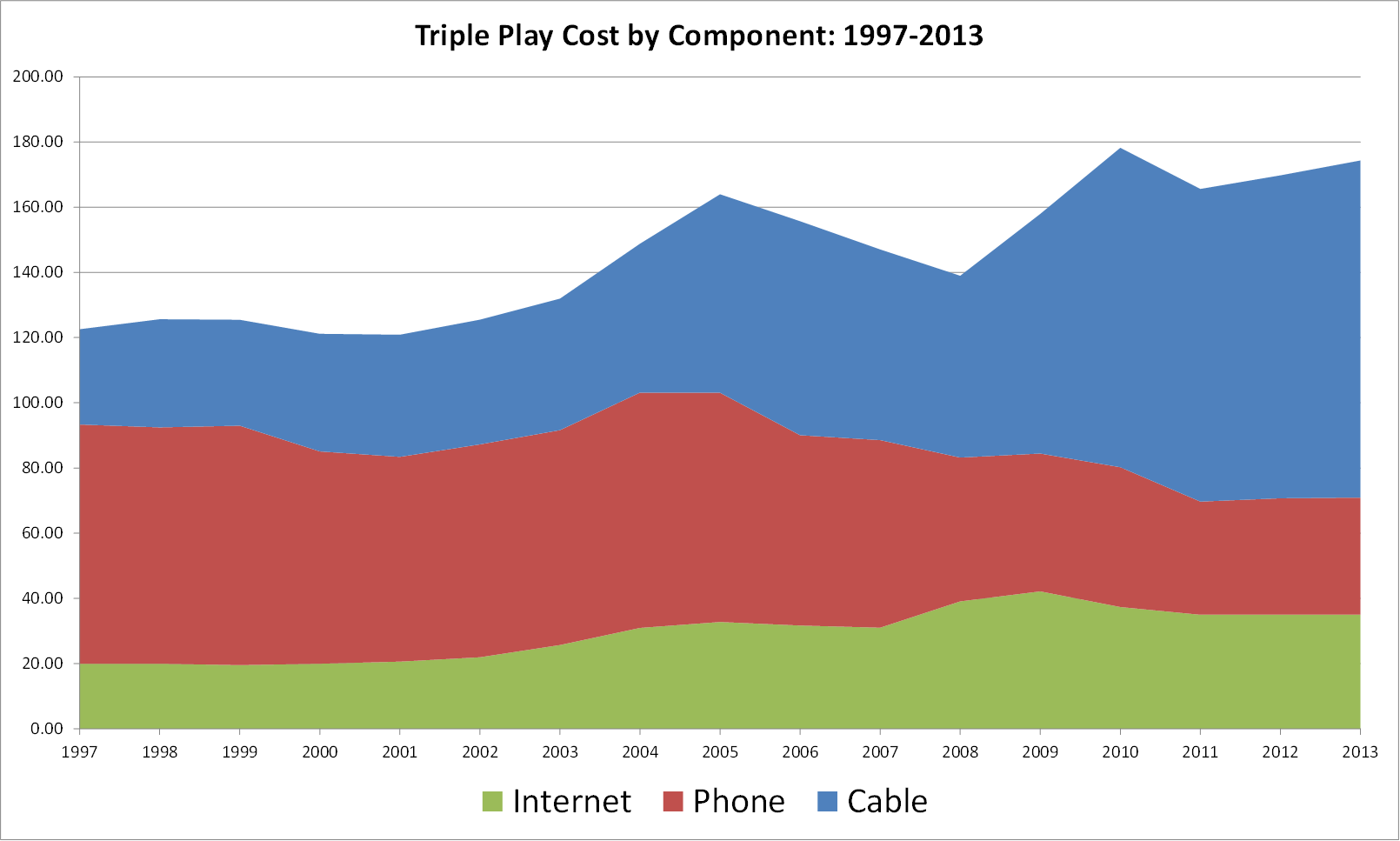
As a fun exercise using the magic of Quicken, I created a graph of my triple play cost (phone+cable+internet) since 1997. Even though the data was collected in monthly intervals, I averaged the cost annually to smooth out fluctuations, which were especially prevalent in the phone data pre-2008 when long distance phone calls were still being charged by the minute.

Triple Play Cost by Component: 1997 - 2013

Analyzing the triple play cost

What the data shows us is not a surprise, and I suspect that is indicative of what is happening in most households. The overall cost of the triple play has increased ~50% over the last 15 years from $120/month to $175/month. However, it’s not the total cost of the triple play that’s noteworthy. It’s trends in the individual components that are interesting. Namely,

  1. The value of landline phone service is declining
    The cost of phone service has been cut in half over the last 15 years and will continue to drop, eventually reaching zero. I’m not surprised given that I rarely use my landline. I’m paying $30/month to rent a phone number to give to telemarketers. When I look at my children, who have grown up with a cellphone as their primary means of communication, I doubt any of them will ever pay for landline service in their lifetime, which portends the end of landline service as we know it in the not too distant future.
  2. Advances in internet service have far outpaced the cost
    Once could argue that paying $20/month for unreliable 56kbps internet service that was metered by the hour was ridiculously overpriced, but it is the baseline. Compare that to paying $35/month for a pipe that is reliable, is always on and delivers 15Gbps, and it’s clear that internet service is a bargain these days, a HUGE one! Stated more bluntly, the service is infinitely more reliable and over 250,000 times faster. If speed and cost were directly proportional, I should be paying over $5,000,000/month for internet service today. As it stands, internet costs haven’t even doubled over the last 15 years.
  3. Cable’s cost increase doesn’t match it’s value proposition
    While the number of channels I receive has increased from 70 to over 600, the number of channels I watch has changed from 10 to about 15. I’m paying over 3x the amount for a service whose value proposition hasn’t changed significantly. If you were to cut off my cable service tomorrow, I might miss watching sports and a few Seinfeld reruns, but other than that, I’m not sure I’d notice. On other hand, if you were to turn off my internet service, I’d be reaching for my checkbook.

What the analysis tells us

  • Cord-cutting is not a fad
    Disputes over content distribution, like the one that happened between Time-Warner and CBS are becoming more and more common and are continuing to drive up the cost of the cable. People are tired of being held hostage to the cable companies and content providers and aren’t going to tolerate it. The result will be more cord-cutting. You can get by without cable today by using an over the air antenna and internet services like Netflix and Amazon Instant Video, but it’s not quite the same. However, these solutions are improving rapidly, and it’s only a matter of time before cord-cutting catches up to and surpasses the content provided by cable.
  • The cable business is ripe for disruption
    Bundling of content is not a sustainable business model. I don’t want to pay for a service where I don’t use 90% of what is being supplied. If the cable companies do not recognize that their value is in the delivery network and not the bundling of content, they will be marginalized by more innovative and progressive thinking companies like Netflix, Amazon, HBO and YouTube (Google). Cable needs to move to a different model, such as a la carte or on-demand programming, sooner rather than later.

Where we’re headed

I’ve believed for over 10 years that content programming would migrate to an on-demand model. I thought for sure that it would’ve happened by now, but the entrenched players have been slow to move and have used government lobbying to slow down and impede competitive services. History has shown that these tactics only delay the inevitable. The companies that refuse to change are eventually replaced by those that embrace the new business models.

Bottom line, the cable companies and content providers need to start allowing us to choose what we want, when we want it, and only charge us for what we use. Otherwise, we’re going to start letting companies into our living rooms that will.

Places to go – San Francisco

Since I’ve lived in California, I’ve never been a big fan of Northern California, especially the Silicon Valley-San Jose-Sunnyvale area. I’m not sure what bothers me, but I never enjoyed traveling there. San Francisco, however, is an exception. It is one of my favorite cities in the world to visit.

I was in San Francisco last week for a conference and had some time to explore the city. Here’s a few of my favorite places to go while I’m there, and a couple of new places I discovered:

1. Scala’s Bistro
One of my favorite places to eat in the city. It’s just off Union Square on Powell Street. I’ve had a couple of great meals there, although I wasn’t able to eat there last time around. I failed to make a reservation and didn’t feel like waiting 3 hours. Needless to say, it gets crowded, especially on the weekends.

2. Ghiardelli Square
Yes, this is a bit touristy, but I always enjoy stopping by Ghiardelli Square while I’m in the city. There’s nothing like swinging by the Ghiardelli chocolate shop for a few treats. My favorites are the dark chocolate sea salt and caramel squares and the chocolate covered strawberries.

San Francisco Cable Car3. Union Square
Union Square is the center of the city in my mind. It’s hard for me to recall a visit to San Francisco where I didn’t end up spending quite a bit of time around Union Square area, and my most recent trip was no exception.

4. The Cable Cars
Like Ghiardelli Square, it’s a bit touristy, but it never gets old for me, particularly on the Powell & Mason Street Line. The views are absolutely incredible on a clear day, especially when you crest the hill on Powell Street and get a clear view of Alcatraz Island. Plus, it sure beats the walk from Union to Ghiardelli Square.

5. Blue Bottle Coffee
Blue Bottle CoffeeI’m not the biggest coffee drinker, but Blue Bottle Coffee was highly recommended on my latest trip to the city. It’s a bit tough to find in Mint Plaza, which is a bit off the beaten path, but you’ll know you’ve found it when you see the line. I waited 20 minutes for a Cafe Mocha, and it was worth every minute of it. My only regret was eating breakfast before I went. I should’ve waited and had a bowl of the steel cut oats that was on their menu.

6. Tank 18
On Sunday evening, I was looking for a place where I could relax and have a glass of wine. Tank 18 showed up on a Google search, so I decided to check it out. I was pleasantly surprised. They bottle their own wine and had a very tasty Syrah. I was drawn there by a Meritage I saw on their website, but the waitress told me that it was extremely popular (and very good) and had sold out. I’m sure I’ll find my way back here on a subsequent trip.

7. Rue Lepic
When my daughter and her boyfriend, whom I met up with while on my last trip, couldn’t get into Scala’s Bistro on Saturday evening, we headed up the hill to Rue Lepic, a small French restaurant at he corner of Pine & Mason. It’s an intimate setting with only about 8-10 white-cloth tables. We had a great dinner, and I would recommend it. I’ve added it to my list of restaurants to head back to while in the city.

I’m looking forward to my next trip to San Francisco and adding a few more items to my list of places to check out.